
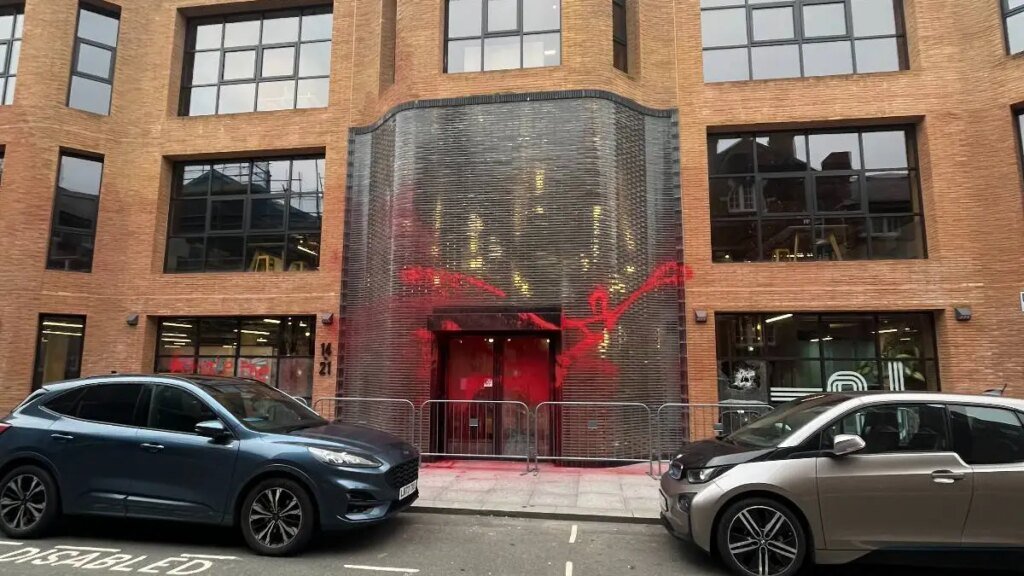
Protesters Demand Justice as Hunger Strikers Raise Alarm in the UK
In a recent display of solidarity, Pro-Palestine activists targeted the Labour Party’s offices in London, using red paint to symbolize their cause while also causing damage to windows. This action is rooted in support for prisoners currently on hunger strike in British facilities, highlighting a growing dissatisfaction with the government’s inaction regarding their plight.
The Hunger Strike and Its Implications
The group, known as Justice for the Hunger Strikers, organized this protest in light of the ongoing situation of several detainees who are refusing food while awaiting trial. Doctors and activists have voiced increasing concerns about the risk to these individuals’ lives, especially as four detainees remain committed to their hunger strike, which continues to escalate.
Ongoing Strikes and Personal Accounts
Among the hunger strikers is Heba Muraisi, who has entered her 57th day of refusing food while imprisoned in West Yorkshire. In a statement shared on Monday, she expressed her frustration, stating, “I’ve been force-fed repression and I’m filled with rage, which is why I am taking this stand. I am highlighting the unjust application of UK laws by our Government, and it’s heartening to see awareness growing after a year of incarceration and human rights violations. Let’s keep fighting!”
The other hunger strikers include Teuta Hoxha, on day 51; Kamran Ahmed, on day 50; and Lewie Chiaramello, on day 36. Notably, both Hoxha and Ahmed have required hospitalization during their protest, underscoring the severity of their situation.
Criticism of Government Response
A representative for Justice for the Hunger Strikers condemned the Labour government for its lack of engagement, stating that despite being alerted two weeks in advance about the hunger strikes, officials have failed to address the issue. “As the situation reaches a critical stage, with the real possibility of death, it’s alarming that the government remains silent,” the spokesperson remarked.
The hunger strikers are imprisoned in various locations across England, facing allegations related to break-ins at facilities linked to Israel’s Elbit Systems and a Royal Air Force base in Oxfordshire. The detainees deny these charges and argue that the UK must be held accountable for its connection to alleged human rights abuses against the Palestinian people.
Legal and Human Rights Concerns
All eight hunger strikers are associated with Palestine Action and were previously charged before the group was labeled a proscribed organization under antiterrorism legislation. Their trials are anticipated to extend beyond a year from now, well past the standard six-month pretrial detention limit in the UK, with anticipated court dates ranging from April 2026 to January 2027.
The detainees have laid out several demands, which include release on bail, a halt to what they view as interference with their correspondence and reading materials, access to fair trials, and the reversal of the proscription of Palestine Action. Recent demands insist on transferring Muraisi back to HMP Bronzefield near her family, easing non-association rules between inmates, and allowing prisoners to participate in various activities and programs.
A Growing Movement
The protest has been described as the largest hunger strike in the UK since the 1981 Irish hunger strikes, inspiring numerous solidarity demonstrations nationwide. International concern has also surfaced, with statements from several United Nations experts expressing alarm at the conditions faced by the detainees.
UN officials emphasized that hunger strikes generally arise as a last resort when individuals feel their rights to protest are stifled. They remarked, “The state’s duty of care towards hunger strikers is amplified, not lessened.”
Moreover, over 800 medical professionals recently signed a letter urging Justice Secretary David Lammy to intervene, voicing serious concerns regarding the health risks faced by the prisoners, which include potential organ failure and irreversible harm.
Legal Actions and Government Stance
Legal representatives for the hunger strikers announced that they have initiated litigation against the government, claiming a neglect of its own prison safety protocols. The hunger strikers stated that they have repeatedly attempted to communicate with Lammy and other officials but to no avail.
In response, James Timpson, the UK’s Minister of State for Prisons, Probation, and Reducing Reoffending, indicated that the government would not be engaging directly with the hunger strikers. “We are accustomed to handling hunger strikes effectively,” he stated, emphasizing the independence of the judiciary as central to the justice system.
Conclusion
The situation surrounding the hunger strikers highlights significant issues regarding human rights and governmental accountability in the UK. As the protest continues, it raises questions about the approach to detainee treatment and the transparency of legal proceedings.
Key Takeaways
- Activists protested to support hunger strikers facing legal battles in UK prisons.
- The hunger strike is described as the largest in the UK since the 1981 Irish hunger strikes.
- UN experts and medical professionals express grave concerns about the strikers’ health and treatment.
- The UK government has faced criticism for its lack of engagement regarding the strikers’ demands.