
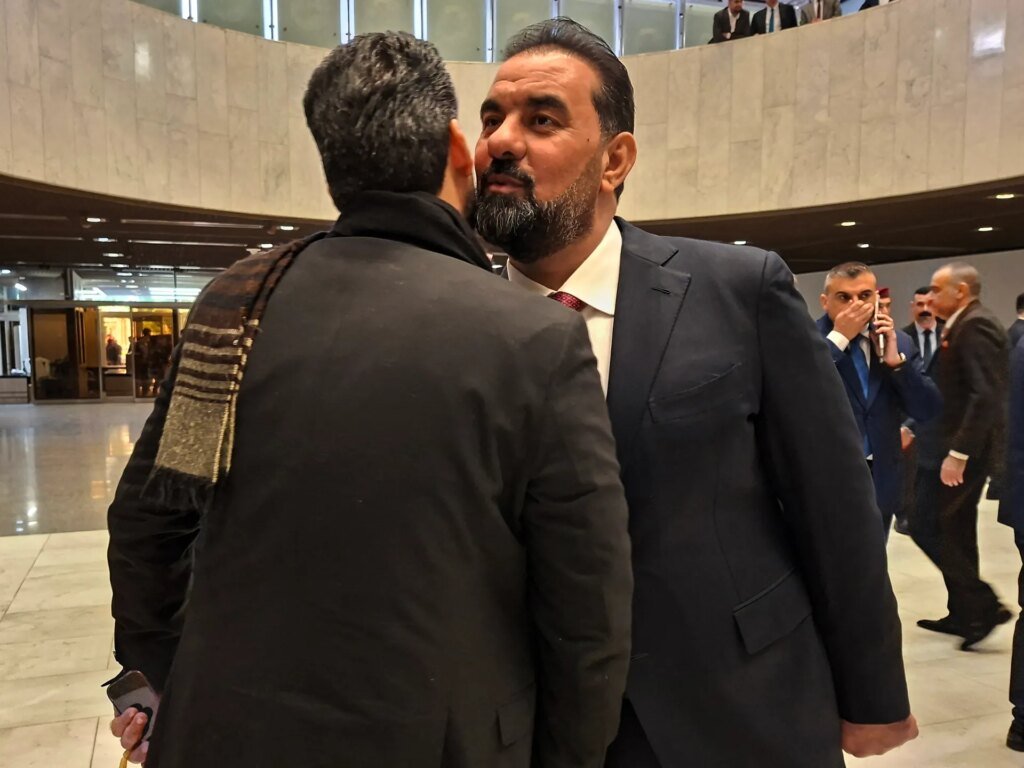
Haybat al-Halbousi Elected as Speaker of Iraq’s New Parliament
Iraq has taken a significant step towards stabilizing its government with the election of Haybat al-Halbousi as the new speaker of parliament. Following a tumultuous period in Iraqi politics, this appointment marks a crucial development for the country’s governance structure.
Election Results and Significance
In a decisive vote, al-Halbousi, representing the Taqaddum (Progress) Party, secured 208 votes, outpacing his nearest rivals, who garnered 66 and 9 votes respectively. This victory not only underscores his party’s influence in the Sunni-dominated regions of Iraq but also sets the stage for further political maneuvers in the formation of the new government.
Parliament’s Role in Government Formation
The first session of Iraq’s Council of Representatives was highly anticipated by the public, following the elections held on November 11. The atmosphere was charged as citizens sought clarity on who would lead the country in the aftermath of a complex electoral process. In accordance with Iraq’s traditional muhasasa system, parliament is tasked with electing a speaker, who is expected to be a consensus Sunni candidate, along with two deputies during this inaugural session.
Subsequent Steps in the Process
After the speaker’s election, the next step involves voting for the presidency, which will traditionally be filled by a Kurdish candidate. Subsequently, the elected president will nominate the prime minister from the largest Shia bloc, the Shia Coordination Framework (SCF).
Challenges Ahead
Prior to this election, Faiq Zaidan, the President of the Supreme Judicial Council, urged lawmakers to adhere to the constitutional timeline for forming a government—set at a maximum of 90 days. The Federal Supreme Court has expedited the ratification of the election results; however, many anticipate that the overall process will drag on. Historical precedents suggest that forming a government can be a lengthy endeavor, with the 2021 process lasting over 300 days.
Speculations on the Prime Minister’s Candidate
The SCF is currently weighing its options regarding which candidate to support for the prime minister position. While incumbent Prime Minister Mohammed Shia al-Sudani was nominated four years ago, he has since attempted to distance himself from the alliance by running on an independent electoral list, achieving a significant share of seats with his Reconstruction and Development Coalition (RDC). However, a recent decision from the FSC has compelled him to return to the SCF, whose leaders serve as external influencers in Iraqi politics.
Current Political Landscape
The SCF now faces critical questions regarding its support for al-Sudani or an alternative prime ministerial candidate, especially as its parliamentary strength includes numerous members affiliated with Shia factions that have ties to Iran. Of the roughly 180 legislators from the SCF, an estimated 80 to 90 are linked to pro-Iran groups, many of which are under U.S. sanctions. This increase in their parliamentary presence has the potential to complicate Iraq’s international relationships and raise concerns among Iraqi Shias wary of Iran’s deepening influence in the nation.
Conclusion
As Iraq navigates this complex political landscape, the election of Haybat al-Halbousi as speaker represents just the beginning of a challenging journey towards stability and effective governance. The coming weeks will be pivotal as key players negotiate the intricacies of their political alliances amidst growing societal pressures.
Key Takeaways
- Haybat al-Halbousi elected as speaker of Iraq’s new parliament.
- His party, the Taqaddum Party, has strong support from Sunni regions.
- Challenges remain in forming a new government within the constitutional timeframe.
- The growing influence of Iran-affiliated groups in parliament poses potential risks for Iraq’s stability.