
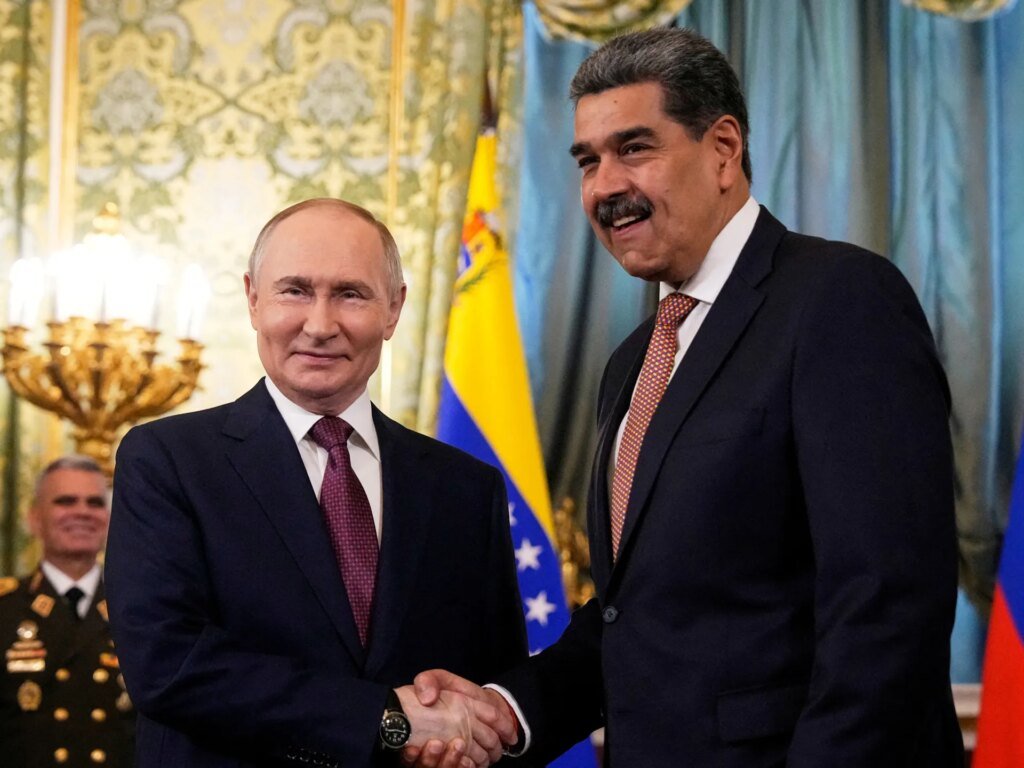
The Global Implications of Venezuela’s Turmoil in U.S.-Russia Relations
As tensions rise regarding Venezuela, one might think the rhetoric from U.S. President Donald Trump is merely a random outburst. However, this situation is intricately connected to significant global conflicts, suggesting that Venezuela has become a strategic pawn in the chess game played by superpowers—much like Ukraine. The echoes of history remind us that conflicts in disparate regions can contribute to a larger, more catastrophic war.
Understanding the Stakes
While we may not be on the brink of a third world war, the potential remains as long as key players like Trump and Russian President Vladimir Putin focus on mutually beneficial decisions instead of direct confrontations. Venezuela, despite being a smaller nation, holds importance on the global stage due to its vast oil reserves and alliances with countries like China, Iran, and Russia, which are viewed as adversaries by the United States.
The U.S. and Russia: A Complex Relationship
Venezuela’s significance to Russia cannot be understated, especially with U.S. pressure escalating. This complicated relationship has roots dating back to Putin’s rise to power in 2000 when the Kremlin regarded the U.S. as an unreliable partner and, at times, an enemy seeking to dominate former Soviet territories. However, a shift occurred during Trump’s presidency, especially in 2025, leading to a less antagonistic dynamic.
Shifting Alliances
The U.S. effectively reduced its financial assistance to Ukraine, adopting a more neutral stance while still providing critical intelligence support. In a recent update to its National Security Strategy, the U.S. even stopped categorizing Russia as a “direct threat.” Negotiations concerning Ukraine appear to be progressing, with Putin believing they might conclude favorably for him. This political shift encourages the Kremlin to maintain its relationship with Trump’s administration, even amidst challenges in Venezuela.
Russia’s Strategic Interests in Venezuela
Russia’s response to U.S. threats against Venezuela has been vocal, with its U.N. representative denouncing these as aggressive neocolonial actions. This comment highlights the U.S.’s call for Venezuela to welcome back American oil companies, a situation complicated by existing Russian oil interests in the region.
Pressure and Opportunities
Russia’s commitment to Venezuela will likely depend on the level of pressure exerted by the U.S. in Ukraine. Should Nicolas Maduro’s government collapse, it’s not necessarily a disaster for the Kremlin; they have adapted to changes in foreign governments before, as seen in Iraq and Syria.
The Bigger Picture
From a geopolitical perspective, U.S. military action in Venezuela could inadvertently level the moral playing field regarding the Ukraine conflict. If the U.S. can assert its will through military means in its hemisphere, it raises questions about Russia’s right to do the same in its neighborhood. This potential for moral equivalency would resonate particularly in the Global South, further complicating relations between the U.S. and Europe while exacerbating internal divisions within the U.S. itself.
A Possible Future
The prospect of prolonged U.S. involvement in Venezuela is appealing to Russia. However, a swift downfall of Maduro could also yield positive outcomes for Moscow, potentially leading to negotiations that favor Russian interests regarding Ukraine.
Conclusion
The situation in Venezuela is not merely a regional issue but a pivotal point in global politics, intertwined with major power struggles. As nations navigate these challenges, the outcome remains uncertain but undeniably significant.
- The escalating rhetoric surrounding Venezuela is deeply connected to U.S.-Russia relations.
- Russia’s strategic interests in Venezuela hinge on the level of U.S. pressure regarding Ukraine.
- Conflicts in regions deemed peripheral can have far-reaching global consequences.
- The potential for negotiations may reshape dynamics in both Venezuela and Ukraine.