
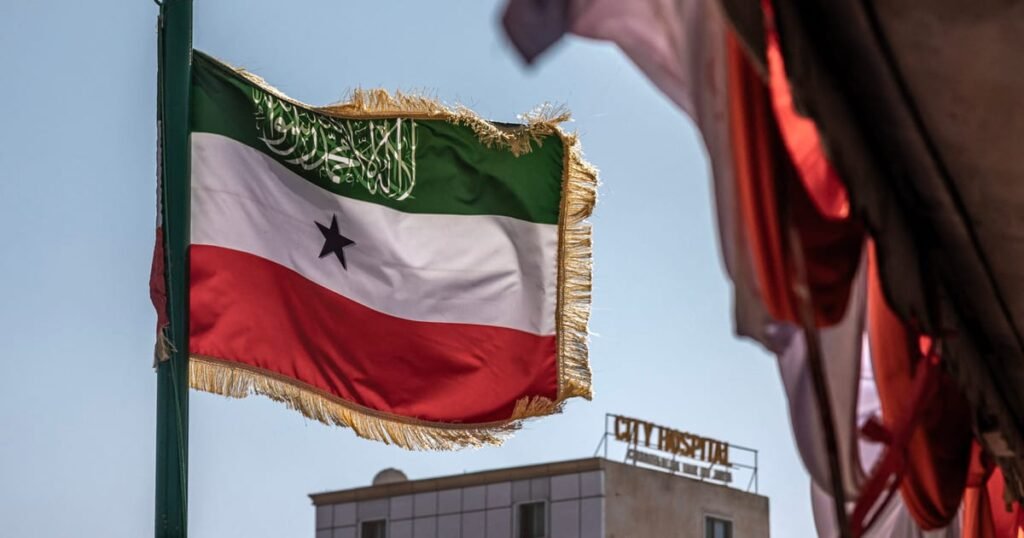
Israel Signs Declaration with Somaliland Amid International Reactions
In a significant move linked to the Abraham Accords, Israeli Prime Minister Benjamin Netanyahu has formalized a joint declaration with Somaliland’s President Abdirahman Mohamed Abdullah. This agreement aims to enhance commercial and diplomatic relations between Israel and various Arab nations.
Upcoming Diplomatic Meetings
Netanyahu’s diplomatic endeavors continue as he is scheduled to meet with U.S. President Donald Trump on Monday in Florida. In a recent statement, Trump expressed his reluctance to follow Israel’s approach regarding the recognition of Somaliland’s independence, as reported by the New York Post.
U.S. Stance on Somaliland
On Saturday, the U.S. State Department reaffirmed its position, maintaining that it recognizes the territorial integrity of Somalia, which encompasses Somaliland’s territory. This declaration means that the U.S. remains aligned with Somalia’s national boundaries.
Regional Responses
Qatar has criticized the joint declaration, labeling it a potentially harmful precedent and an action that violates international law principles. Similarly, the African Union has firmly opposed any steps aimed at recognizing Somaliland’s independence, although it did not specifically mention Israel’s involvement.
European Union’s Reaction
The European External Action Service, acting as the EU’s diplomatic voice, also expressed concerns. In a statement issued on Saturday, it emphasized the necessity of respecting Somalia’s unity, sovereignty, and territorial integrity, calling for ‘meaningful dialogue’ between both Somalia and Somaliland.
Conclusion
This recent declaration highlights the complexities of international diplomacy surrounding Somaliland and raises critical questions about recognition, sovereignty, and regional stability.
- Netanyahu signs a declaration with Somaliland, enhancing ties amid the Abraham Accords.
- Trump distances the U.S. from recognizing Somaliland’s independence.
- The U.S. asserts support for Somalia’s territorial integrity.
- Regional reactions include opposition from Qatar, the African Union, and the EU.