
Guinea’s Presidential Election: Mamady Doumbouya Set for Victory Amid Controversy
In the midst of a charged political atmosphere, Guinea is gearing up for a presidential election where current military leader General Mamady Doumbouya is viewed as the frontrunner. Since seizing power in a coup in 2021, Doumbouya faces criticism concerning media restrictions and opposition party limitations, creating an aura of skepticism around the process.
Polling and Candidates
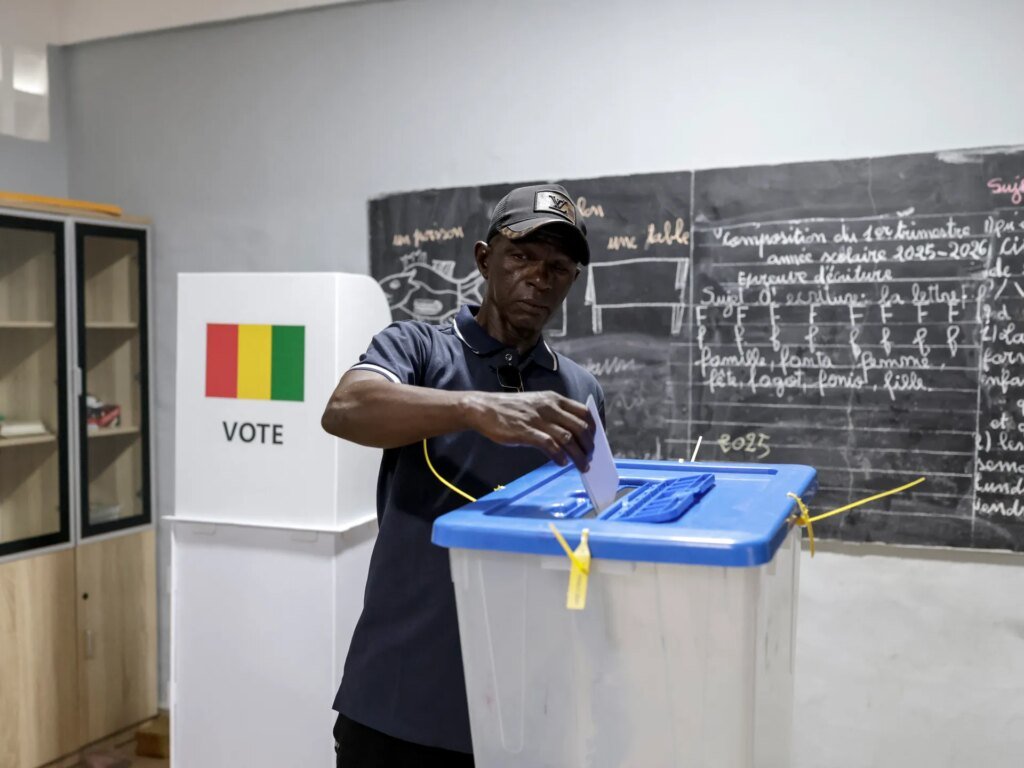
Approximately 6.7 million registered voters are taking part in this election, with polls opening at 07:00 GMT and closing at 18:00 GMT on Sunday. Doumbouya, aged 41 and a former special forces head, is challenging eight other candidates as he moves forward in his quest for continued leadership. Notably, ousted President Alpha Conde and prominent opposition figure Cellou Dalein Diallo remain in exile.
Opposition Boycott and Economic Context
The opposition has urged a boycott of the election in this resource-rich nation, where over 52% of the population struggles with poverty, according to World Bank statistics. Guinea’s history has been marred by political upheaval; however, it saw a democratic shift with the election of Alpha Conde in November 2010—an event that marked the nation’s first freely elected presidency. This progress was reversed when Doumbouya ousted Conde in September 2021.
Authoritarian Concerns
Under Doumbouya’s leadership, Guinea has seemingly shifted back to a familiar pattern of authoritarian rule since gaining independence in 1958. Gilles Yabi, founder of the West African think tank Wathi, noted that this regression is concerning for the nation’s democratic foundations.
Political Restrictions
Political expression has been stifled during Doumbouya’s tenure. Various civil society organizations claim his administration has imposed bans on protests, limited press freedom, and suppressed opposition activities. United Nations rights chief Volker Turk highlighted that the electoral campaign’s environment has been severely restricted, characterized by intimidation of opposition members and media constraints. Turk warned that these conditions could jeopardize the electoral process’s credibility.
Opposition’s Stance
Diallo, the opposition leader, referred to the upcoming vote as an “electoral charade” meant to lend legitimacy to a “planned power seizure.” In September, Guinea adopted a new constitution, which opposition groups urged citizens to boycott. This constitution facilitates military leaders’ candidacies, further strengthening Doumbouya’s position, and extends presidential terms from five years to seven, with one possibility for renewal.
Resource Management and Youth Support
Guinea holds the world’s largest bauxite reserves and vast undeveloped iron ore deposits, including the Simandou site, which officially commenced operations last month after extensive delays. Doumbouya has taken credit for advancing this project to benefit the country economically. This year, his administration also withdrew the licence of the Guinea Alumina Corporation after a refinery conflict, seizing its assets for state management.
This move towards resource nationalism, paralleling trends in neighboring Mali, Burkina Faso, and Niger, has enhanced Doumbouya’s popularity. Additionally, his youth resonates with a nation where the average age is around 19. As one Conakry mechanic, Mohamed Kaba, remarked, “For us young people, Doumbouya represents the opportunity to send the old political class into retirement,” despite ongoing corruption concerns.
Conclusion
As Guinea embarks on this pivotal presidential election, the tension surrounding media freedoms and opposition participation raises significant questions about the future of democracy in the nation. With Doumbouya set to lead amid ongoing controversies, the implications for Guinea’s political landscape are profound.
- General Mamady Doumbouya is projected to win the presidential election amid serious political controversies.
- Opposition parties have called for a boycott, citing restrictions on their activities and media freedoms.
- The new constitution allows military leaders to run for office, paving the way for longer presidential terms.
- Doumbouya’s focus on resource nationalism has contributed to his popularity among the youth in Guinea.