
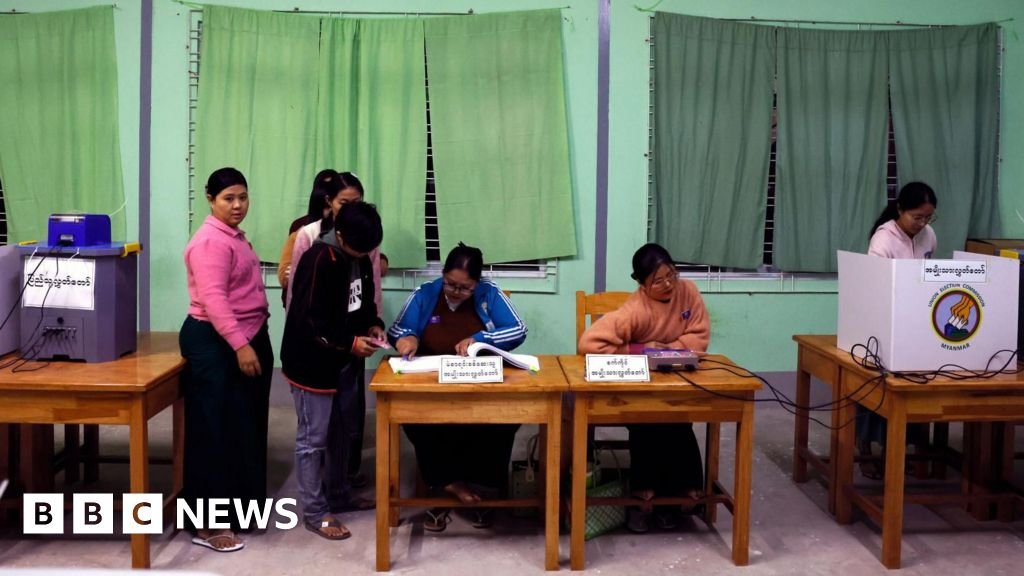
Myanmar Holds Controversial Elections Amidst Ongoing Conflict
Myanmar is currently in the midst of an election process that many view as a mere facade, with significant political parties dissolved and their leaders imprisoned. With around half the country not expected to participate due to ongoing civil unrest, the elections, taking place over the next month, highlight a nation in turmoil since the military coup nearly five years ago.
The Election Scenario
The military junta is conducting the elections in a phased manner, purportedly to restore control and legitimacy in the wake of extensive civil discontent and conflict. Observers indicate that with backing from China, the junta is attempting to cement its power amid the civil war that erupted following its takeover.
More than 200 individuals have been charged under new laws aimed at suppressing dissent related to the elections, with punishments escalating to the death penalty for those accused of disrupting the voting process.
Voting Under Adverse Conditions
As polling commenced, reports surfaced of explosive incidents and aerial attacks in various regions. In the Mandalay area, a rocket attack on an abandoned structure resulted in injuries, one individual suffering serious wounds. Additionally, multiple explosions in Myawaddy township damaged homes and reportedly claimed the life of a child.
Despite these ominous circumstances, some voters expressed a sense of systematized order in the voting process. One resident from Mandalay, Ma Su ZarChi, noted the significant changes in the voting experience, feeling both fear and relief at casting her ballot. Another first-time voter, Ei Pyay Phyo Maung, emphasized her civic duty in participating, hoping for economic relief amidst soaring prices.
Junta’s Perspective
The junta maintains that the election is a move towards reinstating a multi-party democracy, with junta chief Min Aung Hlaing asserting the election’s integrity after casting his own vote. He framed participation as crucial for the country’s democratic progress, stating that refusal to vote equates to rejection of advancement.
Repression and Reaction
Recent arrests of well-known individuals, including filmmakers and actors, highlight the regime’s repression of dissent. Criticism of the election has led to severe penalties, with harsh laws implemented since July to curb any opposition.
Critics, including a UN Special Rapporteur, have condemned the elections, labeling them illegitimate and merely a “theater of the absurd” under duress. The military’s ongoing conflict with both hostile resistance factions and ethnic militias has resulted in widespread devastation, with significant humanitarian crises exacerbated by natural disasters and funding cuts.
Logistical Challenges Ahead
With approximately 265 of 330 townships involved in the phased elections, logistical challenges abound. Political uncertainty looms large over these elections, as nearly half the country is left with no voting options due to instability. Results are anticipated by the end of January, but the path forward remains murky.
Notably, six parties will compete at a national level, while numerous others will vie for regional influence, after the removal of about 40 entities, including Aung San Suu Kyi’s party, which achieved significant electoral victories in past years. Many of its leaders remain imprisoned, stifling legitimate opposition.
Public sentiment regarding the elections appears largely negative. Many civilians feel disconnected from the military’s governance, yearning for the democratic principles experienced during previous administrations.
International Reaction
Responses from the international community have been overwhelmingly critical, with various Western nations labeling the elections a sham. Calls for political dialogue prior to any voting from regional organizations underscore the prevailing skepticism surrounding Myanmar’s political future.
Conclusion
The elections in Myanmar are set against a backdrop of civil strife and uncertainty. As the military government seeks to consolidate power through this election, the ongoing conflict raises serious questions about legitimacy and the nation’s democratic future.
- Myanmar’s elections are viewed as illegitimate amidst ongoing civil war and repression.
- Polling occurred under hostile conditions with reports of violence and voter intimidation.
- The junta claims to be restoring democracy, while critics call it a facade.
- The international community overwhelmingly condemns the elections as a sham.