
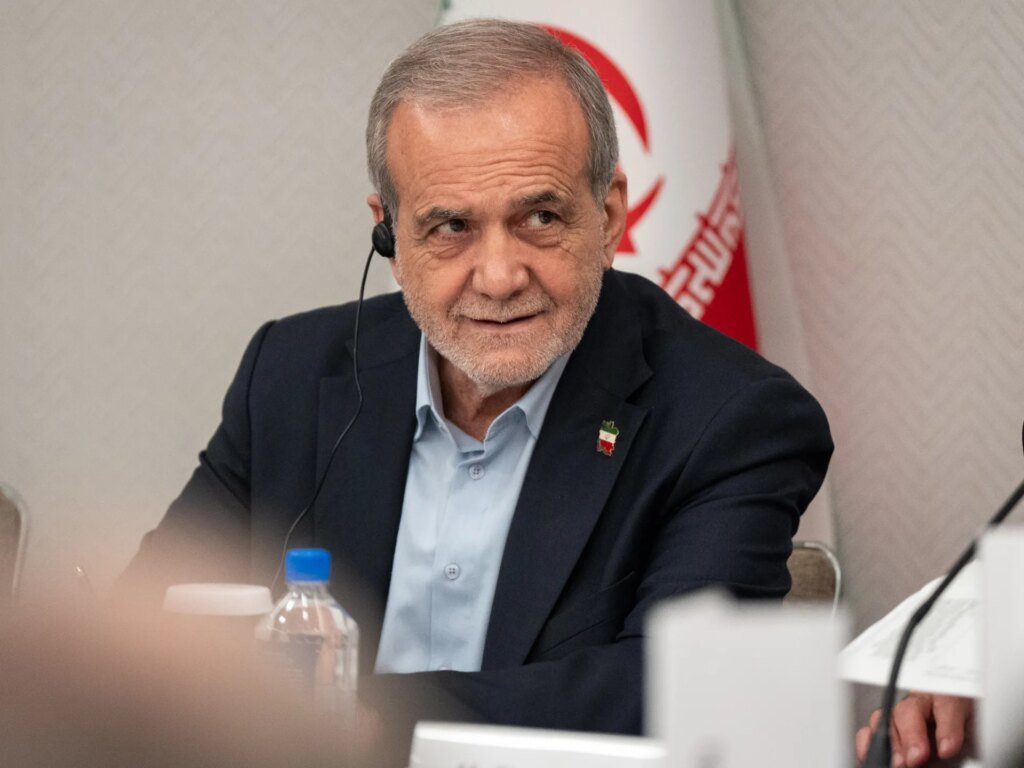
Iran’s Response to Potential West Aggression
In light of increasing tensions, Iranian President Masoud Pezeshkian has issued a stark warning regarding any future military actions by the United States or Israel against Iran. He asserts that such actions would elicit a robust and decisive response from his country. This article delves into Pezeshkian’s remarks, the ongoing geopolitical struggles, and the implications of recent military confrontations.
Full-Fledged Conflict
Pezeshkian described the current situation as a “full-fledged war” involving the US, Israel, and European nations. In an interview, he expressed his belief that these countries are determined to undermine Iran’s stability. He stated, “They do not want our country to stand on its feet,” emphasizing the seriousness of the conflict at hand.
Impending Meetings and Recent History
The President’s statements come just ahead of a scheduled meeting between Israeli Prime Minister Benjamin Netanyahu and US President Donald Trump. This meeting occurs six months after the US and Israel conducted military strikes against Iranian targets, alongside the reimposition of sanctions by France, Germany, and the UK concerning Iran’s nuclear activities.
Military Strength
According to Pezeshkian, Iran’s military forces are now better prepared than they were during the previous attacks. He remarked, “Our dear military forces are doing their jobs with strength,” asserting that their current equipment and manpower are significantly enhanced despite ongoing challenges. He warned that any attack would be met with a far more decisive response than those in the past.
A Complex War
Pezeshkian characterized this ongoing conflict as uniquely challenging, asserting that it is “worse than Iraq’s war against us.” He referred to the 1980-1988 Iran-Iraq War, which resulted in significant loss of life, stating that this situation is “far more complex and difficult.”
Nuclear Accusations
At the heart of this conflict lies the contentious issue of nuclear weapons. The US and its allies accuse Iran of attempting to develop nuclear capabilities, a claim Iran continues to refute. Tensions escalated further following a 12-day conflict in June, initiated by an extensive Israeli attack on Iranian military and nuclear installations, resulting in significant casualties and amplifying hostilities.
Impact of US Policies
Following those military actions, the United States played a direct role, bombing Iranian nuclear sites, which led to the suspension of negotiations that began earlier in April regarding Iran’s nuclear program. Under President Trump, who returned to office in January, there has been a revival of the “maximum pressure” policy aimed at economically crippling Iran through stringent sanctions, thereby targeting its oil revenues.
Future Military Discussions
As Netanyahu prepares for his meeting with Trump at Mar-a-Lago, it is expected that the focus will shift towards enhancing military operations against Iran, particularly concerning Tehran’s missile capabilities. Such plans could further exacerbate an already volatile situation.
Conclusion
In summary, the escalating tensions between Iran and Western nations illustrate a complicated geopolitical landscape. Pezeshkian’s declarations signal a warning against potential military aggression, emphasizing Iran’s preparedness to respond decisively. As leaders convene to discuss military strategies, the future of this conflict remains uncertain.
- Pezeshkian warns of a strong response to any US or Israeli attack on Iran.
- The situation is described as a complex and ongoing conflict involving multiple nations.
- Recent military confrontations have heightened tensions and led to significant casualties.
- Future discussions on military strategy could lead to further escalations in hostilities.