
Concerns Mount Over Upcoming Sham Elections in Myanmar
As Myanmar approaches its highly contested elections, the atmosphere is charged with tension and skepticism. Scheduled for December 28, this election marks the first opportunity for the Myanmar people to vote since the military coup nearly five years ago, which ignited a devastating civil war. However, many citizens and international observers are branding the election as a farce devoid of genuine democratic processes.
Electoral Promises Amidst Civil Unrest
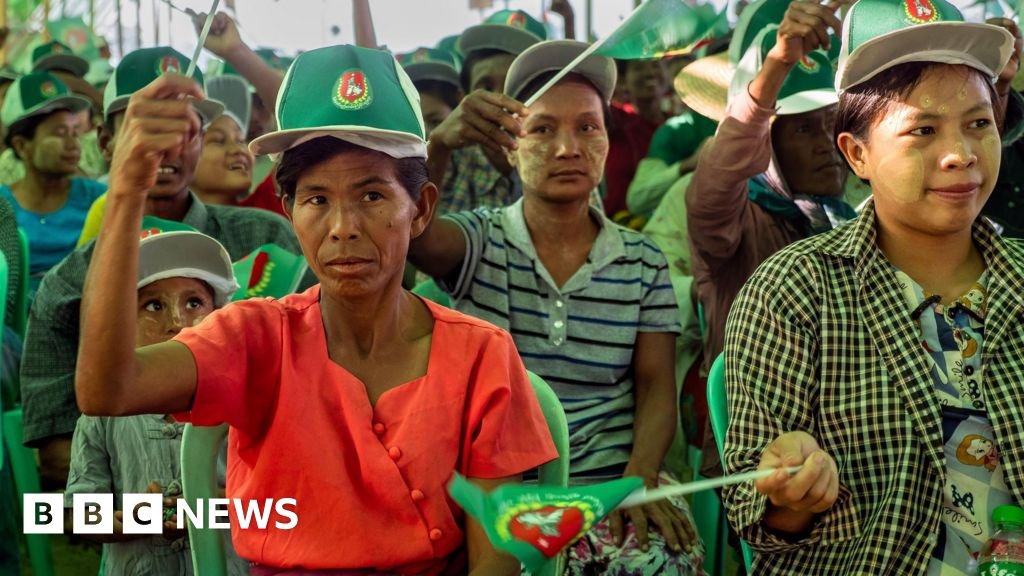
In Mandalay, Lieutenant-General Tayza Kyaw of the Union Solidarity and Development Party (USDP), the military-backed party, is rallying support. Speaking to a gathered crowd of 300-400 people, he attempted to instill hope by promising a better future. Yet, the audience, many suffering from the aftermath of a recent earthquake, struggled to remain attentive, with some dozing off under the sweltering sun.
As children played nearby and families waited for relief, many appeared disinterested in the political process. The imminent election, delayed numerous times by the ruling junta, failed to inspire confidence.
Election Viewed as a Farce
This election is already shrouded in controversy. The military has dissolved the popular National League for Democracy (NLD), silencing its leader, Aung San Suu Kyi, who remains imprisoned. The polling will occur in three phases over the next month but will exclude large parts of the country still reeling from violence. Fear and intimidation have overshadowed the voting environment, raising alarms about its legitimacy.
Locals expressed their apprehensions when approached for comment. A man at the rally explained that fear of repercussions kept many from speaking openly, a sentiment echoed on the streets of Mandalay. A market vendor even urged reporters to leave, fearing unwanted attention and trouble.
Only one woman dared to voice her opinion, meeting discreetly to share her thoughts. “This election is a lie,” she stated, highlighting the pervasive fear and hopelessness gripping the population. Although she resolved not to vote, she understood the risks associated with this decision.
A Repressive Climate
Recent legislation has criminalized expressions against the electoral process, and even minor infractions have led to severe penalties. A prominent activist, Tayzar San, among the first to call for a boycott, now faces charges under this harsh law, emphasizing the risks associated with dissent. Meanwhile, others found themselves sentenced to decades in prison for simply making political statements.
Posters urging citizens to “cooperate and crush” dissent loom large, reinforcing the oppressive atmosphere that stifles any semblance of political freedom.
Military Leadership’s Calculated Gambit
Despite the grim reality, junta leader Min Aung Hlaing is seemingly optimistic. He views this upcoming election, despite its significant limitations, as a pathway to legitimacy that has eluded him throughout his turbulent rule. Attending events that are starkly incongruous with his regime’s history of violence, he has condemned societal divisions while leading a government charged with heinous human rights abuses.
Supported diplomatically by China, the junta’s military is now equipped with advanced weaponry, regaining lost territories in an attempt to solidify control before the electoral stages unfold. As the USDP prepares for a much easier route to potential success, analysts warn of the bleak prospects for true democracy.
A Wounded Society
Beyond Mandalay, the considerable toll of civil war is painfully visible. Areas once thriving with tourism are now battlegrounds, with numerous checkpoints primarily controlled by armed resistance groups. This ongoing conflict complicates any earnest approach to the electoral process.
Residents remain entrenched in their positions, and reaching a consensus seems unattainable. The looming elections serve as a further reminder of a fractured political landscape and a population wearied by violence.
In the face of these challenges, many citizens feel compelled to cast their votes, motivated by fear rather than allegiance. “We will go to the polls,” expressed one woman, “but it won’t be with our hearts.”
- Upcoming elections in Myanmar are viewed by many as illegitimate and tainted by fear.
- The ruling military has dismantled key democratic institutions and criminalized dissent.
- Citizens express fear and apathy regarding the electoral process amid ongoing civil strife.
- Peaceful political discourse remains stifled under the oppressive regime, threatening democracy.