
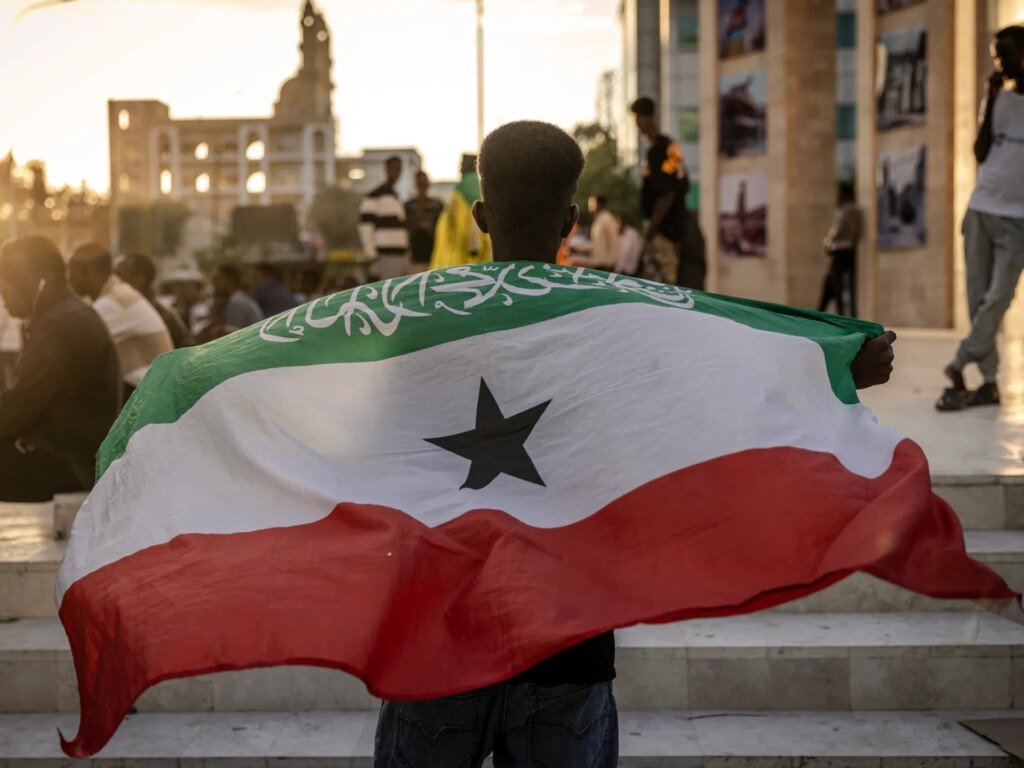
International Condemnation of Israel’s Recognition of Somaliland
Recent developments have sparked widespread outrage among various nations and regional organizations following Israel’s formal acknowledgment of Somaliland as an independent state. This recognition has incited strong disapproval from the Arab League, the Gulf Cooperation Council (GCC), and the African Union (AU).
The Background of Somaliland’s Declaration
Located in the Horn of Africa, Somaliland declared independence from Somalia in 1991 and has sought international recognition for many years. Since taking office last year, President Abdirahman Mohamed Abdullahi has prioritized this quest for legitimacy on the global stage.
Israel’s Controversial Declaration
On Friday, Israel announced that it considers Somaliland to be an “independent and sovereign state,” making it the first country to grant such recognition. This move quickly prompted a reaction from Somalia, which described the action as a “deliberate attack” on its sovereignty, likely to disrupt regional peace.
Responses from the African Union and Other Regional Blocs
In a statement, the AU strongly condemned Israel’s recognition, warning that it could set a “dangerous precedent” with far-reaching consequences for peace and stability across Africa. AU Commission Chair Mahmoud Ali Youssouf emphasized that Somaliland is an integral part of Somalia.
Statements from the Arab League and GCC
Ahmed Aboul Gheit, Secretary-General of the Arab League, characterized Israel’s recognition as a violation of international law and a blatant infringement on Somalia’s unity and sovereignty. He emphasized that unilateral recognitions are unacceptable and could threaten both regional and international security.
The GCC also denounced the recognition, labeling it a “grave violation” of international law and asserting that it compromises the stability of the Horn of Africa. Secretary-General Jasem Albudaiwi cautioned that this could lead to increased tensions and conflicts, contrary to ongoing efforts to promote peace.
Global Reactions and Condemnations
The European Union reaffirmed its respect for Somalia’s territorial integrity and urged dialogue between the Somali government and Somaliland. Additionally, foreign ministers from Somalia, Egypt, Turkiye, and Djibouti united in their condemnation of Israel’s move, reiterating their support for Somalia’s sovereignty.
Other nations, including Qatar, Iran, Saudi Arabia, Pakistan, China, and Nigeria, joined in the outcry, with organizations like the Palestinian Authority and Hamas also rejecting Israel’s recognition.
Somalia’s Official Demand
Somalia has since demanded that Israel rescind its recognition of Somaliland, deeming the action an “unacceptable aggression.” In contrast, Somaliland’s leader hailed the announcement as a “historic moment,” suggesting it could lead to a new strategic partnership with Israel.
Conflict Warnings and Local Reactions
Adding to the tension, the al-Qaeda-linked militia al-Shabab vowed to resist any attempts by Israel to assert control over Somaliland. Their statement underscored the ongoing strife in the region and emphasized their commitment to combatting perceived encroachments.
Conclusion
The international reaction to Israel’s recognition of Somaliland highlights the complexities of regional politics and sovereignty issues. While Somaliland views this as a significant milestone, reactions from Somalia and other nations underscore the potential for escalating tensions in the Horn of Africa.
Key Takeaways
- Israel’s formal recognition of Somaliland as independent has faced widespread condemnation.
- Regional organizations like the AU and GCC argue this move undermines international law and Somalia’s sovereignty.
- Somalia demands retraction of Israel’s recognition, while Somaliland promotes it as a historic partnership.
- Al-Shabab pledges to resist any Israeli claims over the region, indicating ongoing local tensions.