
The Fight for Justice: The Disappearance of Raymond Koh
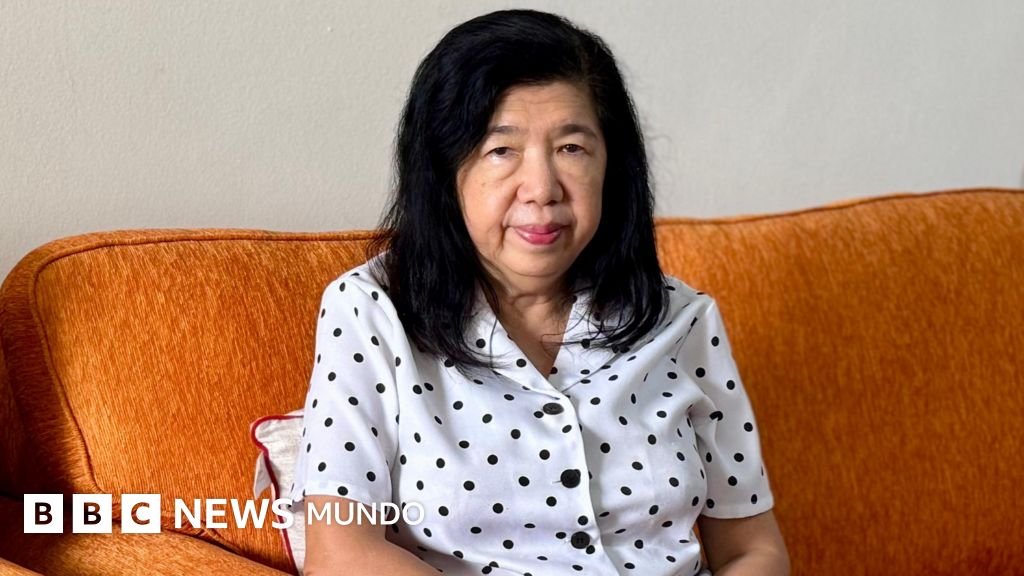
Susanna Liew has spent nearly a decade searching for answers about what happened to her husband, Raymond Koh. Last month, she appeared in front of the camera at the Kuala Lumpur High Court to describe the moment as a “historic and deeply emotional milestone.” At 69, Liew’s voice quivered as she shared, “Today… the High Court has delivered a ruling on what we’ve always believed: that Pastor Raymond Koh was a victim of grave injustice.” This landmark legal victory is significant in a case that has become one of Malaysia’s biggest mysteries.
Nine years earlier, her husband was abducted in broad daylight by masked men. The kidnapping was recorded on surveillance footage and shocked the nation for years. The High Court concluded that an elite special police unit had taken Raymond Koh and held both the police and the Malaysian government accountable for the country’s first forced disappearance case examined in court.
The Ongoing Struggle for Truth
For years, Liew has fought to uncover the fate of her husband, transforming herself from a quiet pastor’s wife into a fierce activist. While she may never know the exact reasons behind his abduction, two separate official investigations established that authorities viewed Koh as a threat to Islam, the predominant religion in Malaysia.
“A voice inside me said: ‘They took him in secret, but I will make sure everyone knows,'” Liew told the BBC shortly after her courtroom triumph.
The Shocking Abduction
On February 13, 2017, just after 10 a.m., Koh was on his way to meet friends when chaos struck. As he left his home in a quiet Kuala Lumpur suburb, a convoy of SUVs and motorcycles approached his vehicle. Masked men in black emerged, forcibly pulling Koh out through a car window as shards of glass flew. They shoved him into one of their vehicles, driving off with both him and his car.
The audacity of the abduction was such that a witness who was driving behind Koh initially thought it was a film shoot. In the following days, Koh’s children went door-to-door seeking clues about their father’s disappearance and discovered that surveillance cameras had captured the entire ordeal. Upon reviewing the footage, it became evident that this was no random kidnapping—it was executed with precision and planning. No ransom note was ever received, nor did they hear from the kidnappers.
Another Alarming Case
In a chilling parallel, just months before Koh’s abduction, an activist named Amri Che Mat was abducted under similar circumstances. Koh’s family took their story to the media, and images from the surveillance footage quickly went viral. This sparked public outrage, prompting Malaysia’s independent human rights commission to initiate its own investigation, later followed by a governmental inquiry.
Speculation swirled around the special police unit’s involvement, although authorities denied any connection, with the police chief urging the public to refrain from speculation to facilitate a smooth investigation. Subsequent claims from the police suggested that Koh was kidnapped by a drug trafficking ring, and an Uber driver was arrested in connection, but those charges were eventually dropped and deemed implausible by the Human Rights Commission’s final report.
The Impact on the Family
The disappearance has taken a severe toll on Koh’s family. Liew resorted to selling handmade jewelry to make ends meet while relying on savings and donations to pay for her younger daughter’s university education. She had hoped for compassion from the police, but the night she reported her husband missing, she was interrogated for five hours about whether Koh had tried to convert Muslims to Christianity.
“I was traumatized,” she recounted.
During later hearings, it became clear that the interrogator had been directed to pursue this line of questioning because Koh was a pastor. In 2011, Koh faced accusations of apostasy for organizing a church event attended by some Muslims, though authorities did not pursue any punishment.
Throughout the years following Koh’s disappearance, Liew sensed a lack of transparency from the police’s investigations, often feeling obstructed in her quest for truth and misled by false leads. The family’s long-standing view has been that police theories were attempts at deflection, aimed at covering their role in the abduction.
A Breakthrough in the Case
In May 2018, a key development emerged when a man presented himself at the home of Norhayati, Amri’s wife. He claimed to be a police sergeant and revealed alarming details: a special police brigade was behind the abductions of both her husband and Raymond Koh, alleging that authorities believed Koh was attempting to convert Muslims, while Amri was spreading Shiism, which is banned in Malaysia. This confession was later deemed credible by the Human Rights Commission despite the sergeant later denying it.
One witness also recalled seeing a distinctive golden Toyota Vios linked to both kidnappings. Investigators traced the vehicle to an individual working for the special police unit. In April 2019, the Commission concluded that this unit was culpable for both abductions, stating they were targeted due to alleged actions against Islam.
Seeking Justice
The findings shocked the Malaysian public, leading to calls for accountability. In the months that followed, the government undertook its investigation, which mirrored the Commission’s conclusions, pointing to “irresponsible corrupt officials.” The investigation fell on a high-ranking officer, Awaludin bin Jadid, who previously led the unit assigned to combat social extremism.
The report stated he harbored “extremist views” against both Shiism and Christianity.
In 2020, Liew filed a civil lawsuit against senior police officials, the Royal Malaysian Police, and the Malaysian government for the enforced disappearance of her husband and demanded accountability regarding his whereabouts. Recently, the High Court ruled that among the named police officers and the Royal Malaysian Police, “one or more” were liable for Koh’s abduction and a “conspiracy that caused harm.” The court found the government indirectly responsible as they acted under state authority.
The judge awarded Liew several million ringgits for emotional distress and ordered a daily compensation of approximately $2,385 for each day of Koh’s disappearance until his whereabouts are disclosed, which has already accumulated to over $7 million. This sum is expected to be the largest payout in Malaysia’s history, intended for Liew and her children upon Koh’s discovery.
A Hope for Closure
While Norhayati also won her case with a substantial settlement, the government is appealing these decisions, citing “financial obligations” and advocating for “universal justice.” They claim that investigations into the kidnappings are ongoing.
“We are frozen in mourning,” Liew expressed, highlighting the emotional toll of not knowing her husband’s fate.
She wishes for the government to drop the appeal, telling the BBC, “I would feel so tired if I had to go through this all again.” The family struggles with the uncertainty, feeling trapped in a state of grief. “If we knew he were dead and had his body, at least we could bury him and move on. But right now, we are in limbo. We don’t know if he is alive or dead; it takes a huge toll on us,” she elaborated.
Finding Strength in Struggle
Despite the emotional hurdles, time has offered some healing. Inspired by support during her struggles with depression, Liew has trained as a counselor. Sharing her story has served as a “catharsis,” and throughout the years, she transformed into a vocal critic of forced disappearances while traveling worldwide to raise awareness about her husband’s case. In 2020, she received the International Women of Courage Award from the United States.
“I never imagined reaching this point. Eight years ago, I was just a housewife, a quiet person,” she reflected.
On a personal level, Liew has also reached a turning point—she has forgiven those she believes abducted her spouse. During the trial, upon feeling anger towards the defendants, she realized that, when face-to-face with the main suspect, she felt no hatred.
“I want to be truly fair and pure in front of God, without any shadows or darkness in my life,” she stated.
A Call for Action
Yet, forgiveness does not equate to abandoning her quest for justice. She urges authorities to establish a disciplinary body to oversee police conduct and a dedicated task force to track down all involved in her husband’s abduction. To date, none of the named police officers in her lawsuit have faced arrest or repercussions, and one has even received a promotion.
“What we truly want is for truth and justice to prevail, for those responsible to be held accountable, and for us to find closure in this case,” she remarked. “We need to know where Pastor Raymond is.”
Conclusion
The harrowing journey of Susanna Liew exemplifies a relentless pursuit of truth amid profound loss and injustice. While she and her family continue to navigate their grief, their fight embodies resilience and hope for accountability in the face of adversity.
Key Takeaways
- Susanna Liew has spent nearly a decade seeking justice for her husband, Raymond Koh, who was abducted in 2017.
- The High Court ruled that an elite police unit was responsible for Koh’s kidnapping, marking a vital victory in Malaysia’s legal history.
- Liew and her family have struggled with the emotional fallout of the disappearance, advocating for transparency and justice.
- The case underscores the need for systemic changes to ensure accountability and protections against enforced disappearances.