
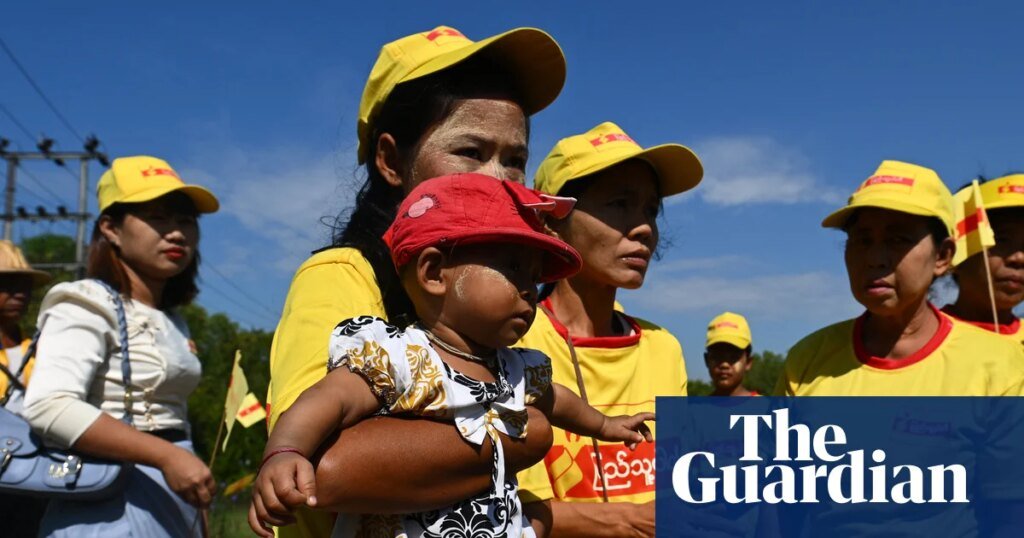
Myanmar’s Upcoming Elections: A Return to Democracy or a Sham?
As Myanmar prepares to hold its first national elections since a military coup five years ago, the nation finds itself at a crossroads. While the ruling junta claims these elections symbolize a return to democracy, many view the tightly controlled process as a facade aimed at solidifying military power. Voting begins this week, with several phases scheduled, amidst ongoing civil unrest.
Election Schedule and Logistics
The elections, scheduled in three phases, will commence at 6 AM on December 28. This first round encompasses over 100 townships, including the commercial hub of Yangon. Following this, another 100 locations will engage in voting on January 11, and the final round is set for January 25.
Who is Running?
Voters will see 57 parties listed on the ballot, yet most are perceived to be affiliated with or loyal to the military. Among them, only six parties are competing nationally, while the remainder are limited to specific states or regions. The military-backed Union Solidarity and Development Party leads in candidate nominations, effectively contesting numerous seats without opposition.
In stark contrast, Aung San Suu Kyi’s party, the National League for Democracy (NLD), which achieved a resounding victory in the 2020 elections before the coup, will not participate. The NLD was dissolved after it declined to register with the junta’s Union Election Commission, an unprecedented act that also impacted many regional ethnic parties.
According to the election monitoring organization Anfrel, a staggering 57% of parties that participated in 2020 have now been disbanded despite garnering over 70% of votes and securing 90% of seats back then.
Are the Elections Free and Fair?
International observers, including several nations and human rights advocates, have labeled the forthcoming elections a sham intended to uphold the current military regime. Despite claims from the junta of public support, these elections unfold against the backdrop of ongoing civil conflict and violent repression.
Voting will not occur in areas under rebel control, which comprise significant portions of the nation. The junta has arrested over 200 individuals for violating strict regulations against any form of protest or dissent related to the elections. People found guilty of such offenses face penalties ranging from three-year prison sentences to potential death sentences.
The military leadership, however, has dismissed outside criticism, asserting their commitment to achieving a multi-party democratic system despite the national and international backlash.
International Responses
China, Myanmar’s leading ally, has expressed support for the junta and its electoral process, interpreting the elections as a pathway to stabilization. In contrast, many Western countries reject the legitimacy of the upcoming vote. UN human rights chief Volker Türk condemned the elections, stating they occur amidst considerable violence and insistence on compliance through threats.
U.S. Secretary of State Marco Rubio has mentioned that the U.S. is still determining its approach regarding Myanmar, having previously condemned the junta while lifting sanctions earlier this year. The U.S. Department of Homeland Security even cited emerging governance improvements in its rationale for ceasing temporary protected statuses for Myanmar nationals, an assertion strongly contested by rights groups.
Aung San Suu Kyi: A Shadow Over the Elections
The absence of Aung San Suu Kyi, Myanmar’s former leader currently in military detention, adds a complex layer to this election. While her government faced criticism for its handling of the Rohingya crisis, she remains a symbol of democracy for many citizens. Her absence from the electoral process is seen as a glaring indication that these elections lack legitimacy.
Currently serving a 27-year sentence for various offenses deemed politically motivated, Suu Kyi has been mostly out of public view since her arrest, raising concerns about her health among family and supporters. Her son, Kim Aris, stated from Britain that he doubts she would consider these elections meaningful in any context.
Conclusion
As Myanmar gears up for its national elections, the atmosphere is fraught with tension and skepticism. While the junta promotes the event as a step towards democracy, the realities of repression and civil strife cast a long shadow over the legitimacy of the process. The international community’s scrutiny will undoubtedly continue as these developments unfold.
- Myanmar’s national elections are set to begin after five years of military rule.
- The process has been criticized as a sham, favoring military interests.
- Aung San Suu Kyi’s party will not participate, highlighting the elections’ lack of legitimacy.
- International responses vary, with China supporting the junta while many Western nations criticize the election conditions.