
Investigation Underway for Fatal Jet Crash in Turkey
In a shocking incident near Ankara, a private jet crash has claimed the lives of Libya’s army chief, Mohammed Ali Ahmed al-Haddad, along with seven others. Turkish and Libyan authorities have now launched a comprehensive investigation to uncover the details surrounding this tragedy. The inquiry, spearheaded by the Ankara Chief Public Prosecutor’s Office, is delving into technical evidence, flight recordings, crew actions, and aircraft maintenance records.
The Investigation’s Focus
Officials have revealed that the French civil aviation investigations agency, BEA, will also take part in the examination. On the day of the crash, General al-Haddad was visiting Ankara for discussions with the Turkish Chief of Staff, Selcuk Bayraktaroglu, and Defence Minister Yasar Guler. The French-made Dassault Falcon 50 had departed from Ankara Esenboga Airport at 2:17 PM and reported an electrical malfunction just 16 minutes into its flight. It requested an emergency return, but radar contact was lost shortly after, around 2:41 PM, as the aircraft was trying to land, leaving only a two-minute window between the emergency notification and the crash.
Details of the Crash Site and Recovery Efforts
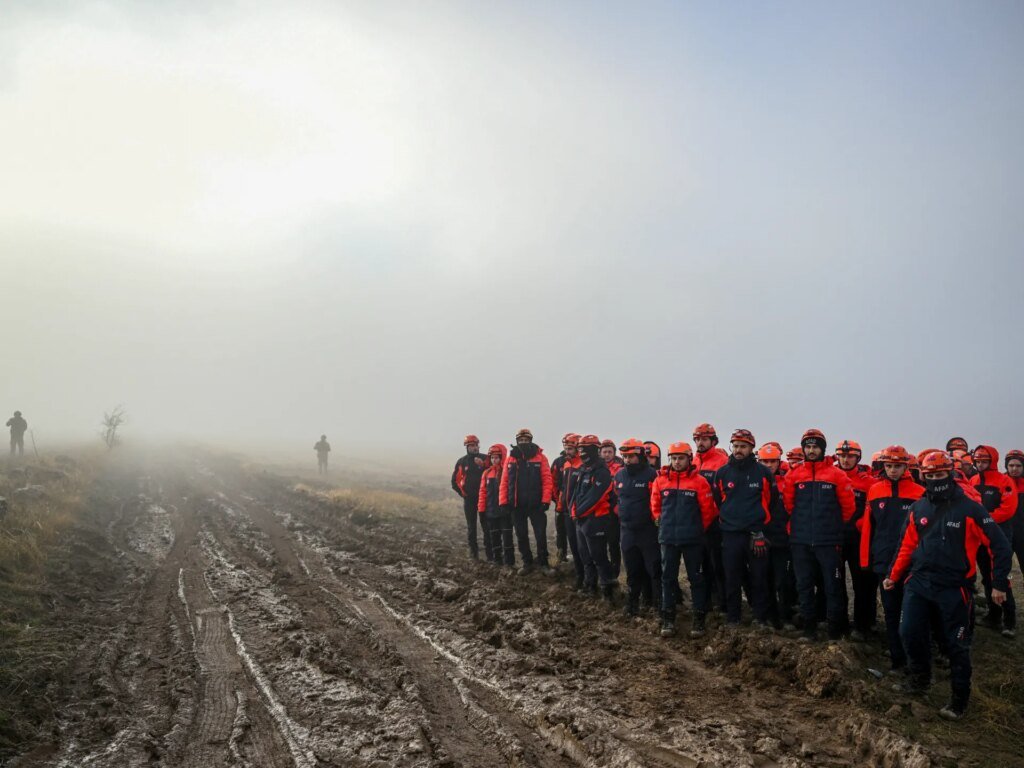
The meticulous forensic examination of the bodies of General al-Haddad and his military colleagues was completed by early Saturday, allowing for their repatriation to Libya after a respectful ceremony at an Ankara airbase. The crash site, located near Kesikkavak village in the Haymana district—approximately 70 kilometers south of the capital—has been sealed off by the Turkish security forces. Authorities have secured all wreckage, including the crucial cockpit voice recorder and flight data recorder, commonly referred to as the “black boxes.” These have been sent for detailed analysis.
Aspects Under Scrutiny
The ongoing investigation is extensive; experts are reviewing air traffic control recordings, radar information, and footage from security cameras at the airport. Additionally, communication logs between the pilots and control tower are under inspection, alongside the crew’s rest logs, medical histories, and any intake of food or medication prior to the flight. Aircraft maintenance records and documentation from the latest safety checks are also being evaluated for possible technical oversights. Fuel samples from the wreckage and the airport tanks have been collected to eliminate the potential for contamination or incorrect fuel usage. Local weather information at the time of the crash has also been requested.
International Implications of the Case
Gursel Tokmakoglu, a former leader of Turkish air force intelligence, emphasized that this incident should be viewed in an international context due to the various stakeholders involved. “The Libyan government chartered an aircraft from a foreign country, the plane itself was made elsewhere, and the pilots were from another nation, while the passengers were Libyan and the crash happened in Turkiye,” he explained. He further pointed out the roles of insurance companies and international aviation agencies, calling it a multinational event.
Turkish Transport Minister Abdulkadir Uraloglu noted that there’s a possibility of sending the black boxes abroad for enhanced analysis, prompting questions about the feasibility of conducting this crucial analysis within Turkey or Libya. Tokmakoglu stated that the examination of the black boxes could either be done domestically or sent to an external agency for assessment, highlighting the value of transparency given the international elements involved.
Preliminary Findings and Future Steps
Initial findings indicate that the aircraft signaled an emergency situation by transmitting the 7700 squawk code, while the crew reported electrical issues. However, aviation analysts caution against prematurely concluding that this malfunction directly caused the crash. “In aviation, one failure can lead to other complications,” Tokmakoglu explained, comparing it to a medical scenario where a heart patient may succumb to complications from an unrelated issue.
Guntay Simsek, an aviation industry analyst, noted there is no evidence currently to suggest that an external factor such as an explosion contributed to the crash. He emphasized that it is standard practice to commence investigations immediately following an incident, aligning with ICAO regulations that mandate a preliminary report within 30 days and a final report within a year.
Conclusion
The tragic crash of the private jet near Ankara has raised numerous questions and sparked an extensive investigation involving multiple countries. As authorities work diligently to piece together the circumstances of this incident, the focus remains on ensuring thorough examination and transparency in the findings. The outcomes of this inquiry are awaited not just by those affected but also by various international aviation stakeholders.
- The crash of a private jet near Ankara killed Libya’s army chief and seven others.
- Investigations are being led by Turkish authorities with participation from international agencies.
- The focus includes technical analysis, crew activities, and maintenance records.
- Initial evidence points towards an electrical malfunction, but conclusions are premature.