
Guinea’s Pivotal Presidential Election: A Nation at a Crossroads
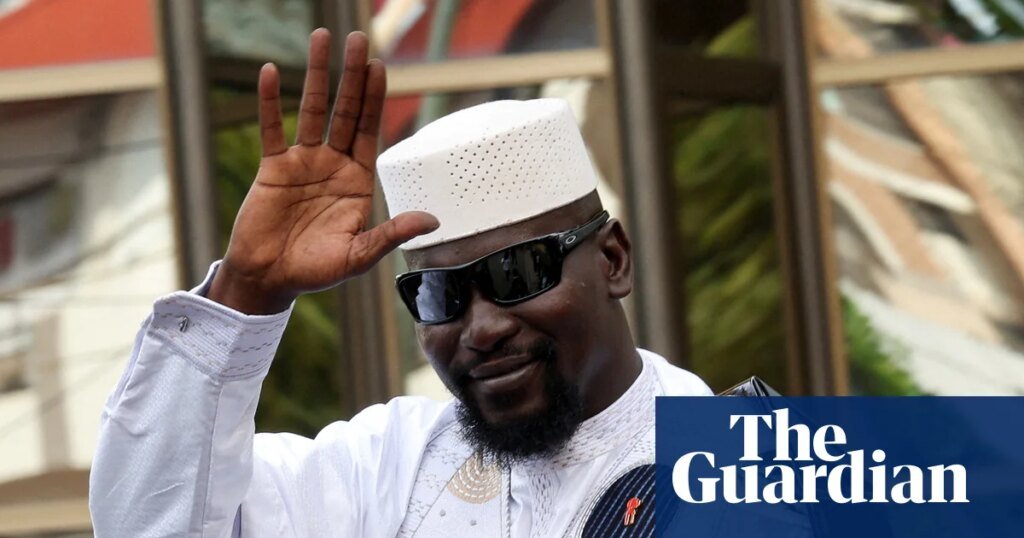
In September 2021, a young Guinean army colonel made headlines by announcing a military coup that ousted the long-standing president, Alpha Condé. Mamady Doumbouya declared in his address that “the will of the strongest has always supplanted the law,” emphasizing that the military was stepping in to fulfill the people’s wishes. Following the coup, Doumbouya outlined a 36-month timeline for transitioning back to civilian rule, ignoring calls for rapid democratic restoration from the Economic Community of West African States (Ecowas). This move sparked significant protests and criticism from opposition groups, many of whom were skeptical about his promise not to run for office himself.
The Upcoming Presidential Election
This Sunday, approximately 6.7 million eligible voters in Guinea will participate in the first presidential election following the 2021 coup. Among the nine candidates vying for the presidency are former government minister Abdoulaye Yéro Baldé, representing the Democratic Front of Guinea, and Faya Millimono from the Liberal Bloc party, a former supporter of the junta who has since become a critic.
The Frontrunner Emerges
Due to a contentious referendum in September that facilitated his candidacy and expanded presidential terms from five to seven years, Doumbouya enters the election as the leading contender. The opposition coalition, Forces vives de Guinée, has condemned his candidacy as a betrayal of democratic principles, stating, “The man who presented himself as the restorer of democracy chose to become its gravedigger,” after he formally announced his intention to run.
A Region in Turmoil
Political instability has become a hallmark of West Africa, which has been labeled a “coup belt” following multiple successful coups since 2020. While Guinea remains associated with Ecowas, other juntas in Burkina Faso, Mali, and Niger, frustrated by post-coup sanctions, have distanced themselves from the regional body to form the pro-Russian Alliance of Sahel States. If Guinea’s election proceeds, it will mark the first democratic process in the junta-led nations since 2020.
Public Sentiment and Election Dynamics
Within Guinea, many observers believe Doumbouya’s victory is almost certain, particularly given his consolidation of power and promotion to general since he took office. The political landscape is strikingly defined not just by the candidates on the ballot, but also by those absent from it. Major opposition parties are currently suspended, their leading figures either imprisoned, barred from running, or, like the former prime minister Cellou Dalein Diallo of the Union of Democratic Forces of Guinea, living in exile.
Reports indicate that fear permeates the nation as the junta intensifies its crackdown on dissent, leading to a number of political opponents being jailed. In a surprising move, Doumbouya pardoned former dictator Moussa Dadis Camara, who was serving a 20-year sentence for his involvement in a significant human rights violation: the 2009 massacre of protesters in Conakry. This pardon, granted just before the final court hearing, led various human rights organizations and victims’ families to appeal to Doumbouya to reconsider his decision, a request that remains unanswered.
Looking Ahead: The Stakes of the Election
As the election approaches, Doumbouya has worked to build public goodwill. The recent inauguration of the Simandou mine—home to the largest untapped iron ore reserves worldwide—marks a significant development after nearly 30 years of delays caused by political instability and corruption. His administration is promoting the mine as a pathway to economic prosperity, despite ongoing complaints about environmental impacts and job losses.
The stakes couldn’t be higher in the upcoming election. The multi-layered Simandou project, which involves constructing ports and a railway, is anticipated to revitalize Guinea’s economy, where half the population struggles to survive on less than $2 per day. As concerns about transparency loom, many are keenly observing how the victorious party will act post-election.
Conclusion
As Guinea stands on the brink of a pivotal presidential election, the nation grapples with deep-rooted issues of power, democracy, and human rights. The outcome will be crucial not only for the future of its governance but also for its economic stability as it seeks to emerge from recent turmoil.
- Guinea’s election is the first since the military coup in 2021.
- Colonel Mamady Doumbouya, the coup leader, has emerged as the frontrunner following a controversial referendum.
- The political climate continues to be challenging, with major opposition parties sidelined.
- The outcome of the election will significantly impact Guinea’s economic prospects and democratic future.