
Urgent Call for Ceasefire Amid Escalating Violence in Sudan
The ongoing civil war in Sudan has reached harrowing levels, prompting United Nations Secretary-General Antonio Guterres to urgently request a ceasefire. This conflict has now evolved into what the UN describes as the world’s most severe humanitarian crisis, necessitating immediate action to alleviate the suffering of millions.
The Conflict’s Background
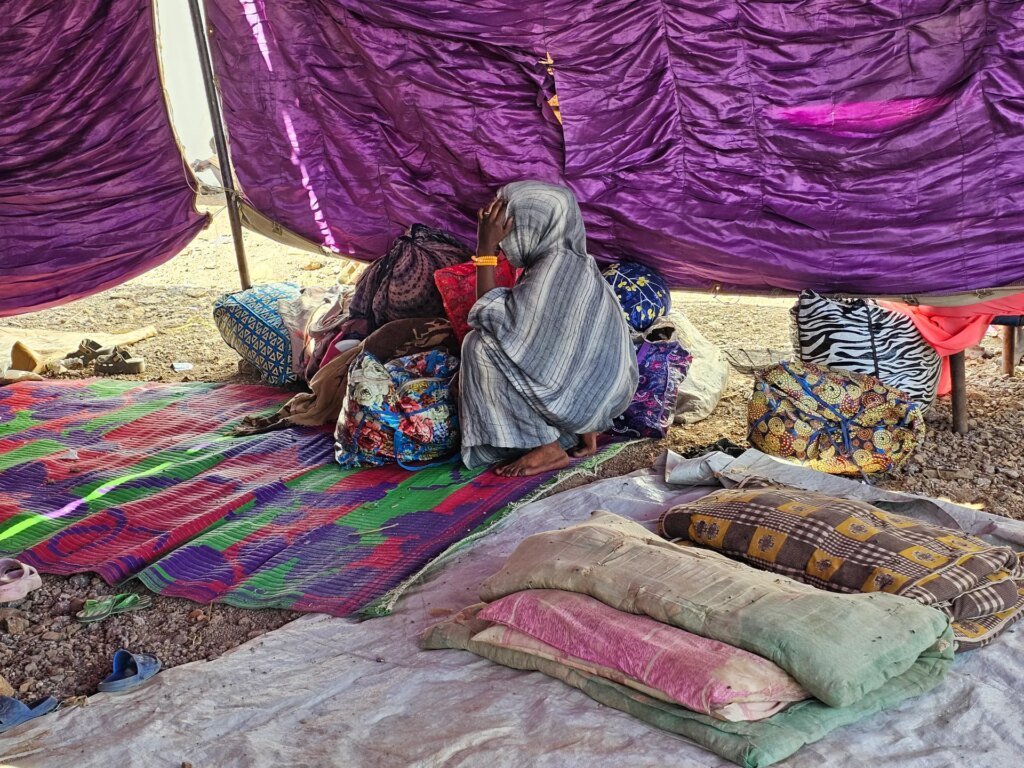
Sparking into violence in April 2023, the war began as a power struggle between the Sudanese army and the paramilitary group known as the Rapid Support Forces (RSF). Since then, the consequences have been catastrophic: approximately 9.6 million people have been internally displaced, while 4.3 million have fled to neighboring countries. Currently, around 30.4 million Sudanese require humanitarian aid, according to UN estimates.
Recent Developments
Secretary-General Guterres made his appeal for a ceasefire on Friday, shortly after Sudan’s Prime Minister Kamil Idris presented a peace initiative to the UN Security Council. This initiative included a request for the RSF to disarm, but the group dismissed the plan as nothing more than “wishful thinking.”
Intensifying Hostilities
During a recent briefing, UN Assistant Secretary-General Mohamed Khaled Khiari noted that expectations of further hostilities during the dry season are materializing. He conveyed the gravity of the situation, stating, “Each passing day brings staggering levels of violence and destruction.” Civilians are subjected to unbearable conditions, with no solution in sight.
Shifts in the Conflict’s Landscape
Recently, the violence has shifted its focus to the central Kordofan region, where the RSF took control of the crucial Heglig oilfield on December 8. This situation has led South Sudanese forces to enter Sudan to safeguard their infrastructure, indicating the conflict’s increasingly intricate regional implications.
The Threat to Civilians
The RSF is intensifying efforts to establish full control over North Darfur state, especially in the Dar Zaghawa region near the Chad border. Their recent offensive jeopardizes the last escape routes for civilians attempting to flee into Chad.
Regional Implications
The violence has spilled over into neighboring countries, evidenced by a recent drone strike in Chad that killed two soldiers at a military installation near the border town of Tine. A Chadian military intelligence officer reported that the drone originated from Sudan, but it remains unclear whether it was deployed by the army or the RSF. In response, Chad has heightened its air force alert status and has issued a warning of potential retaliation if the strike is confirmed to be intentional.
Humanitarian Efforts
Despite the escalation in conflict, the UN made a significant breakthrough, managing to conduct its first assessment mission in el-Fasher since the city fell under RSF control. UN Humanitarian Coordinator Denise Brown noted that the assessment highlighted the dire conditions following months of intense fighting and widespread violations against civilians and aid workers. “Hundreds of thousands have been forced to flee el-Fasher and its surrounding areas,” she added.
International Response
A recent report from Yale University has shed light on the systematic mass killings conducted by the RSF in el-Fasher, with satellite images providing evidence of mass burials and destruction. US Secretary of State Marco Rubio has labeled the situation as “horrifying” and “atrocious,” expressing concern that the true story of the conflict will ultimately reflect poorly on those involved.
Peace Initiatives
Prime Minister Idris’s peace proposal included an immediate ceasefire monitored by the UN and the complete withdrawal of the RSF from the approximately 40 percent of Sudan they currently control. However, an advisor to RSF leader Mohamed Hamdan “Hemedti” Dagalo dismissed this initiative as “closer to fantasy than to politics.” Following his return to Port Sudan, Idris reiterated a strong stance against international peacekeeping forces, citing Sudan’s past experiences.
Conclusion
As the crisis in Sudan continues to unfold, the need for an urgent ceasefire grows increasingly critical. The international community’s response and regional dynamics will play vital roles in shaping the future of a nation in desperate need of peace.
- The UN seeks an immediate ceasefire amid the worsening humanitarian situation in Sudan.
- Over 30 million Sudanese are currently in need of humanitarian assistance.
- The conflict has seen a significant shift to central Kordofan, endangering civilian escape routes.
- International responses continue to evolve, with major implications for regional stability.