
Myanmar’s Upcoming Elections: A Controversial Vote Amid Ongoing Conflict
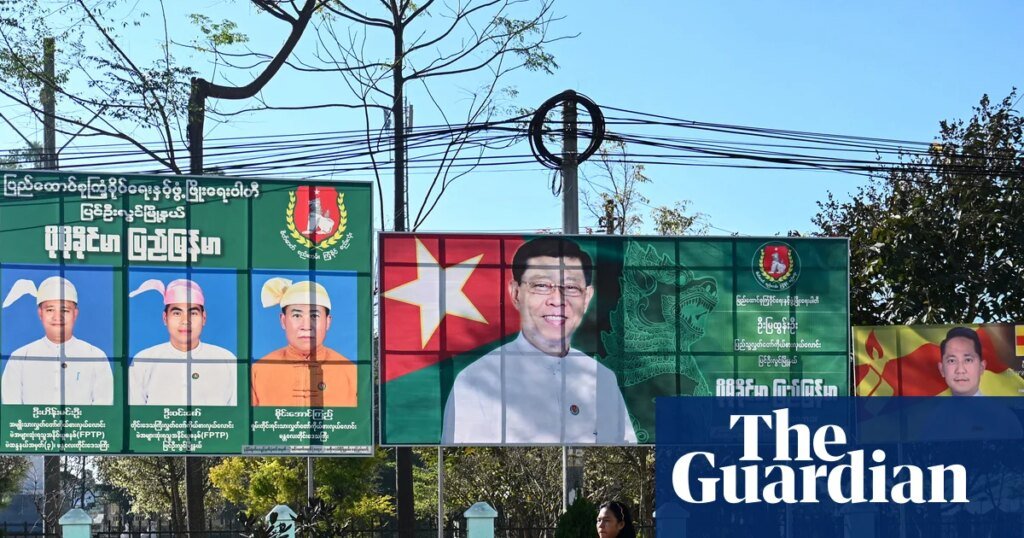
Myanmar is gearing up for its first elections since a military coup in 2021. As political turmoil continues, the credibility of the elections scheduled for December 28 has come into question, particularly with the former leader imprisoned and the country divided between contested areas and rebel control. Few observers foresee these elections being anything but a means for the military to reinforce its power.
“This is not for the people, this is for themselves,” expressed Pai, a 25-year-old who left Myanmar after the military takeover. “The ruling junta is just trying to find a way to escape the trap they are in.”
As election day approaches, the military hopes this vote will legitimize its rule and help mend its reputation as an international outcast.
The junta has rebutted accusations of coercion surrounding the elections, claiming it enjoys public support. According to junta spokesperson Zaw Min Tun, “The election is being conducted for the people of Myanmar, not for the international community. Whether the international community is satisfied or not is irrelevant.”
While many Western governments and the United Nations have labeled the vote a facade, China, a key ally of the junta, is backing the elections as a path to restoring stability in Myanmar.
Recent analysis indicates that the level of conflict in Myanmar has surged over the past year. Data shows a roughly 30% increase in military air and drone strikes compared to the previous year, affecting vital community infrastructure such as schools and medical facilities. A recent military strike on a hospital in Rakhine State resulted in multiple casualties, adding to fears surrounding the humanitarian crisis in rebel-held areas.
With increasing desperation, the military has intensified efforts to bolster its ranks, leading to a 26% rise in forced conscription-related abductions this year. Many young people have fled military-controlled urban centers to avoid being conscripted.
Accusations of ‘Sham Elections’
The junta’s intense paranoia has led to the enactment of a new election protection law making any criticism of the elections liable to severe penalties, including lengthy prison sentences or even the death penalty. Since July, more than 200 individuals have been arrested for merely expressing dissent, often on social media. Witnesses in cities like Yangon report officials conducting door-to-door visits to ensure compliance with voting mandates, leaving residents with little choice but to adhere.
“Everyone knows just how ruthless this military is and that they will continue to be. Anyone perceived as opposing the junta’s sham election is at significant risk,” warned Khin Ohmar, a pro-democracy activist currently in exile.
Though 57 parties are listed on the election ballot, many are viewed as military-affiliated or dependent on the junta, providing only the illusion of democratic choice. Only six parties are campaigning on a national level, the most notable being the junta-supported Union Solidarity and Development Party, which appears to run unchallenged in many areas.
Aung San Suu Kyi’s party, the National League for Democracy, which won a stunning victory in the 2020 elections, was dissolved after declining to register with the junta’s Union Election Commission. This has led to the dissolution of numerous ethnic parties as well, with reports indicating that over half of the parties that participated in the previous elections no longer exist, despite their popularity.
A significant portion of the country will be excluded from this election, illustrating the ground the junta has lost since the coup. The military has announced no voting will occur in 56 out of 330 townships, with another 3,000 wards and village tracts also sidelined, implying that approximately one-third of the country will not participate in the upcoming polls.
Intense fighting has forced communities to take up arms against military brutality, compelling the formation of popular defense forces alongside established ethnic groups previously fighting for independence. Despite relentless violence, including airstrikes that have been labeled possible war crimes, the military has lost substantial territory.
Support from China has proved critical for the junta, allowing it to regain some ground. The Chinese government, seeking to maintain regional stability, has even curbed support to some of the military’s toughest adversaries, easing the junta’s operational difficulties.
In preparation for the elections, military actions have ramped up significantly, suggesting that the fight for territory will continue unabated even after the vote. Analysts predict that while the junta may pursue temporary ceasefires with specific factions, these agreements are likely to be strategic maneuvers rather than signs of a softening approach.
As Richard Horsey, a senior Myanmar advisor at the Crisis Group, states, “They are determined to continue pressing their advantage and reclaim as much territory as possible lost since the coup. This isn’t about shifting to a more gentle governance.”
- Myanmar’s upcoming election raises concerns of legitimacy amidst ongoing conflict.
- The junta faces accusations of conducting a “sham election” to reinforce its power.
- A large portion of the country will be excluded from voting, indicating significant territorial losses.
- Continued military actions suggest that the conflict will persist beyond election day.