
Challenges in the Used Electric Vehicle Market
As the interest in electric vehicles (EVs) continues to grow, concerns about depreciation and the resale market quality are becoming increasingly significant. This article explores the issues related to EV depreciation and the challenges faced by consumers in the second-hand marketplace.
High Depreciation Rates
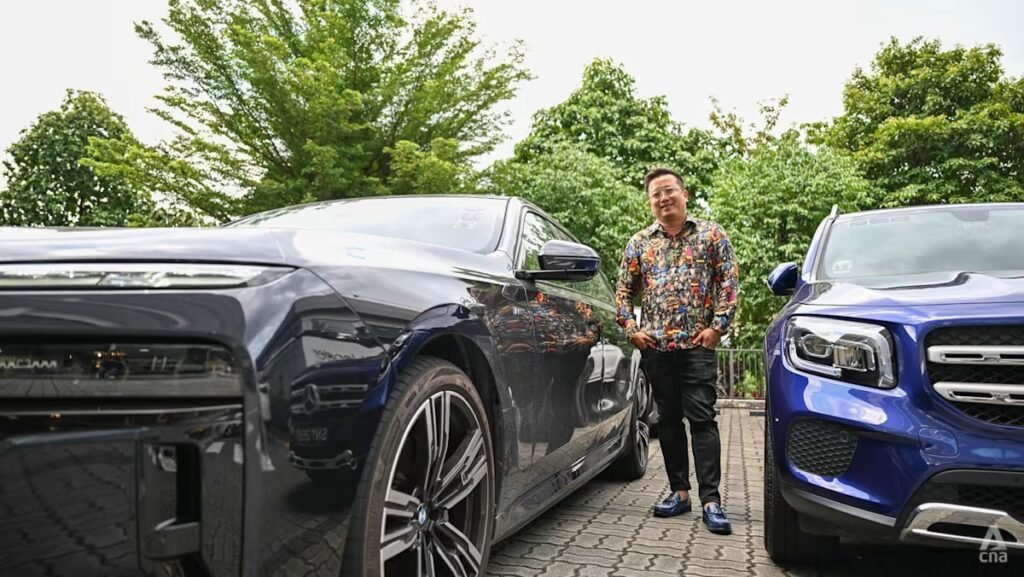
One of the pressing concerns highlighted by dealers is the high rate of depreciation associated with used EVs. Typically, these vehicles can lose up to 40% of their value, a stark contrast to the roughly 10% depreciation seen with traditional internal combustion engine (ICE) vehicles. Mr. Lee noted a trend where many consumers treat EVs similarly to consumer electronics, often eager to upgrade whenever a newer model with enhanced range and features becomes available.
“People are inclined to opt for the latest model. This leads to older versions saturating the market,” he stated.
The Immature Resale Market
Second-hand platforms, such as Sgcarmart, echo these concerns, revealing that EVs typically take about one-third longer to sell than conventional cars. Out of around 15,000 car listings, only about 900 are electric vehicles, making up approximately 6% of the inventory.
Desmond Chan, the platform’s editorial manager, pointed out that many potential buyers are hesitant due to uncertainties regarding EV maintenance and long-term reliability. “There are still questions about maintenance—specifically whether there are ample workshops capable of servicing electric vehicles should issues arise,” he explained.
He further noted that the resale market is still in its infancy. Most EVs currently available are only two to three years old, which corresponds with the period when a significant number of electric cars were introduced. “Understandably, there are many unknowns—such as what the residual value of these cars will be and how well they will perform over time. Currently, no one has clear answers,” Chan added.
However, he believes that as the years pass and more data become available, consumer demand for used EVs will gradually increase alongside an evolving vehicle market.
Looking Ahead
Analyst Walter Theseira emphasized the importance of the resale market for budget-conscious buyers, especially given the high costs associated with Certificate of Entitlement (COE) premiums. Meanwhile, prices for new EVs are expected to decrease due to lower supply chain costs, particularly for models produced in China.
“When weighing the choice between a new EV and a used one, buyers may find that newer models come at competitive prices and possess more advanced features compared to second-hand options from a few years ago,” stated Theseira, who is also an associate professor at the Singapore University of Social Sciences’ School of Business.
In the long term, he indicated that the rate of technological evolution in EVs is starting to stabilize, which could lead to more predictable resale values. “Any EV you purchase today will certainly outperform an EV from a decade ago. However, it’s less certain that it would surpass one from just five years back,” Theseira noted.
This gradual shift could provide reassurance to current EV buyers concerning future resale values.
- Used EVs can depreciate up to 40%, much higher than traditional vehicles.
- The resale market for EVs is still developing, with only 6% of listings being electric vehicles.
- Consumer uncertainty around EV maintenance impacts resale speed and value.
- Future stability in resale values may be achievable as technological changes slow down.