
The Fascinating World of Angels: Messengers and Guardians
Throughout history, angels have been depicted as divine beings tasked with delivering messages from the heavens. In religious texts and popular culture, they serve as protectors and celestial guides, enriching art and literature with their presence. This article delves into the role of angels in the Judeo-Christian traditions, their hierarchical organization, and the impact they have had on various cultures and beliefs.
The Meaning and Role of Angels
The term “angel” literally means “messenger.” Its roots can be traced back to the Latin word angelus, which is derived from the Greek ángelos—the Greek translation of the Hebrew word malakh, meaning messenger. Theologian Kenner Terra explains that angels have historically served as intermediaries between God and humanity. “In both ancient Jewish and Christian traditions, angels function as messengers and celestial agents serving God,” he notes.
In biblical texts, angels appear in various roles: they participate in battles, protect individuals and nations, deliver divine messages, execute God’s will, organize the cosmos, and govern the changing seasons. According to Catholic theologian Alex Nogueira, “Angels are purely spiritual beings, created by God with intellect and free will, whose primary purpose is to serve Him.” Some angels are also charged with aiding humanity in its path to salvation, creating a spiritual connection that persists from the Old Testament through the ministry of Christ and the Church.
Angels in Christianity
Christian thought has long sought to understand angels, giving rise to a field of theology known as angelology. During the late fifth to early sixth centuries, a philosopher using the pseudonym Dionysius the Areopagite wrote foundational texts about these beings, establishing a significant theological framework. “He was among the first to propose a structured hierarchy of angels,” Maerki explains. His classification delineated a divine order among angels, comprising nine distinct ranks: seraphim, cherubim, and thrones at the highest levels, followed by dominions, virtues, and powers, and finally principalities, archangels, and angels.
This hierarchy was not intended to imply superiority but rather indicated which angels were closer to God. The Catholic Church formally commemorates the archangels on September 29, honoring Gabriel, Michael, and Raphael, with October 2 dedicated to the feast of Guardian Angels. “The term archangel comes from the Greek, signifying ‘chief angel’ or ‘leader of the angels,'” says writer J. Alves, noting these figures as divine messengers fulfilling critical roles in salvation history.
Broader Belief Contexts
While belief in angels is particularly strong within Christianity, particularly among Catholics, the notion is not exclusive to this faith. Nogueira points out that the liturgical and devotional aspects, such as specific feast days and prayers, are more characteristic of Catholicism. However, the roots of angelic belief stretch far deeper. “The existence of angels predates Christianity,” Alves explains, noting their appearances in Jewish prophetic visions and their link to Persian angelology from the Babylonian exile. Ancient Mesopotamian and Egyptian cultures also depicted beings that acted as messengers and guardians.
The idea of celestial beings serving deities is echoed across various cultures. In Persian tradition, particularly in Zoroastrianism, there are spiritual intermediaries who facilitate communication between Ahura Mazda, the supreme deity, and humans. This concept significantly influenced biblical traditions and Jewish beliefs during the Second Temple period. Other experts reaffirm that the notion of spiritual messengers was prevalent in ancient societies, connecting to their respective mythologies.
Angels Across Different Religions
In the Abrahamic faiths—Judaism, Christianity, and Islam—angels share more similarities than differences in their interpretations. For instance, the archangel Gabriel, a prominent figure in Christianity, is also recognized in Islam, where he revealed divine messages to Prophet Muhammad. Nogueira highlights that, in Judaism, angels are seen as servants and messengers of God. Similarly, in Islam, they fulfill comparable roles, with four notable archangels: Izrail, Mikail, Israfil, and Jibrail (Gabriel).
Popular Traditions and Cultural Impact
While formal theological frameworks aim to systematize the roles of angels, popular traditions often reinvent their image, portraying them as personal protectors or helpers. Terra notes that the belief in guardian angels stems from Matthew’s Gospel, where Jesus states that children possess angels who behold the face of the Father. “This foundation supports the concept of guardian angels,” he adds.
In popular culture, the portrayal of angels has evolved, leading to imaginative representations such as cherubic figures and iconic imagery of angels surrounded by light. Additionally, expressions like “saved by an angel” or “looks like an angel” have permeated everyday language, blending the divine with daily life. The famous medieval debate about “how many angels can dance on the head of a pin” illustrates philosophical musings regarding the incorporeal essence of angels.
Artistic Representation
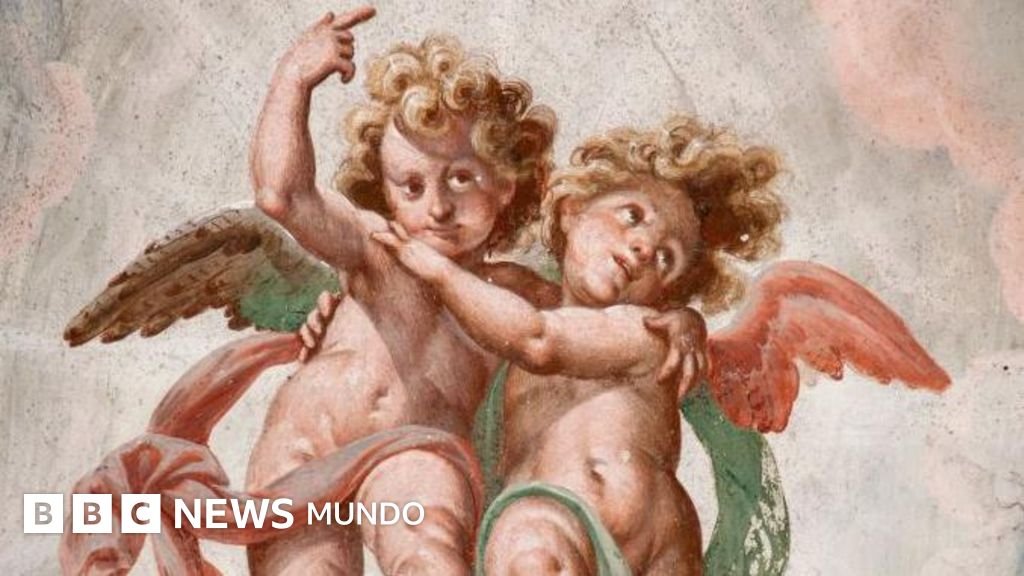
Angels have become a staple in artistic works, appearing in paintings and frescoes, and woven into literary narratives. “There is a long-standing tradition of depicting angels in iconography and visual art, often surrounded by light and possessing wings,” states Maerki. The guardian angel motif has proliferated throughout Christian art, shaping popular imagination about these celestial beings.
Conclusion
Angels hold a significant place in various religious and cultural contexts, symbolizing divine communication and protection. Their timeless appeal continues to inspire art, literature, and daily beliefs, proving that the fascination with these celestial beings is as profound today as it has ever been.
- Angels serve as messengers and guardians across multiple religious traditions.
- Theologians have explored the hierarchical organization of angels, with notable classifications established in early Christian thought.
- While closely associated with Christianity, the concept of angels predates this faith, with origins in Judaism and influences from other ancient cultures.
- Popular culture has shaped the modern perception of angels, transforming them into symbols of personal protection and benevolence.