
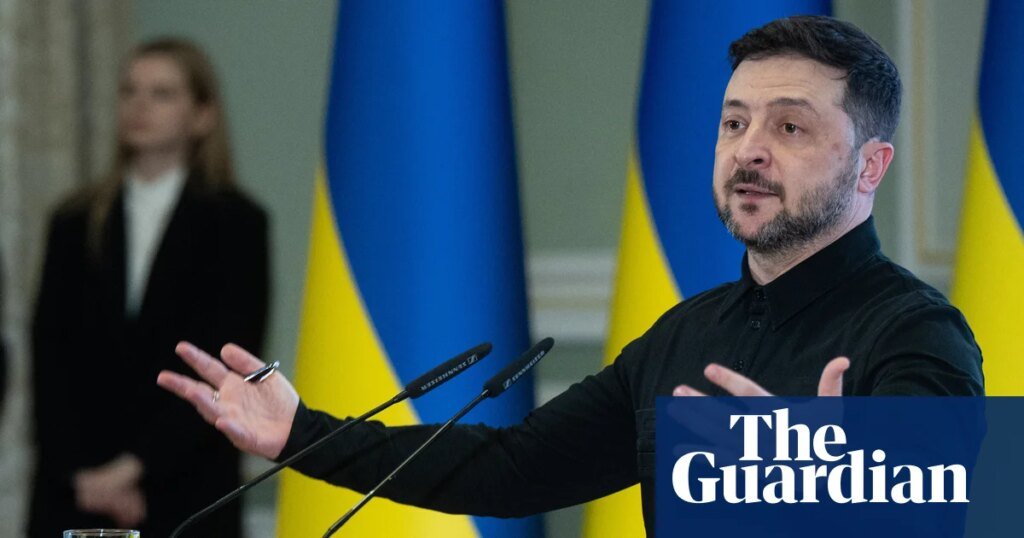
Progress Towards Peace: Ukraine and U.S. Negotiations with Russia
Amid ongoing uncertainty regarding Russia’s reaction, Washington and Kyiv are advancing toward a joint agreement aimed at ending the war in Ukraine. The latest developments in these peace negotiations, facilitated by the United States, indicate that Ukrainian President Volodymyr Zelenskyy has obtained significant concessions from what was previously considered a one-sided proposal favoring the Kremlin. This revised plan represents an achievement for Kyiv, allowing it to reshape an earlier draft that had faced criticism for prioritizing Russian demands.
The Revised Peace Proposal
Zelenskyy has expressed optimism that U.S. negotiators will engage with the Kremlin soon. The updated peace plan includes Ukraine’s acceptance of a demilitarized zone in its eastern territories, a crucial point that has long hindered negotiations. Ukraine insists that this pullback must coincide with a similar withdrawal of Russian forces.
Details of the Proposal
The Russian envoy, Kirill Dmitriev, has transmitted the details of this proposal to President Vladimir Putin. A Kremlin spokesperson acknowledged that Moscow is currently deliberating its response but withheld immediate comments. Dmitry Peskov, the spokesperson, emphasized that Russia’s stance is well known to U.S. officials but chose not to elaborate further.
Key Conditions and Concessions
Putin’s recent statements outline specific demands for peace, including Ukraine yielding control of approximately 5,000 square kilometers in Donbas and officially abandoning its aspirations to join NATO. Despite these tough conditions, Ukraine is prepared to offer certain compromises, including the withdrawal of some military personnel from the eastern front and a strategic pivot away from NATO membership, seeking security assurances that mirror NATO’s Article 5.
Security Guarantees and Future Steps
While the exact nature of these security guarantees remains unclear, the proposal also states that Russian troops should vacate the Dnipropetrovsk, Mykolaiv, Sumy, and Kharkiv regions, with international forces positioned to oversee the enforcement of this agreement. During a two-hour briefing with journalists, Zelenskyy highlighted that the latest draft empowers Ukraine, suggesting that Moscow risks facing increased arms support and further sanctions from the U.S. should they reject the plan.
Negotiation Dynamics
Zelenskyy conveyed, “Moscow cannot approach President Trump claiming to oppose a peaceful resolution.” He further clarified that Ukraine’s troop deployment along the contact line—as defined by this agreement—will be recognized, integrating proposals for a workgroup to allocate forces strategically and outline future economic zones.
Public Input and Regional Stability
Any plan requiring troop withdrawals would ultimately necessitate a referendum in Ukraine, according to Zelenskyy. He expressed the importance of involving public opinion in shaping a free trade and demilitarized zone. On NATO aspirations, he stated, “The choice rests with NATO members. Our route has been cleared.”
Remaining Challenges
Despite the progress made, significant hurdles persist. Russia continues to assert full control over Donetsk, and it remains uncertain whether they will consent to the proposed demilitarized buffer zone or troop withdrawals. Additional complex issues linger, including control over the Zaporizhzhia nuclear plant, which Ukraine insists should be managed jointly with the U.S.
The Broader Context
These discussions come in the wake of ongoing initiatives by Donald Trump to mediate an end to the conflict, which has lasted four years since Russia’s invasion in 2022. The humanitarian toll has been immense, with numerous casualties, widespread destruction in eastern Ukraine, and millions displaced. Meanwhile, Russian advances continue, as indicated by recent military claims regarding territorial gains in the Zaporizhzhia region.
Conclusion
As negotiations continue, both Ukraine and the U.S. are striving to navigate a complex landscape filled with both hope and considerable challenges. With each step, the goal remains clear: a sustainable and just resolution to the ongoing conflict.
- Ukraine and the U.S. are advancing peace negotiations despite uncertainties from Russia.
- The latest proposal includes a demilitarized zone contingent on reciprocal troop withdrawals.
- Military compromises from Ukraine may involve significant changes to its NATO aspirations.
- Key sticking points include control of Donetsk and the Zaporizhzhia nuclear plant.