
U.S. Government Bans Five Europeans Over Censorship Allegations
In a significant announcement on Tuesday, the State Department declared that it would prohibit five European individuals from entering the United States, citing their involvement in efforts to persuade American tech companies to censor or suppress U.S. viewpoints. Secretary of State Marco Rubio labeled these individuals as “radical” activists affiliated with “weaponized” NGOs, indicating they have violated a recent visa policy aimed at curbing the censorship of protected speech in the U.S.
Background of the Visa Policy
Rubio took to social media to express that for too long, European ideologues have exerted pressure on American platforms to penalize voices they disagree with. He stated, “The Trump administration will no longer tolerate these egregious acts of extraterritorial censorship.” The five Europeans identified in the announcement were revealed by Sarah Rogers, the Undersecretary of State for Public Diplomacy, through a series of social media posts.
The Individuals Affected
The individuals on the list include:
- Imran Ahmed, CEO of the Centre for Countering Digital Hate
- Josephine Ballon and Anna-Lena von Hodenberg, leaders of the German organization HateAid
- Clare Melford, director of the Global Disinformation Index
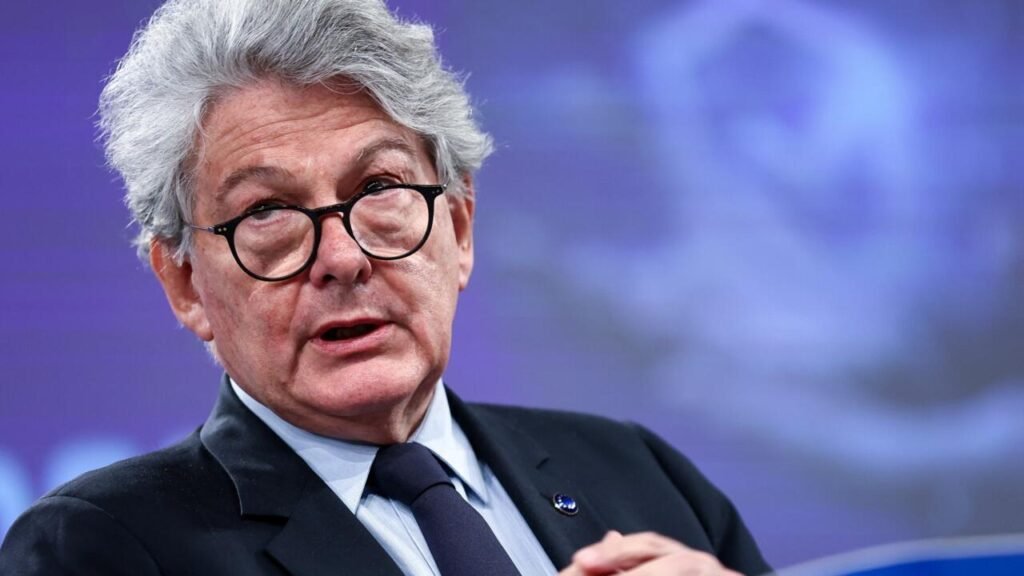
- Thierry Bréton, a former EU commissioner responsible for digital affairs
These individuals are accused of facilitating foreign government campaigns to censor American voices and companies, which Rubio noted could have “potentially serious adverse foreign policy consequences” for the U.S.
Reactions to the Ban
Rogers referred to Bréton as the “mastermind” behind the EU’s Digital Services Act, which establishes rigorous standards to safeguard internet users, including the identification of harmful content such as hate speech. She highlighted Bréton’s warning to tech billionaire Elon Musk concerning potential risks associated with broadcasting his interview with former President Donald Trump in August 2024.
As the most prominent figure mentioned in the ban, Bréton, who previously served as France’s finance minister and the European commissioner for the internal market, criticized the visa restrictions. “Is McCarthy’s witch hunt back?” he questioned on social media, emphasizing that the Digital Services Act had garnered the support of 90% of the European Parliament and all 27 EU member states. He urged American citizens to reconsider their ideas about censorship.
French Foreign Minister Jean-Noël Barrot also condemned the visa restrictions affecting Bréton and the others, asserting that the Digital Services Act was established to ensure that “what is illegal offline is also illegal online.” He argued that the act does not apply extraterritorially and should not concern the United States.
Implications of the Visa Ban
Most Europeans are eligible for the Visa Waiver Program, meaning they typically do not need a visa to visit the U.S. However, they are still required to complete an online application managed by the Department of Homeland Security prior to arrival. It is possible that some of the individuals affected by this action have been flagged in this system, as indicated by a U.S. official who spoke anonymously due to the sensitive nature of the details.
This visa ban is part of a larger trend in U.S. immigration policy, which has seen limitations on visitors from various regions, including certain African and Middle Eastern countries. Additionally, new visa requirements may involve financial bonds for applicants from specific nations.
Conclusion
The U.S. government’s decision to impose visa restrictions on these five Europeans underscores a growing conflict over online speech and censorship. As the Trump administration continues to oppose foreign interference in American discourse, it sets a precedent for how immigration law may be used to address concerns about digital content suppression.
Key Takeaways
- The U.S. barred five Europeans linked to efforts to pressure tech firms on censorship issues.
- Accusations include facilitating foreign government censorship campaigns against American viewpoints.
- Reactions from the EU emphasize the legitimacy of the Digital Services Act and condemn the visa restrictions.
- The visa ban reflects broader U.S. efforts against foreign influence on online speech.