
China’s Escalating Crackdown on Underground Churches: A Family’s Struggle
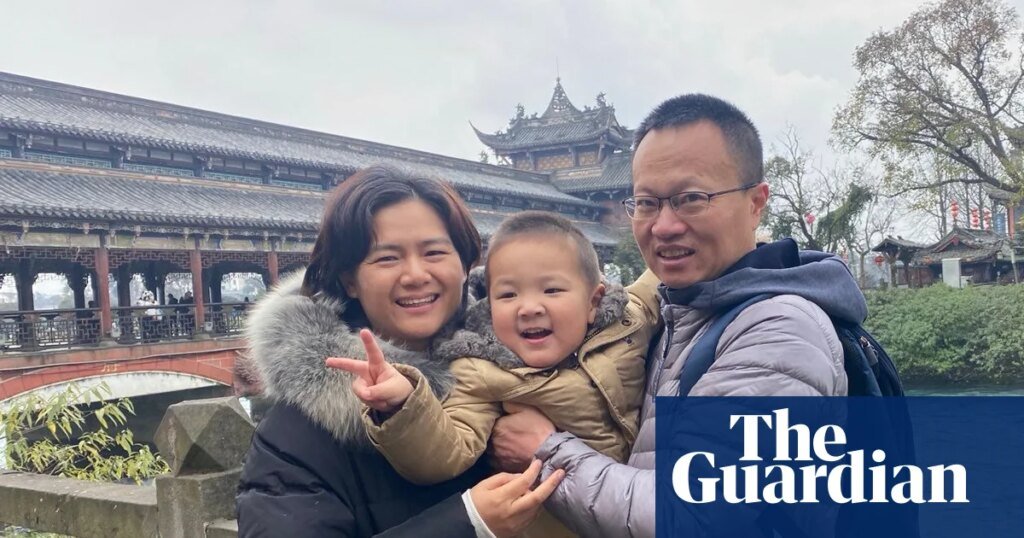
The early morning hours turned chaotic for Gao Yingjia and his wife, Geng Pengpeng, when a group of plain-clothes individuals, claiming to be police officers, knocked on their door at 2 a.m. Hiding out in a friend’s home in a Beijing suburb, they rushed downstairs, hoping to keep the disturbance to a minimum while their nearly six-year-old son slept upstairs. A pivotal moment was unfolding; they understood this was the beginning of significant challenges ahead.
Arrests Mark a Renewed Offensive Against Christians
Just two months later, Gao found himself in a detention center in Guangxi province, facing charges linked to the “illegal use of information networks.” This incident is part of a widespread crackdown on Christians in China, the harshest since 2018, raising alarms among human rights organizations and officials in the United States, who fear this could signal the decline of unofficial churches across the country.
“We were always aware of the risks associated with our faith in China,” Geng admitted, expressing her struggle after seeking refuge overseas with their son. “But honestly, nothing can fully prepare you for this.”
Gao serves as a senior pastor at Zion Church, a leading underground “house church” with thousands of members throughout China. His arrest, alongside many other church leaders, follows increasing pressure on the church network. This action extends beyond Zion, inciting fears of a concerted government assault on Christians nationwide.
The Situation in Wenzhou
Recent reports from Human Rights in China indicate that more than 100 individuals were detained in Wenzhou, Zhejiang province, during a crackdown on Christian groups. The organization noted that local Christians had faced mounting pressure for months, particularly after a dispute arose concerning the installation of a national flag within a church.
“Sometimes I wonder, is this real?” reflects Geng Pengpeng on her turbulent journey.
An Uncertain Road Ahead for Families
Now, Geng grapples with an agonizing decision: Should she return to China to be closer to her husband, risking her own arrest, or remain in Thailand, a country known to comply with Beijing’s deportation requests? Every choice weighs heavily as her faith continues to evolve under this duress. “Sometimes I wonder, is this real?” she reiterates, searching for clarity.
Among those detained during recent raids is Jin Mingri, the 56-year-old founder of Zion Church, alongside nearly 30 of his fellow pastors and church members. Eighteen of these leaders currently face lengthy prison sentences, signaling a grim reality for the future of their congregations.
International Reactions and Broader Implications
In light of these events, U.S. Secretary of State Marco Rubio condemned the crackdown, demanding the release of the detained church leaders. He urged the Chinese government to ensure that all individuals can practice their religion freely, without the threat of persecution.
China officially recognizes five religions: Buddhism, Taoism, Islam, Protestantism, and Catholicism. However, activities outside of state-sanctioned institutions are prohibited. Many Christians resort to unofficial house churches to worship discreetly.
The History of Zion Church
Zion Church, established in 2007, previously operated openly in a transformed nightclub in Beijing. However, the church’s location was closed during a nationwide crackdown in 2018, which resulted in the nine-year imprisonment of Wang Yi, a leader of another house church, for inciting subversion.
Responding to government crackdowns, Zion transitioned to a hybrid model featuring large online sermons coupled with smaller in-person gatherings, often adopting creative measures like using a tour bus to evade detection.
According to Ian Johnson, author of *The Souls of China*, these actions indicate that the government aims to enforce stricter controls on religious activities. “The writing has been on the wall for all of these churches since the 2000s,” he emphasizes, viewing the recent arrests as a decisive move by the state.
A Challenging Future for Christianity in China
This year has proven increasingly burdensome for Chinese Christians. In May, Gao Quanfu, another pastor, and his wife were detained, while allegations of fraud led to lengthy sentences for members of the Golden Lampstand Church. The summer saw police questioning over 100 members of Zion Church and the closure of several local branches.
Despite these challenges, Jin maintained an unwavering belief in the church’s growth potential, recording a rise in membership from approximately 1,500 to 5,000 after the 2018 crackdown. Now, as an interim leader steps forward, the sentiment remains hopeful amidst uncertainty.
China’s Ministry of Public Security has not provided a comment regarding the current situation.
- Gao Yingjia was detained amid a significant crackdown on underground churches in China.
- Over 100 individuals were arrested in a related sweep in Wenzhou, escalating concerns about religious freedom.
- Zion Church, a leading underground congregation, has faced intensified pressures since 2018.
- Human rights organizations continue to advocate for the rights of Christians under threat in China.