
Israel’s Struggle for Media Control
The Israeli government is intensifying its efforts to regulate media outlets, effectively gaining more influence over how its activities are reported to the public. This includes the controversial Al Jazeera Law, which enables the government to shut down foreign media on the basis of national security. Recently, the Israeli parliament extended this law for another two years, originally enacted during the ongoing conflict with Gaza, with the apparent aim of curbing Al Jazeera’s presence in Israel.
Governmental Restrictions on Media
In addition to this, the government is also seeking to dismantle Army Radio, one of the two publicly funded news platforms in Israel. This station has faced criticism from right-wing factions, who perceive it as biased against their interests. Many Israelis still depend on traditional media for their news; approximately half turn to broadcast channels and about a third rely on radio stations for updates on current events.
The Importance of Media Tone
The framing of media narratives plays a crucial role in shaping public perception. Analysts in Israel suggest that the selective reporting on Palestinian hardships during the conflict has fueled ongoing violence and grievances, enabling repeated assaults on Gaza and other regional countries like Syria, Yemen, and Lebanon.
Government Control and Criticism
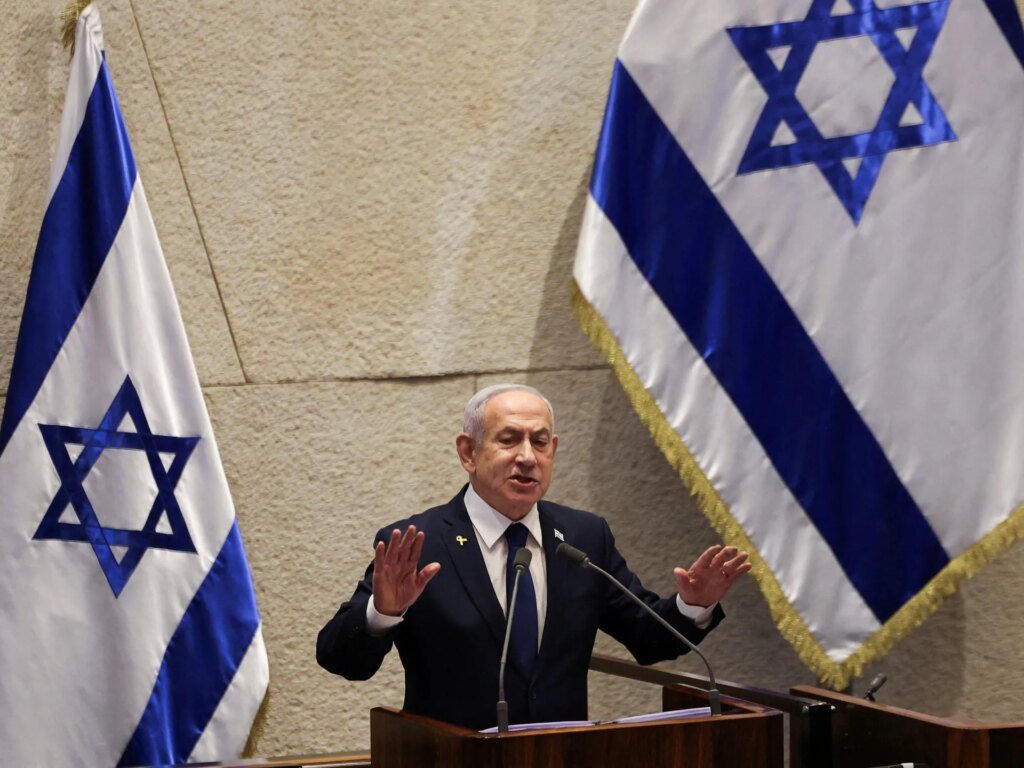
The far-right government led by Prime Minister Benjamin Netanyahu, which includes ministers with past “terrorism” convictions and vocal supporters of illegal annexation in the West Bank, seeks to further tighten its grip on media control. Israeli officials claim that domestic and international media coverage of the violence in Gaza has been excessively critical. In November, Communications Minister Shlomo Karhi specifically attributed the October 7 Hamas-led attacks to media narratives that he alleges have sown discord within the nation.
Legislative Changes in the Horizon
Beyond the existing Al Jazeera Law, the government is proposing three significant legislative changes: privatizing the public broadcaster Kan, abolishing Army Radio, and placing the media regulatory body under government oversight. Both Army Radio and Kan have been instrumental in broadcasting critical reports about the administration. Recently, Kan featured an interview that implicated Netanyahu in discussions aimed at evading accountability for the attacks on October 7.
Rationale Behind Shut-Downs
Israeli Defense Minister Israel Katz has defended the move to eliminate Army Radio, stating that it has become a platform for criticizing the military and its personnel. The regulations surrounding media management are also undergoing transformation, with the parliament advancing a bill to dismantle current media regulators in favor of a government-appointed authority, which may invite even greater state intervention.
Unprecedented Measures Against Foreign Media
The government has codified emergency measures that allow it to ban foreign media perceived as threats. Initially enacted in May 2024, these regulations enabled the government to close Al Jazeera’s operations and even target The Associated Press for allegedly sharing footage with Al Jazeera. Under this law, the communication minister can halt broadcasts and seize equipment if deemed a security risk, following the prime minister’s approval.
Criticism from Journalistic Organizations
This crackdown has drawn sharp rebuke from various organizations. The International Federation of Journalists and the UK’s National Union of Journalists have voiced their concerns over Israel’s legislative moves against foreign media. IFJ General Secretary Anthony Bellanger characterized the actions as typical of authoritarian regimes, emphasizing that such measures threaten free speech and the public’s right to information.
Media Complicity and Public Perception
Disturbingly, the Israeli media has largely acted as a support system for government actions in Gaza, where over 70,000 Palestinians have lost their lives. Coverage of Palestinian suffering is rare and often rationalized to fit the prevailing narrative. Even with numerous media workers killed in Gaza, many Israelis remain oblivious to the dual standards presented in their government’s rhetoric. For instance, when Iran attacked an evacuated hospital during a conflict, the Israeli government condemned it as a war crime, while failing to acknowledge the devastation wrought upon Gaza’s healthcare system.
As journalist Orly Noy aptly put it, “The Israeli media sees its role as shaping public sentiment toward supporting military aggression, rather than enlightening the populace.” This has raised questions about the broader ethical responsibilities of media in times of conflict.
Conclusion
The current media landscape in Israel reflects a critical junction where state control is tightening. The government’s actions to legislate against dissenting voices not only raise ethical concerns but also pose challenges to the very fabric of democracy in the region. Understanding these dynamics is essential for recognizing the broader implications for freedom of expression and public discourse.
Key Takeaways
- The Israeli government is tightening its grip on media through laws targeting critical outlets.
- Al Jazeera Law allows for the shutdown of foreign media on national security grounds.
- Public broadcasting platforms like Army Radio are facing abolition amid accusations of bias.
- The proposed legislative changes may significantly increase government oversight of the media environment.