
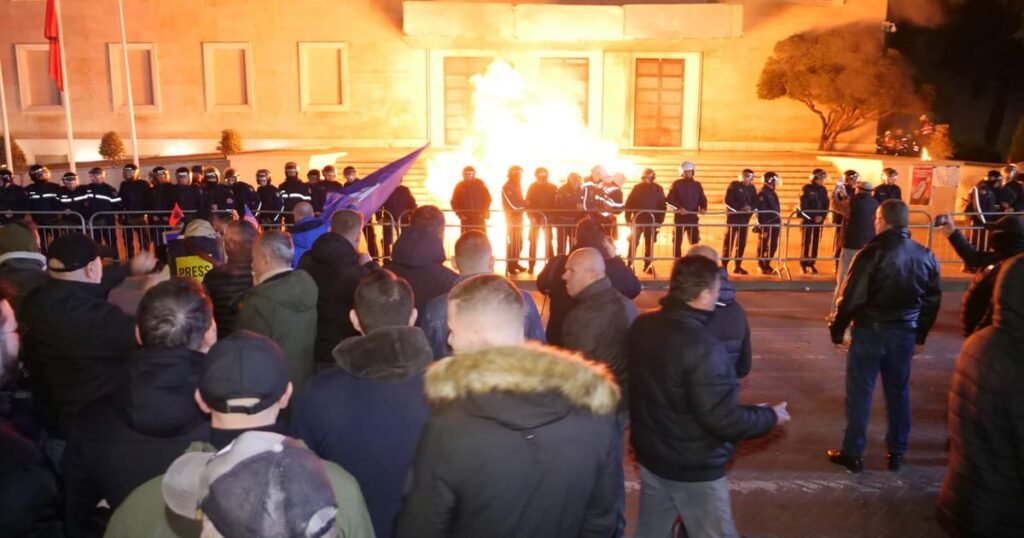
Albania’s Protests: A Stand Against Government Violence
Recently, Albania witnessed a significant protest led by seasoned opposition leader Sali Berisha and his Democratic Party. This demonstration came on the heels of chaotic scenes in the parliament, where police had to intervene during a brawl among lawmakers, which included the alarming use of flares within the chamber.
The Essence of the Protests
In a statement relayed through a spokesperson, Berisha emphasized, “We do not condone any form of violence — particularly that exercised by those in power. The most evident form of violence today is the extortion and systematic looting perpetrated by Edi Rama and his ministers against the Albanian people.” He articulated that the purpose of these protests was to “stop this violence.”
Calls for Accountability
Compounding the unrest, prosecutors and opposition lawmakers are advocating for the lifting of immunity from Balluku, the Minister of Infrastructure. This move would allow anti-corruption prosecutors to arrest and charge her. However, Prime Minister Rama and his ruling Socialist Party have delayed the vote, stating they are awaiting a Constitutional Court decision expected in January.
Corruption Allegations Against Balluku
Balluku stands accused, along with several officials and private companies, of manipulating public tenders to favor select companies on significant infrastructure projects such as Tirana’s Greater Ring Road and the Llogara Tunnel.
Defending Her Position
In response to these allegations, Balluku has labeled the accusations as “insinuations,” “half-truths,” and “lies.” She has expressed her willingness to fully cooperate with the judicial process, asserting her commitment to transparency.
Moreover, Prime Minister Rama has come to her defense, criticizing the anti-corruption agency known as SPAK. He characterized their actions as “arrests without trial,” arguing that such practices undermine European democratic standards.
Conclusion
The protests in Albania underscore a growing discord between the government and the opposition, fueled by allegations of corruption and a call for accountability. As the political climate continues to evolve, the nation watches closely as the future of its leadership hangs in the balance.
Key Takeaways
- Protests emerged following chaotic events in Albania’s parliament involving police intervention.
- Sali Berisha condemned government actions as violence against the people.
- Calls for lifting Balluku’s immunity indicate rising tensions over corruption allegations.
- Prime Minister Rama defends Balluku, challenging the methods of the anti-corruption agency.