
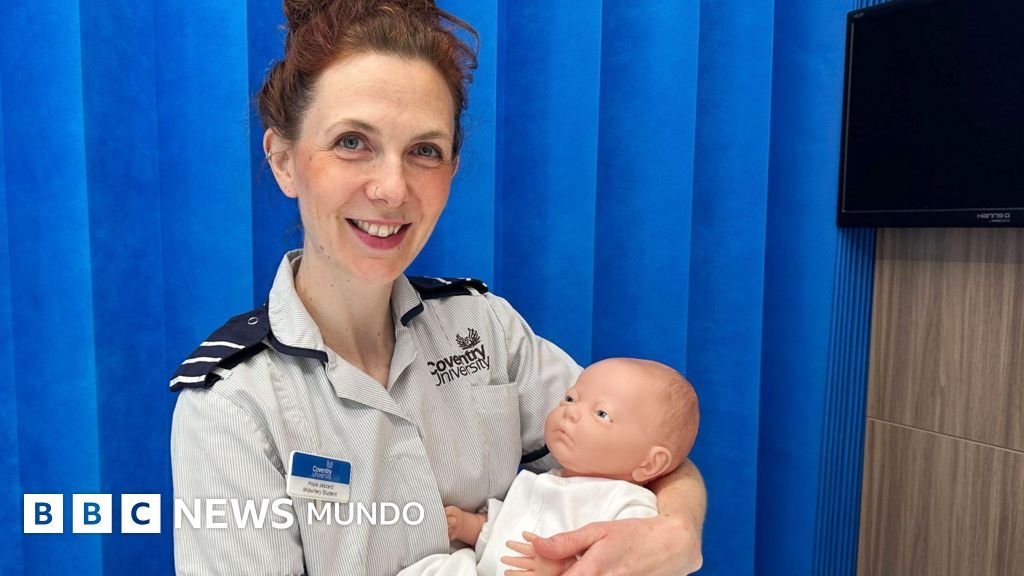
Overcoming Hospital Phobia: Hope Jezzard’s Journey
The intense fear of hospitals can be paralyzing, but for Hope Jezzard, this fear transformed into a motivation to help others. Once consumed by a crippling phobia known as nosocomephobia, Hope now works as a midwife, assisting mothers in navigating their own concerns about medical environments.
Understanding Nosocomephobia
Nosocomephobia, or the fear of hospitals, often originates from traumatic childhood experiences. Hope recounts her own struggles during a recent interview, revealing that her mother’s multiple hospitalizations during her youth played a significant role in shaping her fear. “She almost died twice and was on life support. The feeling of being separated from her was heart-wrenching,” Hope explained.
As she entered her teenage years and early twenties, routine medical appointments triggered an alarming sense of panic for her, making her heart race. “The smells and sounds of hospitals would send me into a state of anxiety,” she shares.
Expert Insight into Hospital Fears
John Hawker, a psychotherapist specializing in phobias, notes that a fear of hospitals is not uncommon and frequently stems from early experiences. “It could be something as simple as a childhood injection. The scent of antiseptic can trigger a strong reaction,” he states. For many, logical reasoning can’t easily overcome such ingrained fears.
Facing the Challenge
Hope’s journey to becoming a midwife began during her pregnancies when she was inspired by the support she received from midwives despite her fear. Initially, she believed pursuing such a career was unfeasible. “But I wanted to help others. Overcoming my fear became a necessity,” she said, taking the leap to study midwifery at Coventry University.
“Walking into a hospital for the first time was incredibly daunting. I had avoided clinical settings for years, and my first shifts were terrifying,” she recalls. Over time, through therapy and a commitment to self-compassion, she began to feel more at ease in medical environments. “One helpful tool was treating myself kindly, just as I would a friend facing the same fear,” she added.
Practical Tips for Managing Hospital Anxiety
- Write Down Your Fears: This can provide clarity and a sense of control.
- Bring a Supportive Friend: Having someone familiar can help ease anxiety.
- Communicate with Hospital Staff: They can better assist you when they understand your fears.
- Talk to Your General Practitioner: They may refer you to a behavioral therapist.
- Consider Conversational Therapy: Look into individual or group sessions for support.
Kim Black’s Story
Similar to Hope, Kim Black also battled her own hospital phobia. Diagnosed with hip dysplasia at an early age, she found herself freezing in fear whenever a hospital visit was necessary. “I did everything I could to avoid going to the hospital, sometimes even delaying needed care,” she explained. Now, she helps others confront their fears, encouraging them to establish boundaries during hospital visits.
“Writing helps me to manage my overwhelming thoughts. When I get to the hospital, I take the initiative to explain my feelings to the staff immediately,” Kim advises.
Finding Empowerment
Hawker emphasizes that tackling hospital phobias is achievable through various therapeutic methods designed to separate individuals from distressing memories without reliving the trauma. “The goal is to help individuals feel empowered in medical environments,” he notes.
Hope believes that gradually exposing herself to her fears allowed her to regain control. “Now, as a midwife, there are moments I still feel like running from hospitals, but I’ve transformed a very negative aspect of my childhood into a positive force for good in my adult life,” she shares.
Conclusion
Hope Jezzard’s story is a powerful reminder that fears can be overcome, especially when fueled by a desire to help others. Her journey from fear to empowerment demonstrates the importance of support, therapy, and self-compassion in addressing nosocomephobia.
Key Takeaways:
- Nosocomephobia often has roots in childhood trauma.
- Support and therapy can aid in overcoming hospital fears.
- Writing down fears can provide perspective and clarity.
- Establishing open communication with healthcare providers is essential for coping with anxiety.