
Ukrainian Strikes Target Russian Military Assets
On Monday, Ukraine executed a series of strategic strikes against various Russian military targets, resulting in significant damage to infrastructure, including an oil terminal, a pipeline, several fighter jets, and multiple vessels. This ongoing military campaign reflects Ukraine’s commitment to disrupting Russian operations amid the ongoing conflict.
Overview of Strikes
The Ukrainian General Staff reported that attacks were directed at the Tamanneftegaz oil terminal and several military facilities situated in both Russian-controlled territories and regions occupied by Russian forces in Ukraine. The strikes included:
- Damage to a major oil terminal and ammunition storage facilities.
- Destruction of a drone launch site.
- Severe impairment to a pipeline, alongside damage to two docks and vessels in Krasnodar, which triggered a substantial fire.
One notable operation involved a Ukrainian-made missile targeting a temporary site housing the Russian 92nd River Boat Brigade located in Olenivka on the occupied Crimean peninsula. Additionally, efforts were made to strike an ammunition depot in the Donetsk region to slow down Russian advancements there.
Partisan Activities
In a related incident, Ukrainian partisans reportedly set ablaze two Russian fighter jets at an airfield near Lipetsk in western Russia, according to Ukrainian military intelligence reports. This emphasizes the growing resistance within occupied territories and showcases the extensive reach of Ukrainian forces.
Russia’s Response
The Russian Defence Ministry acknowledged that it intercepted multiple Ukrainian drones during the same period, specifically noting three over the Krasnodar region. These exchanges highlight the ongoing tactical battle as part of Ukraine’s strategy to disrupt Russian military operations and challenge the narrative of strong Russian presence amid ongoing US-led peace negotiations, which have not yet yielded significant progress.
War of Attrition Continues
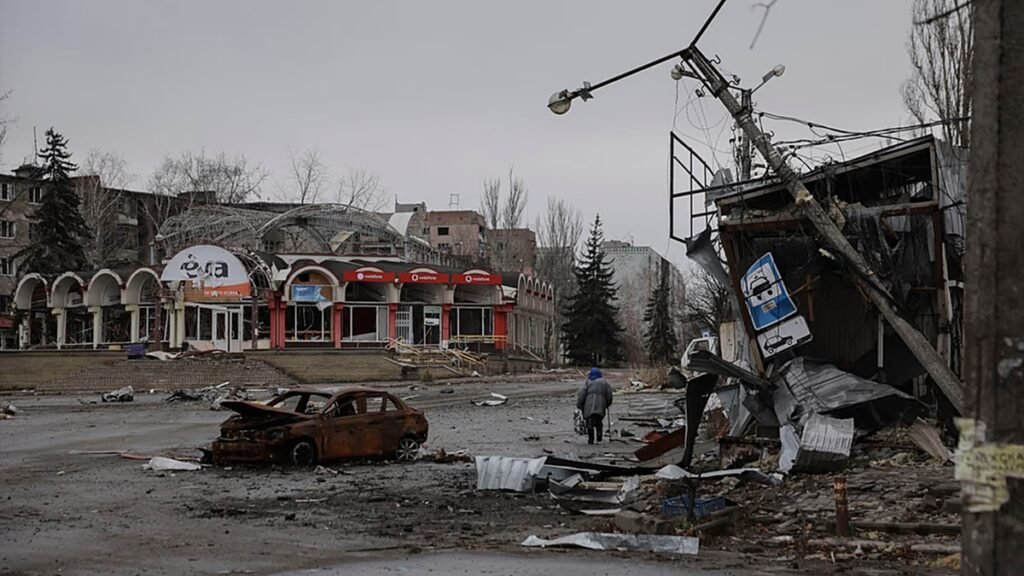
Russia persists with its war of attrition, focusing attentively on the Donbas region, which comprises the eastern Ukrainian territories of Donetsk and Luhansk. These areas remain crucial to Moscow’s overarching goals for concluding the conflict. Reports from Ukraine’s General Staff documented that, in just the past 24 hours, Russian forces launched 27 attacks in various settlements, particularly affecting the city of Kostyantynivka.
This city, which once supported a population of 67,000, has seen its numbers dwindle to approximately 4,300 residents, including families who are reluctant to evacuate. As Ukrainian officials highlight, Russian airstrikes have obliterated entire neighborhoods, while relentless drone surveillance has forced civilians to take shelter wherever possible.
Targeting Civilian Infrastructure
In a broader strategy aimed at weakening Ukraine’s morale, Moscow has escalated its assaults on Ukraine’s energy infrastructure, thereby attempting to leave civilians without essential heating and water supplies during the frigid winter months. Since the onset of the full-scale invasion in early 2022, Russia has targeted Ukrainian power systems, a tactic Kyiv describes as “weaponizing winter.”
Recent reports from Ukraine’s Energy Ministry indicate that energy facilities across five regions faced attacks overnight, with Ukraine’s air force confirming the launch of 86 drones, of which Ukrainian defenses successfully intercepted 58.
Conclusion
The ongoing conflict between Ukraine and Russia continues to manifest in aggressive military tactics, with Ukraine actively targeting Russian military infrastructure and capabilities. As both sides grapple with the realities of war, the struggle over territory and resources remains fierce.
Key Takeaways
- Ukraine has intensified operations against Russian military targets, damaging crucial infrastructure.
- Recent strikes underscore Ukraine’s commitment to disrupting Russian military capabilities.
- The conflict continues to impact civilian infrastructure, especially energy supplies.
- Ukraine’s efforts are part of a broader strategy to influence ongoing peace negotiations.