
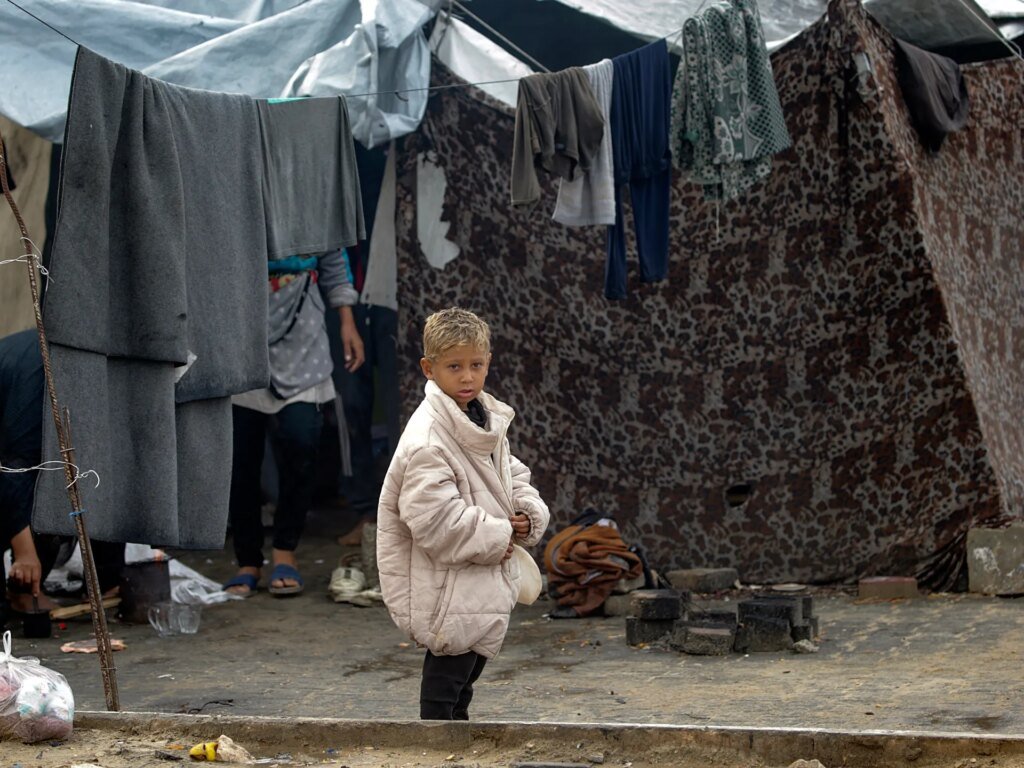
Continued Violence in Gaza Amid Failed Ceasefire
The conflict in Gaza shows no signs of abating, as Israeli forces have reportedly killed at least two Palestinians amidst ongoing violations of a ceasefire agreement. This situation raises serious concerns about humanitarian aid access for the vulnerable population in the Gaza Strip.
Recent Attacks and Casualties
According to reports from a Palestinian news agency, Wafa, the two individuals were fatally shot by Israeli troops in the Shujayea neighborhood of eastern Gaza City. This brings the tally of Palestinian fatalities in the last 24 hours to at least 12. Notably, eight of these victims were found in the rubble of destroyed buildings.
Ceasefire Violations
The violence marks yet another instance of the numerous breaches of a United States-brokered ceasefire agreement that took effect on October 10. The Gaza Government Media Office criticized Israel’s ongoing “serious and systematic violations,” stating that there have been 875 violations since the ceasefire began.
This includes a range of actions such as:
- Persistent air and artillery strikes.
- Unauthorized demolitions of homes and civilian infrastructure.
- Over 265 instances where Israeli forces have shot at Palestinian civilians.
The office reports that since the commencement of the ceasefire, at least 411 Palestinians have been killed, with more than 1,100 injured as a result of Israeli attacks.
Humanitarian Crisis
The humanitarian conditions for many families displaced by the ongoing conflict remain dire. Essential supplies such as food, medicine, and proper shelter are in critically short supply. Under international law, Israel, as the occupying power, is obligated to meet the needs of the Palestinian population. However, organizations like the United Nations claim that Israel has consistently prevented the free flow of humanitarian aid into Gaza.
The deteriorating situation is further exacerbated by recent severe winter storms, which have led humanitarian groups to express that Israel’s restrictions on the entry of vital supplies, including tents and blankets, are endangering lives.
Aid Access and Requirements
Recent figures from the Gaza Government Media Office reveal that only 17,819 trucks have entered Gaza since the ceasefire began, far below the expected 43,800. This results in an average of merely 244 trucks per day, significantly less than the agreed daily entry of 600 trucks.
“Over the past 24 hours, and despite the ceasefire, we have continued to receive reports of air strikes, shelling, and gunfire in all five governorates of Gaza,” stated Stephane Dujarric, a spokesperson for UN chief Antonio Guterres.
He emphasized the UN’s ongoing commitment to addressing the pressing shelter needs of approximately 1.3 million individuals, particularly those displaced by recent storms. While aid deliveries have included vital items like tents and winter clothing, the demand remains overwhelming.
Healthcare Challenges
The Palestinian Ministry of Health has recently pointed out significant shortages of medications and healthcare supplies, complicating efforts to adequately care for patients. Throughout the conflict, nearly all healthcare facilities in Gaza have suffered damage, affecting 125 facilities, including 34 hospitals.
Conclusion
The situation in Gaza continues to be marked by severe violence and a deepening humanitarian crisis, as violations of ceasefire agreements persist. The urgent need for humanitarian assistance remains unaddressed, placing countless lives at risk.
Key Takeaways
- Ongoing Israeli attacks have resulted in significant Palestinian casualties, with at least 12 reported dead in a single day.
- The Gaza Government Media Office reports 875 ceasefire violations since October 10.
- Humanitarian aid access remains critically limited, with far fewer deliveries than required.
- Healthcare facilities in Gaza are severely impacted, hampering patient care amidst ongoing shortages.