
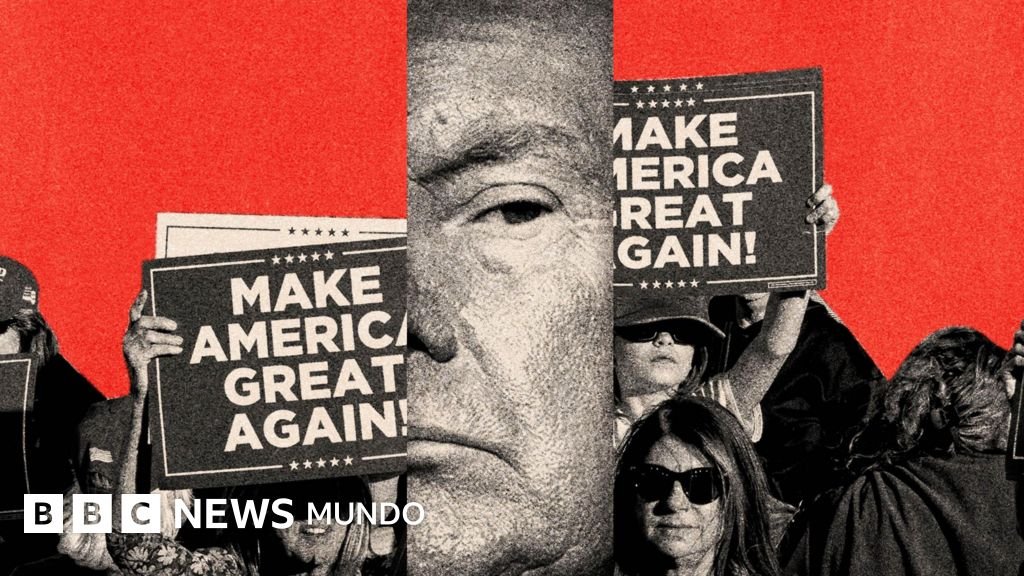
Anticipating the Future of the Republican Party: Trump’s Legacy and Potential Heirs
In a recent White House cabinet meeting, President Donald Trump made an intriguing prediction about the future of the Republican Party. As he surveyed the room filled with his trusted advisors, he remarked that the next GOP presidential candidate was “probably sitting at this table.” His comments hint at a growing anticipation around the 2028 elections and the evolving dynamics within the Republican coalition.
The State of Trump’s Coalition
Despite a constitutional amendment limiting a president to two terms, Trump’s supporters are already rallying for him with chants of “four more years” during rallies. However, when discussing potential nominees for 2028, Trump made it clear: “It won’t be me.” This leaves significant questions about who will carry on his agenda and the MAGA movement in the years to come.
Recent municipal and state elections have shown an erosion of support from minority and working-class voters, demographics that previously aided Trump’s return to the White House. Tensions within his coalition have surfaced, with figures like Congresswoman Marjorie Taylor Greene criticizing Trump for losing touch with his base. Reports have emerged about potential divides, as seen in a recent headline from The Washington Post that posed the question: “MAGA leaders warn Trump the base is fading. Will he listen?” These developments indicate that challenges lie ahead for both Trump and his movement, threatening his political legacy.
Who’s in Line to Succeed Trump?
Amidst the recent discussions, several notable figures were present in that cabinet meeting, each representing a potential contender to lead the GOP post-Trump. Vice President JD Vance, who is seen as a probable heir to Trump’s mantle, sat directly opposite the president. Considered a favorite among Trump’s children and certain tech libertarians, Vance’s close alignment with Trump’s ideology makes him a strong candidate should he choose to run.
Next to him was Secretary of State Marco Rubio, a former Republican rival who has transformed his stance to align with Trump’s America First policies. His longstanding influence within the party places him at a strategic advantage, albeit as a more traditional Republican figure.
Robert F. Kennedy Jr., who has recently switched party affiliations to Republican, also adds an intriguing dynamic to the discussions. His skepticism towards vaccinations and focus on health issues has stirred debate within healthcare circles. Meanwhile, Kristi Noem, the Secretary of Homeland Security, is gaining traction with her tough immigration stance, depicting herself as a key player within the administration.
If any of these individuals chooses to pursue a presidential run, they may view themselves as Trump’s ideological successors, ready to preserve the movement that has reshaped American politics over the last decade. Nevertheless, as noted by Benjamin Franklin, who famously remarked on the challenges of maintaining a coalition, the victor in the GOP primaries will need to keep these alliances intact.
Challenges Ahead for the GOP
Predicting the next leader of the Republican Party is no simple task. There remain numerous uncertainties, particularly about whether the forthcoming generation of MAGA leaders will arise from Trump’s inner circle or develop from outside it. According to Rodney Davis, a former Republican congressman, the next GOP leader will need to establish their own identity while also acknowledging Trump’s significant influence on the party.
As the 2028 elections approach, it’s possible that voter sentiment may shift away from Trump-like candidates. Certain polls, like one conducted by YouGov, have pointed to a decline in Trump’s popularity. Other mounting concerns, including the economy and debates over presidential power, complicate the picture for future candidates.
The Changing Nature of the Republican Coalition
The Republican coalition has undergone dramatic changes over the years, as observed by Davis, reflecting a departure from the coalition that supported Ronald Reagan. Instead, Trump’s brand of politics emphasizes secure borders, economic nationalism, and an America First foreign policy, themes that resonate differently with new Republican voters.
New Republican Voters
A recent survey by the Manhattan Institute revealed that about 65% of today’s Republican base aligns with traditional views, having supported the party’s presidential nominees since 2016. In contrast, 29% fall under what the Institute labels “new Republican participants,” bringing a younger, more diverse perspective that diverges on economic and social issues, often leaning more liberal.
This emerging faction presents both opportunities and challenges for the GOP. While key figures like Rubio and Vance enjoy strong approval from long-time Republicans, their favorability diminishes with the new voter base, highlighting a potential rift within the party. Moreover, the study indicated that many new Republicans appear more amenable to political violence or extreme views, raising questions about the future direction of the party.
Intra-Party Conflicts
Internal disputes within Trump’s coalition have become increasingly apparent. A clash between Trump and Greene highlights tensions over various issues, including foreign policy and economic concerns. As diverse viewpoints clash, such as Musk’s public disapproval of certain tariffs, maintaining unity becomes critical for the GOP.
Additionally, disagreements about controversial figures, like Nick Fuentes, a far-right commentator, reflect growing strains among conservative groups. As noted by Field, this internal conflict could pose challenges for Trump loyalists as they navigate the changing landscape of the party.
Looking Ahead
As Democratic candidates have gained ground in recent elections, Republicans face pressure to adapt their strategies for future electoral success, especially within the framework of the upcoming midterm elections in 2026. Concerns loom that without Trump at the forefront, the Republican coalition may struggle to achieve victories.
Nonetheless, even a setback in the coming elections is unlikely to spell the end for the MAGA movement. The rise of Trump’s political brand has been a complex journey, characterized by defeats as well as victories. The shifts brought about by Trump’s leadership will have lasting implications for the GOP, with grassroots movements having laid the groundwork for the future of American conservatism.
Conclusion
The evolving landscape of the Republican Party poses challenges and opportunities as it grapples with the legacy of Trump’s presidency. Potential successors are emerging, each with their own vision for the future. The internal dynamics will play a crucial role in defining the party’s direction and unity in the years to come.
- Trump predicts future GOP candidates are already within his cabinet.
- Internal tensions among Trump’s supporters highlight a shifting coalition.
- The emerging “new Republican” faction may reshape party dynamics.
- Despite setbacks, the MAGA movement is likely to impact the GOP’s future significantly.