
The Future of Star Creation in Our Universe
In the vast expanse of the cosmos, the birth and death of stars tell a captivating story about the universe’s age and evolution. Recent observations indicate that the rate of new star formation is declining, leading astronomers to ponder the implications for the future of our universe. This article explores the life cycle of stars, the trends in star formation, and what they signify for the future of the universe.
The Lifecycle of Stars
Scientists estimate that the universe is approximately 13.8 billion years old, with the first stars forming shortly after the Big Bang. Observations by the James Webb Space Telescope recently unearthed a trio of ancient stars in the Milky Way, believed to be nearly 13 billion years old.
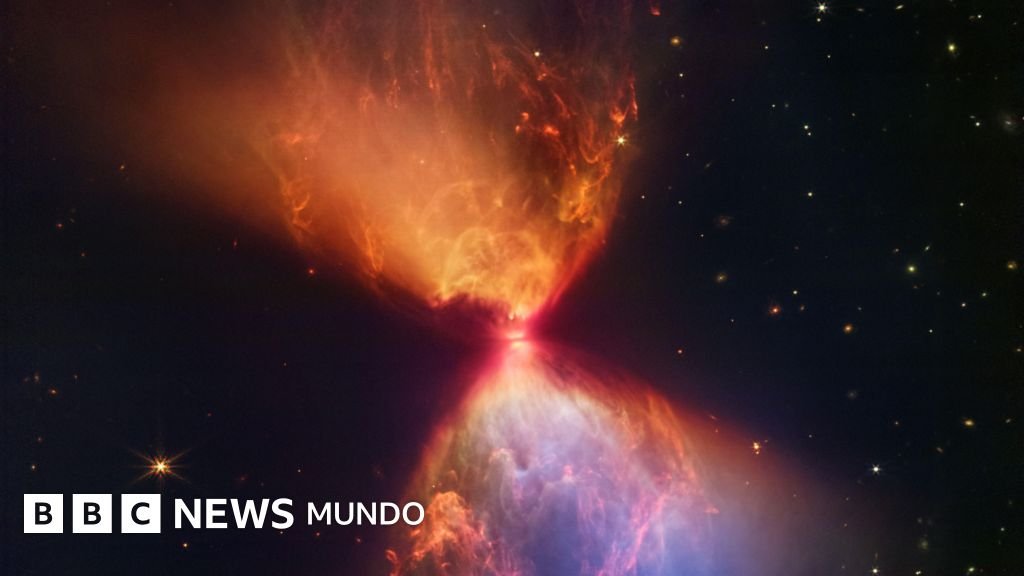
Stars are essentially massive balls of hot gas. Their formation occurs within enormous clouds of cosmic dust known as nebulae. Gravity causes these gases to coalesce, heating them up and eventually giving birth to a young star or proto-star.
The Process of Star Creation
As stars reach millions of degrees Celsius in their cores, hydrogen atoms begin to fuse into helium through nuclear fusion, a process that emits light and heat. At this point, a star enters its stable phase, known as the main sequence. It is estimated that about 90% of all stars, including our Sun, exist in this phase. Main sequence stars vary greatly in size, ranging from one-tenth to 200 times the mass of our Sun.
The Fate of Stars
As stars exhaust their fuel, they take different paths towards their demise. Smaller stars, like our Sun, will gradually fade over billions of years, while larger stars—those at least eight times the mass of the Sun—meet a more explosive end in a supernova.
Old Stars Dominate the Universe
A revealing study conducted in 2013 by an international team of astronomers suggested that 95% of all stars that will ever be formed in the universe have already been born. David Sobral, a lead author of the study, remarked, “We live in a universe dominated by old stars.” The most prolific period of star formation seems to have occurred around 10 billion years ago during a phase dubbed the “Cosmic Noon.”
According to Professor Douglas Scott, a cosmologist at the University of British Columbia, galaxies are still converting gas into stars, albeit at a decreasing rate. Scott’s ongoing research utilizes data from Europe’s Euclid and Herschel space telescopes, allowing for the analysis of approximately 2.6 million galaxies through a comprehensive 3D map of the universe.
The Decline of Star Formation
Researchers discovered that the temperatures of galaxies have been cooling over the past billion years. “We’ve passed the peak of star formation, and as a result, the universe will witness increasingly fewer new star births,” explains Scott.
The Cycle of Stellar Life and Death
While the death of older stars can contribute materials for new ones, the process is not so straightforward. Imagine constructing a new house using bricks from an old one; not all materials will be reusable. Similarly, each generation of stars leaves behind diminishing resources for future stars. Scott notes, “This means we can build fewer new stars each time, until eventually, the available materials become insufficient.”
It is already established that less massive stars are far more common than their massive counterparts in the universe.
The Universe’s Inevitable End
Theoretical discussions about the universe’s eventual demise have persisted for years. One of the leading theories, the “Heat Death” or “Big Freeze,” suggests that as the universe continually expands, energy will disperse until it can no longer support life. As stars exhaust their fuel and cease to form anew, the universe will undergo a significant cooling.
Scott remarks, “The amount of available energy in the universe is finite.”
The Long Road Ahead
Before we mourn the stars, it’s important to note that their disappearance is a process that will unfold over an astronomical timescale. Scott predicts that new stars will continue to form for another 10 to 100 billion years, long after our Sun has faded away.
Regarding the “Big Freeze,” recent estimates suggest that it could take an astonishing quinvigintillion years—an unfathomable one followed by 78 zeros—before it comes to pass. Thus, there is ample time to cherish the beauty of stars during our next clear night.
Conclusion
The story of stars is a remarkable narrative intertwining birth, evolution, and eventual decay. As they shape the cosmos, understanding their life cycles and the implications of declining star formation offers insights into the future of our universe and its ultimate fate.
Key Takeaways
- The universe is approximately 13.8 billion years old, with most stars already formed.
- Star formation is declining, with astronomers noting a cooling trend in galaxies.
- Older stars dominate the universe, and each generation has less material for future stars.
- The eventual “Big Freeze” could occur in a quinvigintillion years, allowing ample time to enjoy the stars.