
Sudan’s Political Roadmap: A Civilian-Led Initiative for Peace
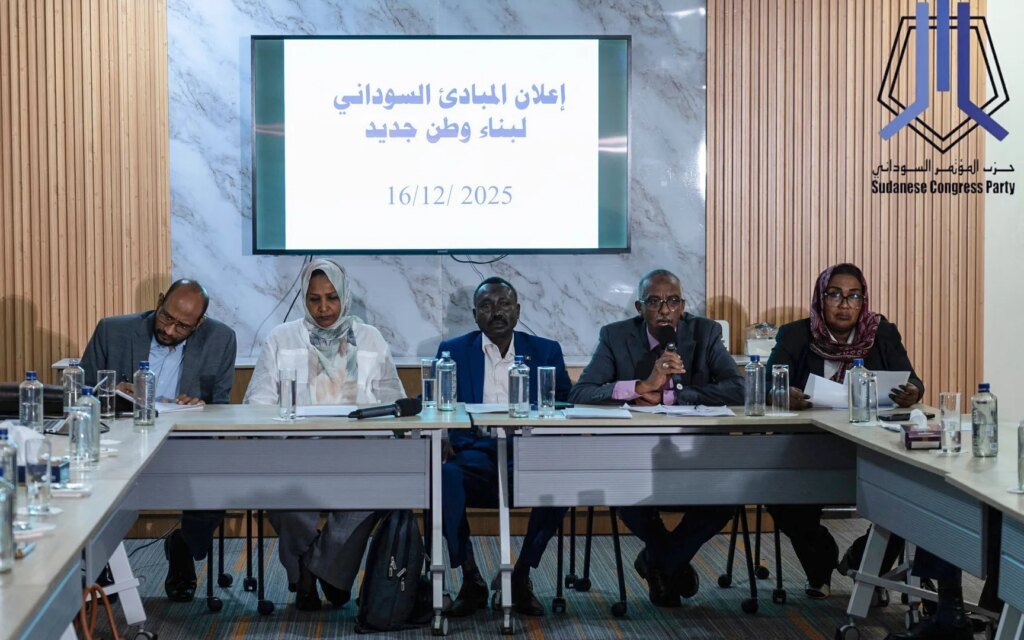
On December 16, a coalition of Sudanese political parties, civil society organizations, and major political figures gathered in Nairobi to unveil a nine-point political roadmap designed to foster a civilian-led initiative aimed at ending the ongoing conflict in Sudan and reinstating a democratic transition. Framed as a platform supporting peace and anti-war sentiments, this initiative positions civilians as a “third pole” amidst the conflict dominated by two military factions: the Sudanese Armed Forces (SAF) and the paramilitary Rapid Support Forces (RSF).
The roadmap aims to restore political agency to civilians who have been sidelined for months by armed groups and foreign negotiators, even though it does not specify any concrete steps for military reform. Its publication has reignited crucial discussions among Sudanese political and civil spheres regarding representation, legitimacy, and the persistent issues of elite-driven politics.
Understanding the Roadmap
The Nairobi declaration follows a statement issued by the Quad—comprising Egypt, Saudi Arabia, the United Arab Emirates (UAE), and the United States—in September. This earlier statement called for an immediate three-month ceasefire leading to a permanent truce, humanitarian access for civilians, and the establishment of a political process for a civilian transition. It stressed the need to exclude remnants of the former regime of President Omar al-Bashir and to transition Sudan’s security forces under civilian oversight, principles that were reiterated in the Nairobi declaration.
Among the signatories are well-known parties like the National Umma Party and the Sudanese Congress Party, as well as civil organizations such as the Darfur Lawyers Association and the Coordination of Internally Displaced Persons and Refugees. Notably, the declaration was also signed by former Prime Minister Abdalla Hamdok, who previously led the transitional government until the military coup in October 2021.
Challenges and Limitations
Despite the roadmap’s intentions to facilitate civilian leadership, critics argue that it falls short in authentically representing Sudan’s diverse civic movement. Sudanese researcher Hamid Khalafallah pointed out that this coalition resembles previous civilian formations that have struggled to engage effectively with ordinary Sudanese citizens, especially those most affected by the conflict. He contended that the group still largely consists of elite individuals who engage in politics as they always have, failing to connect with the grassroots.
While the declaration mentions resistance committees—neighborhood groups that played a significant role in the protest movements that led to al-Bashir’s ousting—none of these groups officially endorsed or signed the roadmap. Draft versions were shared with some grassroots organizations, yet the integration process progressed without waiting for collective input, leading to concerns about the genuine empowerment of civilians.
Though the inclusion of Abdelwahid al-Nur, a longtime leader of the Sudan Liberation Movement (SLM-AW), was viewed by some as a positive step, observers like Khalafallah question whether this collaboration seeks to genuinely reform civilian politics or simply serve as a counterbalance against rival military forces.
Global Reactions and Perspectives
European officials have expressed skepticism about the Nairobi initiative. A senior diplomat from the European Union remarked that they do not consider the Nairobi declaration to be a viable foundation for a unified civilian process. The focus, according to this official, should be on consolidating various civilian efforts under a singular, credible framework, primarily led by the African Union, rather than multiplying civilian platforms.
The EU’s approach illustrates a larger issue of frustration among international actors regarding Sudan’s fragmented civilian landscape, as they worry that abandoning these discussions would only legitimize military rule. The official emphasized the need to support the creation of a credible “third pole” outside of the military factions while stressing the importance of adhering to humanitarian principles.
Navigating Political Complexity
Expert in U.S.-Africa policy, Cameron Hudson, highlighted that the Nairobi declaration appears to be more about aligning with the Quad’s objectives rather than building true domestic consensus. He cautioned that connecting ceasefire efforts directly with political reforms risks misunderstanding the timing of Sudan’s political transition, suggesting that ceasefire negotiations should be prioritized independently of any political changes until hostilities cease.
The juxtaposition of the international community’s goals is stark; both the Quad and the EU agree on the necessity of excluding the SAF and RSF from a future political landscape while simultaneously acknowledging that these forces are essential for any cessation of violence. This presents a fundamental contradiction within their strategies, showcasing the complexities of attempting to navigate Sudan’s turbulent political environment.
- A coalition in Nairobi has proposed a nine-point roadmap for a civilian-led initiative in Sudan.
- The declaration aims to empower civilians amidst the ongoing conflict between military factions.
- Critics argue that the initiative does not fully represent broader civic movements or grassroots interests.
- Global perspectives, particularly from Europe, emphasize the need for a unified civilian process under credible leadership.