
New Epstein Files Release Sparks Controversy Amid Redactions and Missing Documents
The recent release of documents by the United States Department of Justice (DOJ) has reignited interest in the case of Jeffrey Epstein, the late financier and convicted sex offender. This latest batch of documents, which includes photographs of notable figures associated with Epstein, has drawn criticism from campaigners advocating for transparency regarding the Epstein Files. Despite the informative content, many consider the extensive redactions too significant, leading to renewed calls for accountability.
What’s Included in the Latest Release?
The DOJ’s recent unveiling of documents marks another chapter in the ongoing saga surrounding Epstein, who died by suicide in a New York jail in 2019. The initial set of around 950 pages was made public in early 2024, and this latest release continues to shed light on the investigations surrounding Epstein and his accomplice, Ghislaine Maxwell, who is currently serving a 20-year prison sentence for her involvement in the scandal.
Notably, one document reveals that the Federal Bureau of Investigation (FBI) had been alerted to Epstein’s misconduct nearly ten years prior to his first arrest. In a complaint made in September 1996, Epstein survivor Maria Farmer expressed concerns about his engagement in child sex abuse. While the document redacts the name of the complainant, Farmer has publicly confirmed her role.
In a statement following the release of the files, Farmer expressed feelings of “redeemed” and described it as “one of the best days of my life.” She expressed both joy for her own vindication and sorrow for other victims who were overlooked.
Insights from Newly Released Testimonies
The fresh documents also include new transcripts from grand jury proceedings, which feature accounts from girls and young women who detailed their experiences of being compensated for sexual acts with Epstein. Alarmingly, the youngest person interviewed was just 14 years old. One woman shared that she had begun working for Epstein at 16 and subsequently helped recruit others, receiving $200 for each girl brought to him.
While much of the previously released material has circulated in public records, new photographs—many of which are significantly redacted—highlight various prominent figures.
Notable Figures in the Released Photographs
The latest document release features an assortment of photographs that were confiscated during FBI searches of Epstein’s residences in both New York City and the U.S. Virgin Islands. Among the identified individuals captured in these images are notable musicians like Mick Jagger, Michael Jackson, and Diana Ross. Jagger is seen in a photograph sitting between Epstein and former U.S. President Bill Clinton, while Jackson is pictured posing with Clinton and Epstein alongside a painting.
Additional recognizable names in this collection include actor Kevin Spacey, comedian Chris Tucker, billionaire Richard Branson, and Andrew Mountbatten-Windsor, commonly known as Prince Andrew, along with his former wife Sarah Ferguson. One image shows Prince Andrew in a compromising position, lying across the laps of several unknown individuals.
The Trump Connection
Donald Trump’s presence in these files is notably minimal, with only a few images tied to him, mainly familiar to the public. Documents released indicate an instance where Epstein allegedly introduced a 14-year-old girl to Trump at his Mar-a-Lago resort in Florida. During the introduction, Epstein remarked to Trump, “This is a good one, right?” to which Trump reportedly smiled and nodded. The plaintiff in the court filing does not accuse Trump of wrongdoing.
Following media inquiries, a White House spokesperson characterized the administration as the “most transparent in history,” emphasizing that it had called for investigations into connections between Epstein and political adversaries.
Disappearing Files and Increasing Scrutiny
The investigation into the blacked-out documents took a mysterious turn when it became evident that at least 16 files, including one featuring Trump, were no longer available on the DOJ’s website. Reports have emerged that these documents included explicit imagery and controversial photographs. The DOJ has yet to provide an explanation, citing ongoing reviews and the need for redactions.
In response, Democrats on the House Oversight Committee published a selection of 68 photographs from their own records, arguing that there is a need for transparency surrounding Epstein’s network and heinous activities.
Why So Many Redactions?
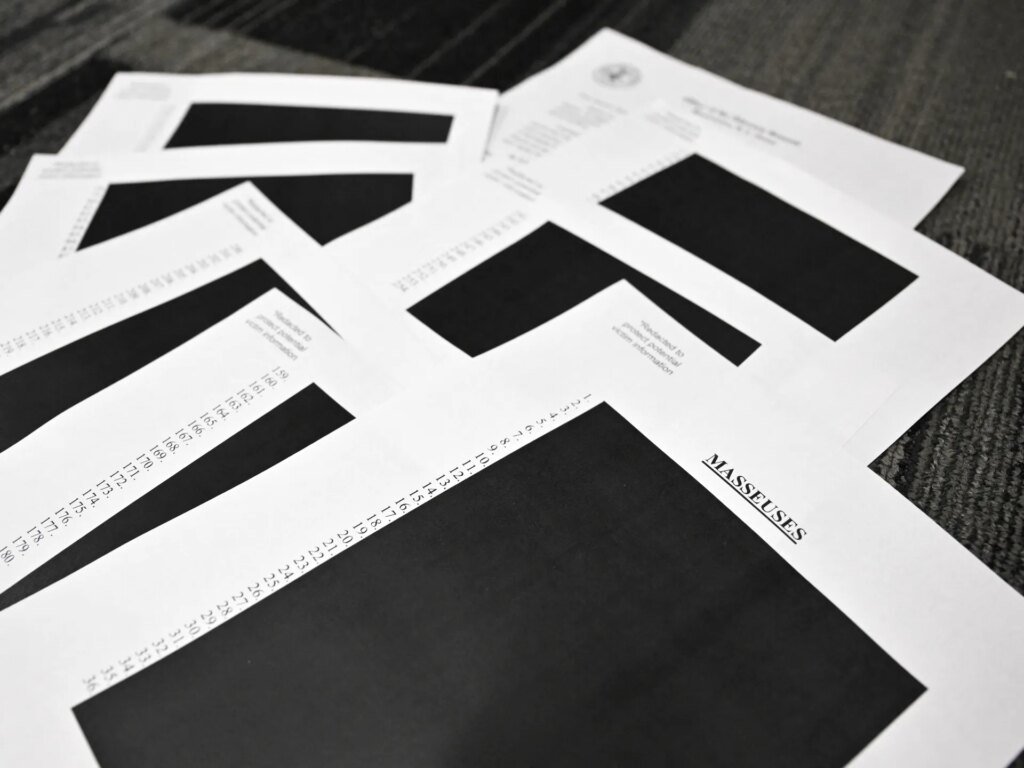
Out of the thousands of pages released, approximately 550 were fully redacted, weakening calls for transparency. Key documents, including court proceedings and interviews, are unreadable due to the omissions. The deputy attorney general explained that the redactions were standardized to protect personal information of victims and sensitive investigation details.
Future Releases and Legal Actions
As the year comes to a close, the DOJ has promised more documents will surface regarding Epstein’s investigations. Following missed deadlines for earlier disclosures, lawmakers voiced their dissatisfaction, insisting that transparency and accountability are essential for the victims of Epstein’s crimes.
Some officials are evaluating legal actions to ensure compliance with transparency directives. As the scrutiny continues, campaigners are focused on ensuring that the remaining undisclosed documents are eventually revealed.
- The DOJ recently released new documents related to Jeffrey Epstein, including redacted photographs of notable figures.
- Critics of the release are concerned about extensive redactions and the disappearance of some files.
- Key new revelations include testimonies from victims describing Epstein’s illicit activities.
- Lawmakers are calling for further legal steps to ensure transparency and accountability in the Epstein case.