
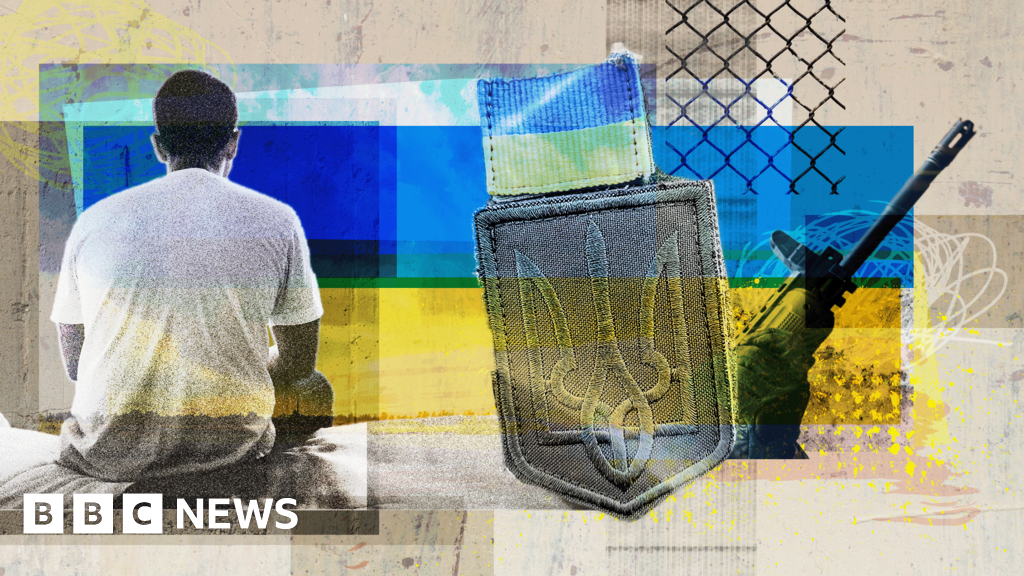
The Silent Tragedy of Soldier Suicides in Ukraine
The conflict in Ukraine has not only claimed lives on the battlefield but has also birthed a silent tragedy—the rising number of soldier suicides. This article delves into the poignant stories of families affected by this crisis, the struggles they face, and the social stigma surrounding mental health issues in Ukraine.
Heartbreaking Loss
Kateryna cannot contain her tears when she speaks about her son, Orest. Her voice shakes with anger as she recounts the moment she learned of his tragic death during frontline fighting in eastern Ukraine in 2023. The army’s official investigation concluded he died from a “self-inflicted wound,” a finding that Kateryna finds hard to accept.
Orest was a 25-year-old with a passion for books and dreams of an academic future. Initially deemed unfit for service due to poor eyesight, he was unexpectedly recruited in 2023 when a patrol stopped him on the street. After a re-evaluation, he was sent to the front lines as a communications specialist.
The Hidden Crisis
With the ongoing mourning for soldiers lost during Russia’s full-scale invasion beginning in 2022, a darker story is taking shape. There are no official statistics on soldier suicides; they are often dismissed as isolated occurrences. However, human rights advocates and grieving families suspect the true number could be much higher, perhaps in the hundreds.
“Orest was caught, not summoned,” Kateryna states bitterly.
Officials at the local recruitment center defend their actions, claiming Orest’s impaired vision qualified him as “partially fit” to serve. After being deployed near Chasiv Yar in Donetsk, Orest showed signs of withdrawal and depression, something his mother remembers vividly.
She continues to write him letters, totaling over 650, which only amplifies her anguish compounded by the knowledge that suicides are categorized as non-combat losses in Ukraine. Families of those who take their own lives are left without financial support or military honors—a stark contrast to the recognition afforded to those who die in combat.
“In Ukraine, it’s as if we’ve been divided,” Kateryna reflects. “Some died the right way, and others died the wrong way. The state took my son, sent him to war, and brought me back a body in a bag. That’s it. No help, no truth, nothing.”
Echoes of Betrayal
Mariyana, a widow from Kyiv, shares a similarly devastating tale. Like Kateryna, she wishes to keep her identity private. Her husband, Anatoliy, volunteered to fight in 2022 but was initially turned down due to a lack of military experience. He persisted until they accepted him, eventually serving as a machine-gunner near Bakhmut, a site of fierce conflict.
“After one mission, he told me about 50 men being killed. He came back different—quiet, distant,” recalls Mariyana. After suffering a serious injury, Anatoliy was hospitalized. Following a phone call with Mariyana, he took his own life in the hospital yard. “The war broke him,” she mourns.
Due to the circumstances of his death, he was denied a military burial. “When he stood on the front line, he was a hero. But now he’s not?” Mariyana feels cast aside, saying, “I gave them my husband, and they left me alone with nothing.”
Demanding Change
Among those left behind, Mariyana has found companionship in an online community of women grieving for soldiers lost to suicide. Together, they long for legal changes that would grant them the same rights and recognition as families of combat casualties.
Viktoria, another widow, is still unable to speak openly about her husband’s death due to fear of judgment. Andriy, who had a congenital heart condition but insisted on serving, was a driver in a reconnaissance unit. In June 2023, she received the shocking news that he had taken his own life.
“It felt as though my world had crumbled,” she recalls. Though the military agreed to reopen the investigation into Andriy’s death after discrepancies were found, she is determined to honor his memory, stating, “I’m fighting for his name. He can’t defend himself anymore. My war isn’t over.”
A Call for Support
Oksana Borkun, who runs a support organization for military widows, claims that her network has grown to include around 200 families who have lost loved ones to suicide. “If it’s labeled a suicide, then he’s not seen as a hero—that’s the stigma,” she notes. Many families are left questioning official accounts of their loved ones’ deaths, with reports of inconsistencies and inquests closed prematurely.
Military chaplain Father Borys Kutovyi has seen the tragic impact of mental health on soldiers firsthand. He believes every suicide signifies a failure somewhere within the support system. “Even the strongest minds can break,” he emphasizes.
Olha Reshetylova, Ukraine’s Commissioner for Veterans’ Rights, acknowledges the alarming reports of military suicides, signaling that existing measures are inadequate. She advocates for comprehensive reforms: “Families have a right to the truth. They don’t trust investigators. In some cases, suicides may cover up murders.” Her goal is to honor these soldiers as heroes, stressing the importance of societal understanding and compassion.
Conclusion
The ongoing conflict in Ukraine leaves behind more than just visible scars; it results in silent tragedies stemming from unchecked mental health issues among soldiers. The stories of families like Kateryna’s, Mariyana’s, and Viktoria’s highlight the urgent need for legal and societal reforms to address the stigma surrounding mental health and ensure that all soldiers are honored for their service, irrespective of how they died.
Key Takeaways
- The rising number of soldier suicides in Ukraine reflects an urgent mental health crisis.
- Families of soldiers who die by suicide face stigma and receive no military recognition.
- Organizations and advocates are pushing for legal reforms to support bereaved families.
- There’s a critical need for societal change to address mental health issues within the military community.