
Escalating Tensions: Israeli Military Actions in Southern Syria
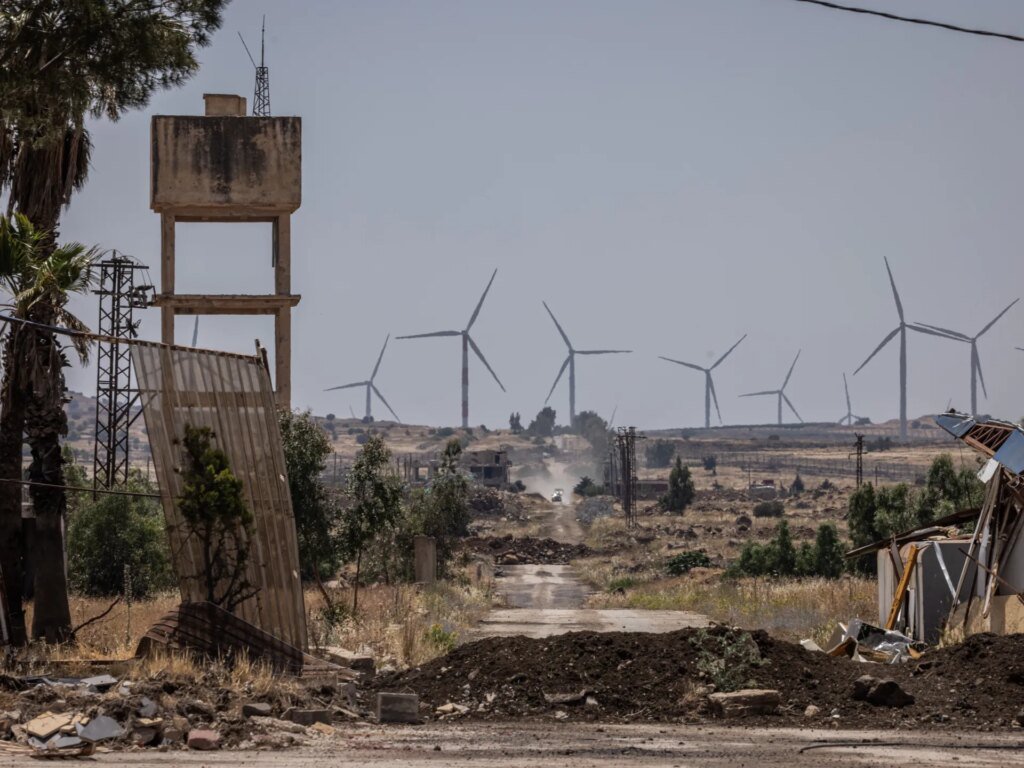
The situation in southern Syria continues to escalate as Israeli military activities intensify, prompting strong reactions from both the Syrian government and its citizens. Recent reports reveal that Israeli forces have penetrated the Quneitra area within the occupied Golan Heights, establishing military checkpoints that have led to increased public unrest and opposition to these actions.
Recent Incursions and Public Response
On a recent Saturday, Israeli troops advanced into the villages of Ain Ziwan and al-Ajraf in southern Syria, according to firsthand accounts from Al Jazeera correspondents embedded in the region. This particular operation involved the deployment of five military vehicles to set up a checkpoint in Ain Ziwan.
For several months, these incursions have become a near-daily occurrence, particularly targeted at the Quneitra governorate. The Israeli military has been conducting frequent arrests, setting up additional checkpoints, and performing land bulldozing activities—all contributing to rising tensions among the local populace.
In fact, protests were held on Friday in the city of al-Salam, where demonstrators from a group known as “Syrians with Palestine” voiced their discontent over what they described as ongoing Israeli violations of Syrian land. These protests reflect widespread anger and a sense of injustice felt by the citizens regarding the repeated military interventions.
Military Operations and Increasing Attacks
The frequency and intensity of Israeli military actions have raised significant concern. Although the level of direct military threats may have lessened recently, Israel continues its aerial bombardments, resulting in civilian casualties and damage to Syrian military installations. Over the past year alone, reports indicate that Israel has launched more than 600 military strikes, averaging nearly two every day.
Israeli incursions have particularly intensified following the ousting of President Bashar al-Assad in December 2024, with military activities becoming increasingly overt and aggressive. In this context, Israel has deemed the 1974 Disengagement Agreement, established post the 1973 war, as invalid, citing Assad’s departure as a reason for this assessment. This agreement had previously set a UN-monitored buffer zone that Israel now frequently violates.
The Ramifications of Continued Aggression
Syrian President Ahmed al-Sharaa has recently reported that Israel has executed over 1,000 air attacks and more than 400 ground incursions since the overthrow of Assad, describing these actions as “very dangerous.” The Syrian government asserts that such aggressive military actions obstruct stability in the region and complicate efforts aimed at improving economic conditions in southern Syria.
Authorities and citizens alike fear that ongoing military engagement may further destabilize an already vulnerable area. In light of these invasions, Syria remains passive in terms of retaliatory measures, showing restraint despite provoking actions from Israel.
Negotiations for Diplomatic Resolution
Currently, talks are underway between Syria and Israel, with Damascus aiming to secure an end to Israeli air raids and the withdrawal of troops from southern Syria. In the backdrop of these negotiations, the United States is also pushing for a diplomatic approach to reinstating the 1974 agreement, hoping to bring about some form of stability to the region.
Conclusion
The persistence of Israeli military activities in southern Syria reflects a complex relationship marked by ongoing conflict and diplomatic efforts. As both sides navigate this fraught landscape, the implications for regional stability remain uncertain, stirring fear and unrest within the affected populations.
- The Israeli military has made several incursions into southern Syria, notably in the Quneitra area.
- Local protests have emerged in response to these violations, highlighting growing public discontent.
- Israel has conducted extensive military operations, including numerous air attacks over the past year.
- Negotiations are ongoing in hopes of resolving tensions and restoring stability in the region.