
Russian Missile Strikes Intensify in Odesa, Ukraine
The ongoing conflict between Russia and Ukraine has escalated dramatically, particularly in Odesa, where recent attacks have resulted in numerous casualties. This article highlights the impact of these missile strikes, the ongoing military activities, and the diplomatic efforts aimed at resolving the war.
Missile Strikes on Odesa
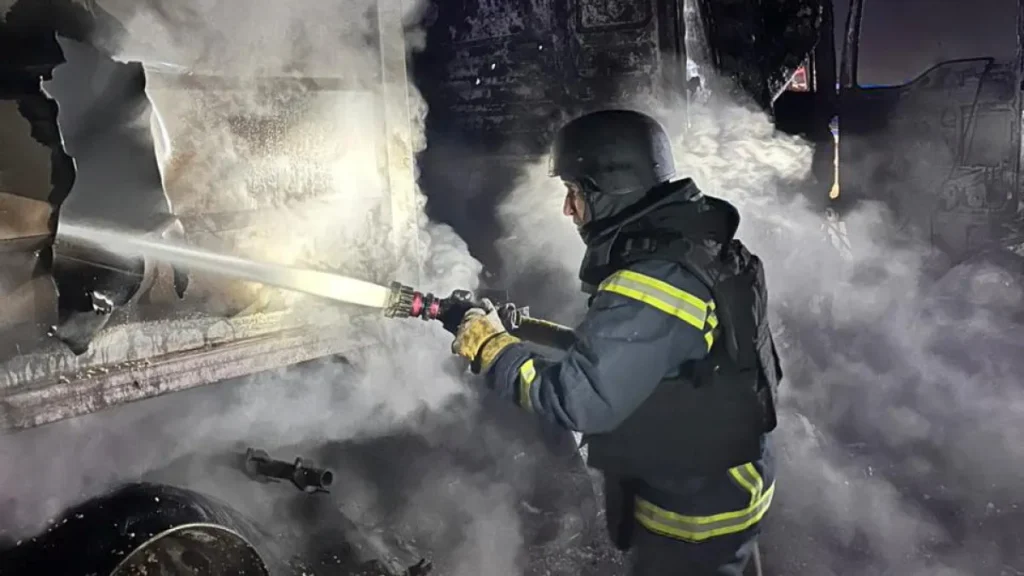
In a devastating attack on Friday evening, a Russian ballistic missile targeted the port infrastructure in Odesa, leading to the tragic deaths of at least eight individuals and injuring 27 others. The strike hit a crucial logistics site, with some victims trapped on a bus at the epicenter while trucks were set ablaze in nearby parking areas. Ukrainian officials have condemned the bombardment as part of a systematic Russian assault on Odesa’s civilian infrastructure, which has left over two million residents without electricity, water, or heating during severe winter conditions.
Continued Military Operations
The situation worsened as Russian forces launched another attack on Saturday, striking reservoirs in what Ukrainian Deputy Prime Minister Oleksii Kuleba described as a deliberate effort to target civilian supply routes. This escalation occurs amidst ongoing exchanges of fire across several fronts, while negotiations led by the United States and various European nations to end the war struggle to find common ground.
Recent Developments on the Battlefield
On Saturday, Russia claimed control over the villages of Svitle in the eastern Donetsk region and Vysoke in northeastern Sumy, although these reports remain unverified. In response, Ukraine has ramped up its campaign against Russian military and energy targets. A notable development occurred on Friday night when Ukrainian drones targeted the Filanovsky oil rig, owned by Russian energy firm Lukoil, in the Caspian Sea. This strike represents the first officially recognized attack on Russian drilling infrastructure in that region.
Diplomatic Efforts in Miami
Simultaneously, American and European officials convened in Miami over the weekend to discuss the path toward ending the conflict, with representatives from both Russia and Ukraine present. Russian envoy Kirill Dmitriev confirmed his attendance, while U.S. Secretary of State Marco Rubio emphasized that Washington would not coerce Ukraine into an agreement, framing the situation as “not our war.” Negotiations are being led by Trump veterans Steve Witkoff and Jared Kushner alongside Ukrainian negotiator Rustem Umerov, and officials from the UK, France, and Germany. Russian negotiators are engaging separately with U.S. representatives.
Stumbling Blocks in Negotiations
A significant hurdle in the discussions relates to territorial concessions, with reports suggesting that Washington might be encouraging Kyiv to yield parts of the eastern Donetsk region. Russian President Vladimir Putin showed little willingness to compromise during his recent press conference, reaffirming his commitment to ongoing military operations and projecting confidence in achieving additional territorial gains before the year’s end.
The Territorial Dispute
The crux of the negotiations hinges on the contentious matter of territory—what has been gained, lost, and what might be surrendered. Putin is calling for Ukraine to relinquish all lands held by Russian forces, which includes Crimea, illegally annexed by Moscow in 2014. Moreover, he demands that Ukrainian troops pull back from parts of the eastern region still held by Kyiv, despite ongoing fierce fighting. Ukraine has flatly rejected these demands.
Ongoing Military Actions
As diplomatic efforts progress, fighting continues unabated. Currently, Russia maintains control over significant portions of Ukraine’s eastern territories and coastal regions along the Black Sea. Although Putin expressed confidence in the achievements on the battlefield, suggesting that Russian forces have “fully seized strategic initiative,” reports indicate challenges to that narrative. Ukrainian forces have reportedly regained control over much of the northern city of Kupiansk, countering Russian claims of occupation. Additionally, Ukrainian defenders have effectively resisted attempts by Russian troops to seize control of Pokrovsk in Eastern Donetsk.
International Support for Ukraine
In a boost for Ukraine, European leaders recently pledged a loan of 90 billion euros (approximately $105 billion) to support military and economic needs over the next two years. President Volodymyr Zelenskyy, who met with Polish President Karol Nawrocki in Warsaw to strengthen regional alliances, indicated that these funds would be utilized for defense if the conflict persists, or for reconstruction efforts should peace be attained.
Conclusion
The situation in Odesa and the broader conflict in Ukraine continue to be perilous, marked by both military escalations and diplomatic efforts. As international discussions progress, the path toward peace remains fraught with challenges.
- Russian missile attacks on Odesa have resulted in casualties and extensive damage to civilian infrastructure.
- Ukraine is launching counterattacks against Russian military assets amid ongoing assaults.
- High-level diplomatic talks are taking place in Miami, but significant disagreements persist over territorial concessions.
- International financial support for Ukraine has increased as the military conflict endures.