
France Faces Budget Impasse as Lawmakers Fail to Reach Agreement
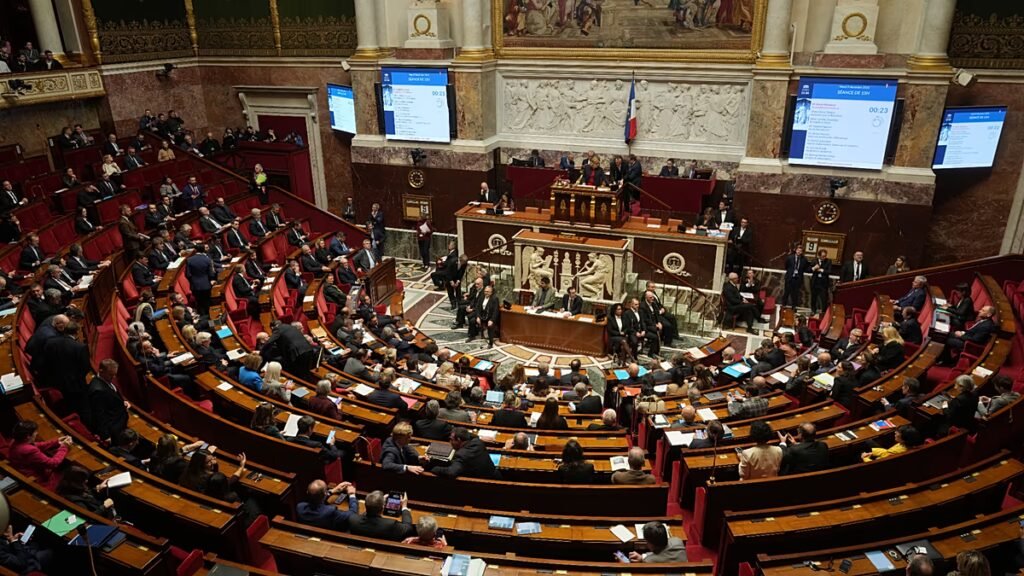
In a significant political setback, French lawmakers were unable to finalize the state budget for 2026, leaving the nation without an approved financial framework as the year comes to a close. The joint committee comprising seven senators and seven deputies broke down in under an hour, with divisions so stark that substantive discussions never took place.
Budget Negotiations Collapse
Philippe Juvin, the Senate budget rapporteur, admitted to the lack of a common agreement that could be accepted by both legislative chambers within the set deadline. Prime Minister Sébastien Lecornu expressed his disappointment over parliament’s inability to cast a vote on the budget before December 31. His cabinet highlighted the failures of the joint committee, stating that the absence of governmental participation hindered progress, and he pointed out a lack of motivation among parliamentarians in a message on social media platform X.
Potential Solutions and Concerns
In light of the deadlock, the government is expected to pursue a special law that would allow the 2025 budget to extend into the new year. This legislation is crucial for ensuring the continuity of tax collection and the ability to pay civil servants after January 1.
Central Bank’s Warning
François Villeroy de Galhau, the governor of the Banque de France, cautioned on France Inter that a special law would only serve as a temporary fix, potentially leading to a deficit considerably exceeding acceptable limits. He noted that without this law, necessary spending increases, particularly in defense, would be jeopardized. Villeroy stressed that allowing the deficit to breach 5% of GDP would place France at risk.
Current Deficit and Budgetary Challenges
As of now, France’s deficit stands at 5.4% of GDP, the highest in the eurozone. The minority government has insisted that the 2026 budget maintain a deficit below 5%, a target that was already revised from an original goal of 4.7% due to concessions made to Socialist lawmakers. The Senate’s proposed budget, which is the sole version that has been voted upon, reached a 5.3% target, with expenditures exceeding the budget limit by €9 billion. The stark contrast between the government, which seeks to reduce spending and taxes, and the Socialist party, which advocates for increased budgets, remains a major sticking point.
Political Fallout and Futures
Prime Minister Lecornu, who was appointed in September and reaffirmed in October following the dismissal of his predecessors over austerity measures, has committed to passing a budget by the year’s end without resorting to constitutional powers previously wielded to bypass votes. Eric Coquerel, president of the joint committee and a representative of the far-left France Unbowed party, remarked that there was no point in considering the budget articles since the rapporteurs failed to present a unified text.
This budget impasse follows the recently contentious adoption of the Social Security budget, spurring heightened scrutiny from investors and credit agencies regarding France’s fiscal health amidst escalating debt.
Continuing Political Crisis
The political landscape in France remains turbulent since President Emmanuel Macron called for snap elections in 2024, aimed at consolidating power but ultimately leading to a hung parliament and a rise in far-right representation. The legislative process is expected to resume with the Senate’s version of the budget, which is the last text to have been voted on.
Despite the anticipated special law, all political factions recognize its insufficiency, as it would preclude necessary expenditures, particularly in defense, against the backdrop of increasing global uncertainties. France’s debt has climbed to 117.4% of GDP in the third quarter of 2025, a rise from previous periods, leading to Villeroy’s warning that French bond yields have diverged dangerously from those of Germany, aligning closer to Italy’s and thereby escalating borrowing costs.
Conclusion
The inability to agree on the 2026 budget highlights ongoing challenges in French politics, with implications for fiscal stability. As lawmakers navigate these turbulent waters, the government seeks immediate measures to maintain operations while grappling with long-term economic health.
- French lawmakers failed to finalize the 2026 budget before the year-end deadline.
- The government may introduce a special law to extend the 2025 budget into 2026.
- The current deficit stands at 5.4%, the highest in the eurozone, raising concerns among financial authorities.
- The political crisis continues as lawmakers struggle to find common ground amidst rising debt and budgetary conflicts.