
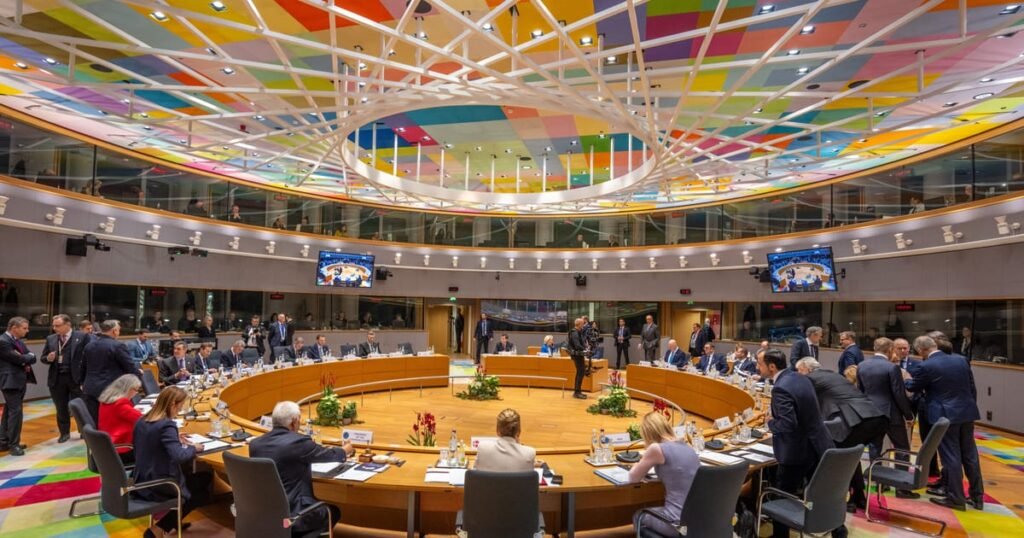
European Leaders Discuss Financial Aid for Ukraine
In a significant development, European leaders concluded 15 hours of talks at an EU summit in Brussels but were unable to agree on a plan to utilize frozen Russian assets for supporting Ukraine with billions in financial aid. As a result, discussions are now shifting towards a different approach involving joint borrowing to provide €90 billion in assistance over the next two years.
The New Funding Strategy
This latest plan to financially support Ukraine will proceed without the participation of Hungary, Slovakia, and Czechia. Germany, which had previously expressed opposition to this method of funding, has now taken a supportive stance.
Announcement of Support
European Council President António Costa shared the news on X, stating, “Decision to provide 90 billion euros of support to Ukraine for 2026-27 approved. We committed, we delivered.” This marks a pivotal moment for EU cooperation, even as some member states remain on the sidelines.
Implications for EU Unity
The failure to reach an agreement on the use of frozen Russian assets signifies challenges in maintaining unity within the European Union. The proposed solution, while promising significant aid to Ukraine, also highlights divisions among member states regarding the approach to financial support.
Looking Ahead
As discussions progress, the focus will now be on how to effectively implement this joint borrowing mechanism to ensure that Ukraine receives the necessary assistance. The support plan aims to bolster Ukraine during an essential period, reinforcing the EU’s commitment to its sovereignty.
Conclusion
The ongoing debates among European leaders reflect both the urgency of providing aid to Ukraine and the complexities of reaching consensus. As the EU navigates these challenges, the emphasis on cooperation will be crucial as they move forward with the newly proposed financial strategy.
- EU leaders discussed aid strategies for Ukraine at a recent summit.
- Joint borrowing of €90 billion over two years is now the proposed solution.
- This plan excludes Hungary, Slovakia, and Czechia, while gaining Germany’s support.
- Unity within the EU faces challenges as discussions continue.