
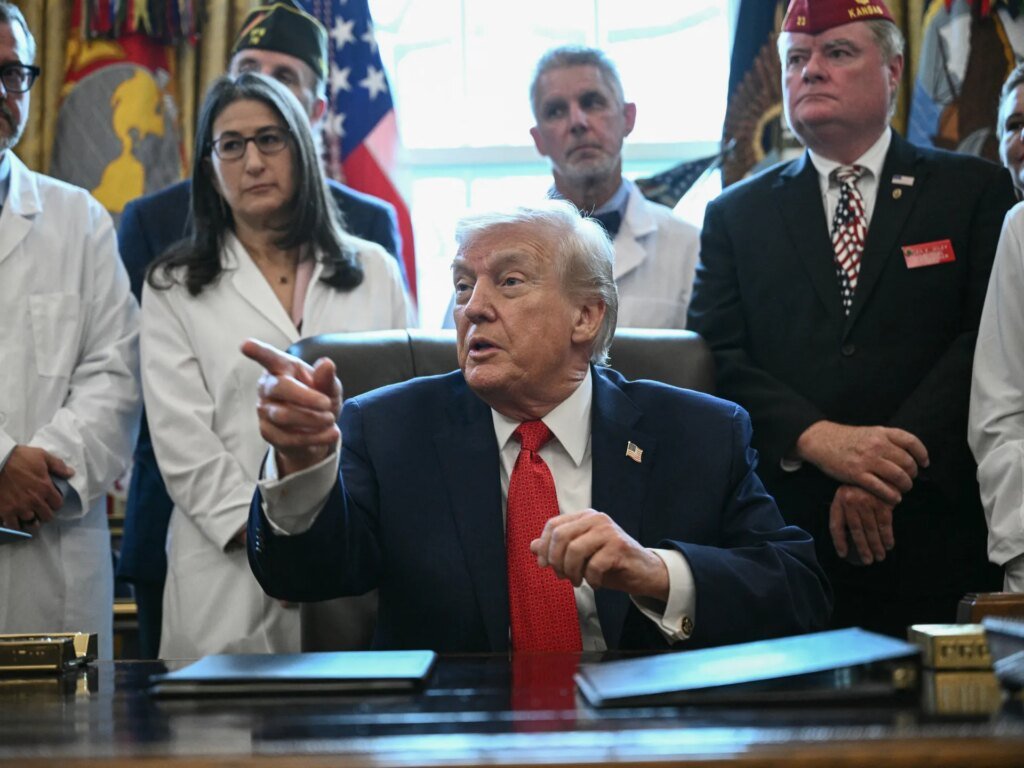
President Signs Executive Order to Reclassify Marijuana
In a significant move, President Donald Trump has issued an executive order aimed at federally reclassifying marijuana, reducing its classification as a dangerous substance. This action comes as part of a broader effort to facilitate research opportunities on cannabis and align federal policies with shifting public attitudes toward marijuana use.
Details of the Executive Order
Signed on Thursday, the order mandates Attorney General Pam Bondi to accelerate the reclassification process under the Drug Enforcement Administration (DEA). Currently, drugs are categorized into a five-tier system, with Schedule I drugs being the most restricted. Previously, marijuana was classified in the Schedule I tier alongside substances like heroin and LSD. Following the executive order, it could be reclassified to Schedule III, placing it in a category shared with medications like ketamine and anabolic steroids.
While the President clarified that this change does not equate to the legalization of marijuana or endorse its recreational use, it opens the door for more extensive research. Studies involving Schedule III substances face significantly fewer regulatory hurdles than those involving Schedule I drugs, which could lead to a better understanding of marijuana’s properties and potential benefits.
Context and Reactions
Trump emphasized the popularity of this reclassification, noting that it allows for “tremendous amounts of research that can’t be done unless you reclassify.” This move aligns with recent trends in several states where marijuana has been legalized for both medical and recreational purposes, creating a conflicting landscape between state and federal laws.
Former President Joe Biden made strides to reduce federal penalties concerning marijuana, including pardoning numerous individuals convicted of simple possession. These actions addressed disparities in sentencing heavily affecting minority communities and contributing to mass incarceration in the United States. Biden’s administration had also initiated the process of recategorizing marijuana to Schedule III, but it remained unfinished by the time he left office in January.
Reactions to Trump’s order have been mixed. Some factions within the Republican Party have expressed concerns, with 20 Republican senators previously signing a letter urging Trump to maintain stricter regulations. They argue that marijuana can still pose risks and that reclassification might undermine his broader political agenda.
Despite the internal debates, public support for marijuana legalization has surged, nearly doubling from 36 percent in 2005 to 68 percent in 2024, according to Gallup polls. This growing acceptance reflects a transformative shift in societal views regarding cannabis use.
Conclusion
President Trump’s executive order marks a pivotal moment in the ongoing dialogue about marijuana in the United States. By lowering its classification, he aims to enhance research opportunities and align federal policies with evolving public opinion while navigating the complexities of party politics.
- Trump’s executive order calls for the reclassification of marijuana from Schedule I to Schedule III.
- The change facilitates research on cannabis by simplifying regulatory requirements.
- Public support for legalizing marijuana has nearly doubled over the last two decades.
- The decision faces internal Republican opposition, reflecting ongoing debates about marijuana’s risks.