
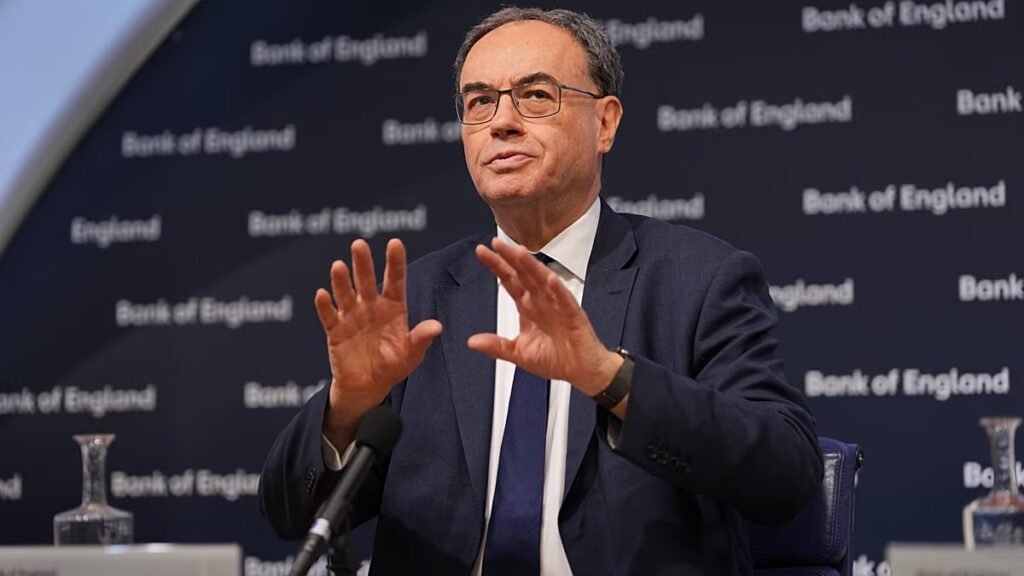
Bank of England Lowers Interest Rate Amid Economic Challenges
The Bank of England has made a significant move by reducing its key interest rate by 0.25% to 3.75%. This decision comes at a time when the UK’s economic growth remains tepid and unemployment rates are elevated. The recent inflation data revealed that price pressures have eased, reaching their lowest mark in eight months, with the Consumer Price Index (CPI) standing at 3.2% in November, down from 3.6% in October.
Economic Context for the Rate Cut
This rate reduction, the lowest in almost three years, may provide a much-needed boost for Finance Minister Rachel Reeves and Prime Minister Keir Starmer, who have struggled to fulfill their growth-boosting pledges for the UK. Many analysts believe that their efforts have been thwarted by a recent increase in employer social security contributions, alongside the ongoing repercussions of Brexit that continue to affect investment and trade.
Impact of Business Sentiment
Additionally, uncertainty surrounding U.S. tariffs and increases in the minimum wage are making businesses more hesitant to hire new staff. Productivity continues to show signs of stagnation, further complicating the economic landscape.
Recent Economic Indicators
According to the latest statistics, the UK economy contracted by 0.1% in October, echoing a similar decline in the third quarter of the year. Over the past seven months, the economy has only recorded growth in one month, based on data from the Office for National Statistics.
Inflation Pressures Persist
While tapering inflation may push the Bank of England towards a more stimulus-focused approach, it’s important to note that price pressures are still above the central bank’s established target. Claire Lombardelli, the deputy governor of the Bank, highlighted earlier this week that there are still “upside risks” to inflation, despite a slowdown in wage growth.
Future Predictions
In their analysis before Thursday’s decision, economists from ING foresee two additional rate cuts scheduled for February and April of 2026. Concurrently, the European Central Bank is expected to announce its own interest rate plans later today, with no changes currently anticipated.
Conclusion
The recent interest rate cut by the Bank of England reflects ongoing challenges in the UK economy. By easing monetary policy, the bank aims to stimulate growth and address rising unemployment, amidst ongoing uncertainties affecting businesses.
- The Bank of England reduced its key interest rate to 3.75%.
- Inflation has dropped to 3.2%, its lowest in eight months.
- Economic contraction persists, with minimal growth over the past months.
- Future predictions suggest further rate cuts could occur in early 2026.