
The Bondi Beach Terror Attack and Its Ties to the Southern Philippines
The recent Bondi Beach terror attack has ignited discussions surrounding the alleged assailants, Sajid and Naveed Akram, and their recent trip to the southern Philippines. Their visit raises critical questions about potential connections to the rising instances of violent Islamist extremism in that area. This article delves into these concerns, examining the context and implications of their travels to a region long-known for such activity.
Is the Southern Philippines a Hotspot for Terrorism?
The southern region of Mindanao has been embroiled in conflict for decades, influenced by Islamist separatists, communist insurgencies, and local warlords. This combination has created an environment conducive to the growth of jihadist organizations affiliated with groups like al-Qaida, Jemaah Islamiyah, and more recently, the Islamic State (IS). The local population, motivated by political and historical grievances, aspires to establish an Islamic state.
While many extremist factions have weakened over the years, sporadic violence persists. One significant event occurred in 2017 when IS-aligned militants captured the city of Marawi. Their control lasted five months, resulting in extensive destruction, numerous casualties, and the displacement of thousands. Mindanao remains unique within the predominantly Catholic Philippines due to its substantial Muslim minority.
How Do Extremist Groups Sustain Their Presence?
The geographical features of Mindanao—dense forests, uneven terrain, and remote islands—have provided a strategic advantage for guerilla warfare. These conditions have attracted foreign fighters seeking training from groups like Abu Sayyaf and others connected to IS. Furthermore, a porous maritime border facilitates the smuggling of arms and militants from neighboring countries such as Indonesia, Malaysia, and even the Middle East.
Although the activity of extremist groups has diminished, remnants of IS still operate in the region, notably around Marawi. Security expert Todd Elliott notes, “Marawi is still a hotbed of jihadist support,” indicating that while the threat may have lessened, it is far from eradicated.
Active Islamic Militant Groups in the Region
Despite a significant decline in capabilities, several militant organizations continue to operate in the southern Philippines. Abu Sayyaf, once infamous for its kidnappings and bombings, has been largely neutralized; most of its members have surrendered according to military reports. Meanwhile, the Bangsamoro Islamic Freedom Fighters, a faction of the Moro Islamic Liberation Front, remains active, albeit diminished by ongoing surrenders and military operations.
The Moro Islamic Liberation Front accepted a peace deal in 2019, aimed at forming the Bangsamoro Autonomous Region of Muslim Mindanao, which spurred a formal renouncement of terrorism. The Maute Group, also known as Daulah Islamiyah, has been reduced in size to what authorities consider manageable levels. The Isis-East Asia network, albeit loosely organized, claims around 300 to 500 fighters who conduct sporadic attacks in Mindanao.
In recent developments, authorities eliminated Mohammad Usman Solaiman, a reputed leader of Daulah Islamiyah and an alleged bomb expert, in Maguindanao del Sur. His group has been linked to several attacks across the region, including a series of bus bombings in 2022.
Recent Attacks and Government Responses
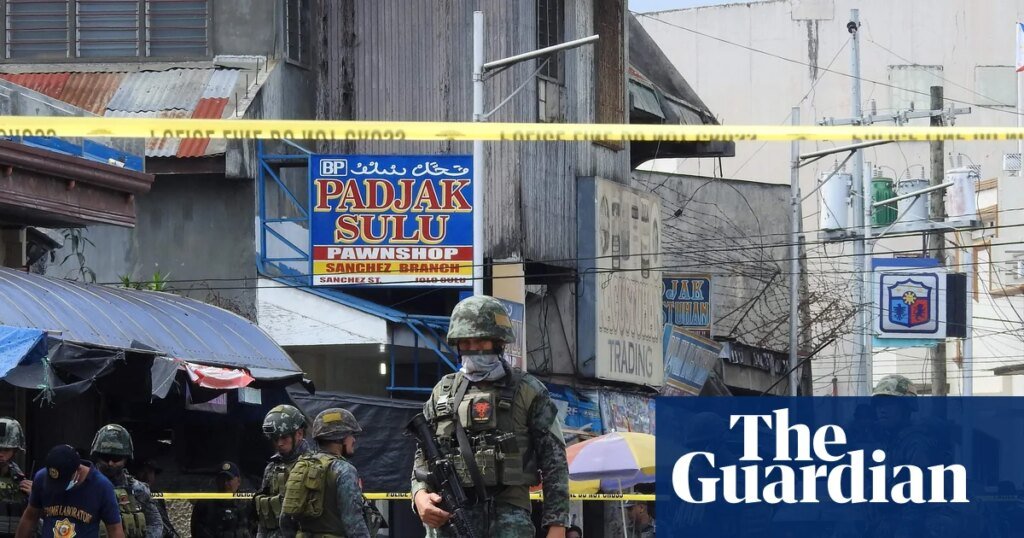
While extremist attacks have decreased notably following the fall of IS and during the COVID-19 pandemic, isolated incidents continue to occur. The most severe attack in recent years took place in 2019, when twin bombings at a Catholic church in Jolo, Sulu province, resulted in 20 fatalities and around 100 injuries. Another bombing in 2020 also claimed 14 lives, exemplifying ongoing threats.
In response, the Philippine government has intensified its campaign against extremist groups, bolstered by an anti-terror law introduced in 2020 that enhances its capacity to combat violent extremism. Operations have led to the deaths, arrests, or surrenders of prominent Islamist militants, thereby significantly undermining their operational capabilities. Nonetheless, the remaining factions are often fragmented and struggle with limited reach.
Conclusion
The connection between the Bondi Beach attack and the Akram family’s recent journey to the southern Philippines underscores the complex nature of global terrorism. As authorities investigate further, it remains crucial to understand the regional dynamics that allow extremist ideologies to persist, even in diminishing capacities.
- Sajid and Naveed Akram traveled to the southern Philippines shortly before the Bondi Beach attack, raising concerns.
- The southern Philippines, particularly Mindanao, has a long history of Islamist extremism and conflict.
- While several militant groups have weakened, isolated incidents of violence still pose a threat.
- The Philippine government continues to combat extremism with increasing measures and operational strength.