
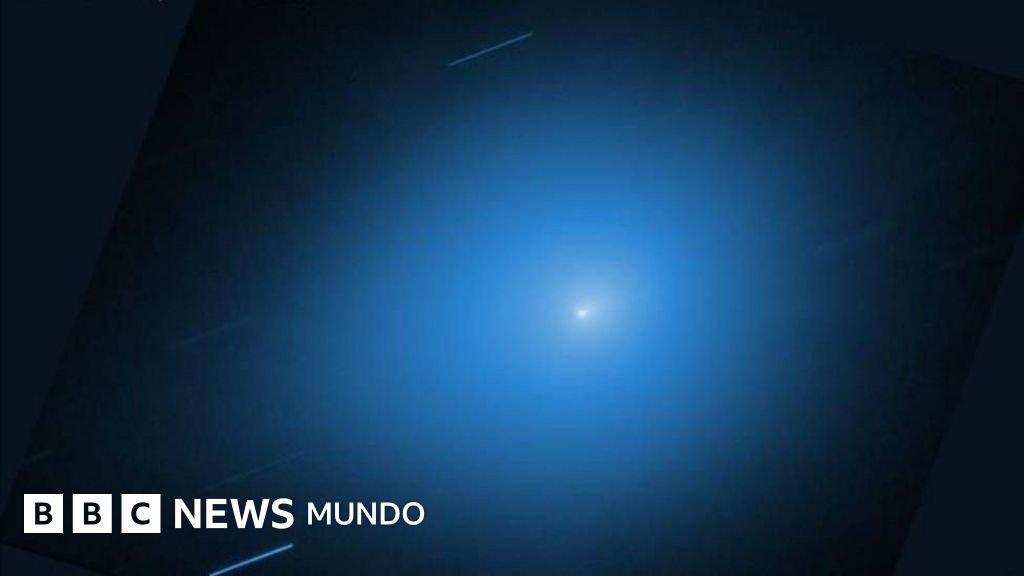
The Fascinating Journey of Comet 3I/ATLAS
Comet 3I/ATLAS marks our third known interstellar visitor, sparking curiosity and speculation since its discovery. Though government shutdowns delayed NASA’s announcements, they eventually clarified the mystery surrounding this intriguing object. This article discusses its origin, trajectory, size, and the science behind its unique composition.
The Discovery of 3I/ATLAS
Comet 3I/ATLAS was detected on July 1, 2025, by the ATLAS project’s telescope based in Rio Hurtado, Chile. This significant discovery was initially overshadowed by the fears and theories of it being an alien spacecraft, particularly during the lengthy government closure that prevented updates. However, following a press conference after the shutdown, NASA clarified that “3I/ATLAS is a comet.”
What Makes a Comet Different?
Unlike asteroids, comets are primarily comprised of ice and dust. As they approach the Sun, the heat causes these materials to vaporize, giving comets their distinctive glowing halos and tails. According to NASA, 3I/ATLAS originated from another star system and was propelled into interstellar space, eventually finding its way into our solar system after millions or even billions of years of travel.
Understanding the Name
Comets generally bear the names of their discoverers or the projects involved in their discovery. In this case, “3I” stands for the third known interstellar object, while “ATLAS” references the project responsible for its identification. The letter “I” indicates its interstellar origin.
Path Through Our Solar System
The trajectory of 3I/ATLAS indicates that it is traveling too swiftly to be captured by the Sun’s gravity, following a hyperbolic path. This means it will pass through our solar system, continuing into deep space without ever returning.
Is There Any Danger?
Fortunately, 3I/ATLAS poses no threat to Earth. Although it passed within the orbit of Mars during its closest approach, it is now receding from the Sun and will not come near our planet. It will be at a safe distance of around 1.8 astronomical units (approximately 270 million kilometers) from Earth on December 19, 2025.
Size and Speed Insights
Astronomers have yet to determine the exact size of 3I/ATLAS, but its core is estimated to be between 440 meters and 5.6 kilometers in diameter. Initially spotted within Jupiter’s orbit, it was traveling at approximately 221,000 kilometers per hour. As it neared the Sun, its speed increased to around 246,000 kilometers per hour at perihelion. Now that it is moving away from the Sun, its velocity will taper off to the speed at which it entered the solar system.
Composition Analysis
The research indicates that 3I/ATLAS has likely been wandering through interstellar space for an extended period. Scientists believe its composition is distinct as it showcases a higher ratio of carbon dioxide to water compared to typical solar system comets. Additionally, the dust surrounding the comet shows unusual properties that hint at a different grain size compared to other comets.
Observing 3I/ATLAS
Initially, observing the comet was a challenge, given its position on the opposite side of the Sun from Earth. NASA utilized instruments from over 20 missions to track 3I/ATLAS from various observation points, likening their collaborative effort to watching a baseball game from different angles. Now, as of October 2025, it is once more visible from Earth, with the possibility of spotting it before sunrise using a small telescope until the spring of 2026.
Conclusion
The journey of Comet 3I/ATLAS unveils a remarkable narrative about interstellar objects and our past. With its unique characteristics and origins, it not only represents an opportunity to explore beyond our solar system but also propels the scientific community to uncover more mysteries of the cosmos.
- Comet 3I/ATLAS is an interstellar visitor first detected in July 2025.
- The comet is composed of ice and dust, exhibiting unique properties compared to typical solar system comets.
- It poses no danger to Earth as its trajectory will take it further away after passing by.
- 3I/ATLAS can be seen with small telescopes until the spring of 2026.