
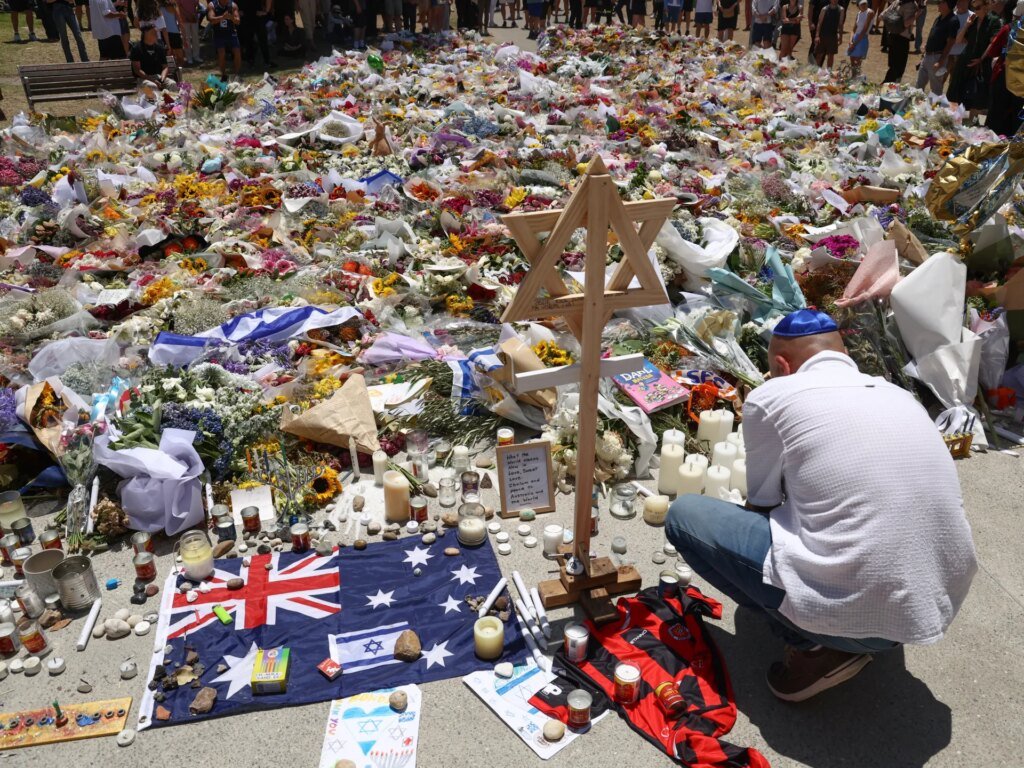
Clarifications on the Bondi Beach Attack and Security Measures
In the aftermath of the tragic Bondi Beach attack, a Philippine official has stated that merely visiting the country does not substantiate claims regarding the suspects undergoing terrorist training. This announcement comes as Australia takes steps to tighten its hate speech laws following the tragic incident.
Details of the Incident
On Wednesday, Philippine National Security Adviser Eduardo Ano confirmed that the two men linked to the Sydney attack—which resulted in 15 fatalities during a Jewish event—were in the Philippines from November 1 to November 28 of this year. Immigration records revealed that 50-year-old Sajid Akram and his 24-year-old son, Naveed Akram, traveled through Manila, eventually reaching Davao City on the southern island of Mindanao. Interestingly, Sajid used an Indian passport while Naveed entered with an Australian passport.
No Evidence of Military Training
Ano emphasized that there is “no evidence” suggesting the suspects received military training during their stay. “A mere visit does not support allegations of terrorist training, and their duration of stay would not have allowed for any meaningful or structured training,” he explained. Reports indicated that the suspects mostly remained in their hotel rooms during their stay in Davao, associated with local news outlet MindaNews. Hotel staff noted that the duo primarily stayed indoors, only occasionally venturing out for brief periods.
Legal Proceedings and Government Response
In a significant development, Australian authorities reported that Naveed Akram faces 59 charges related to the attack, including murder and terrorism charges, now that he has regained consciousness. His father, Sajid, was shot and killed by police at the attack site.
Shifts in Threat Perception
Ano also addressed concerns surrounding Mindanao, a region known for its Muslim majority and history of secessionist conflict. He termed characterizations of the area as a “hotspot for violent extremism or Islamic State ideology” as “outdated and misleading.” He referenced the 2017 Marawi Siege, during which Philippine security forces effectively diminished the presence of ISIS-affiliated groups in the country. “The remnants of these groups are fragmented and operationally degraded,” he stated confidently.
A peace agreement established in 2014 has also contributed to stability, leading to a more autonomous region called Bangsamoro, despite ongoing sporadic violence from smaller rebel factions throughout southern Philippines.
Federal Initiatives in Response to Hatred
Australian Prime Minister Anthony Albanese announced on Thursday that new legislation will be introduced to combat hate speech. This decision comes in light of rising anti-Semitism following the October 7 attacks on Israel. Albanese remarked that the nation witnessed a significant increase in hatred, culminating in one of the worst acts of mass murder in Australia’s history.
Legislative Measures
During a press conference, Albanese outlined the upcoming reforms aimed at streamlining the process for charging individuals promoting hate and violence, including religious leaders. Furthermore, there will be new authority to cancel visas for those spreading hatred. Albanese expressed determination to combat this growing issue. “It was an attack on our Jewish community – but it was also an attack on the Australian way of life. Australians are shocked and angry. I am angry,” he stated.
Conclusion
The incident at Bondi Beach has raised numerous questions regarding national security and the fight against hate. In response, Australian authorities are taking decisive steps to address the root causes of such violence, while Philippine officials clarify the backgrounds of the suspects.
Key Takeaways
- Philippine officials confirm no evidence linking Bondi Beach suspects to terrorist training.
- New Australian legislation aims to strengthen hate speech laws following the tragic attack.
- Philippine security forces have significantly reduced the influence of ISIS-related groups since 2017.
- The peace accord in 2014 has increased stability in Mindanao despite ongoing violence from smaller factions.