
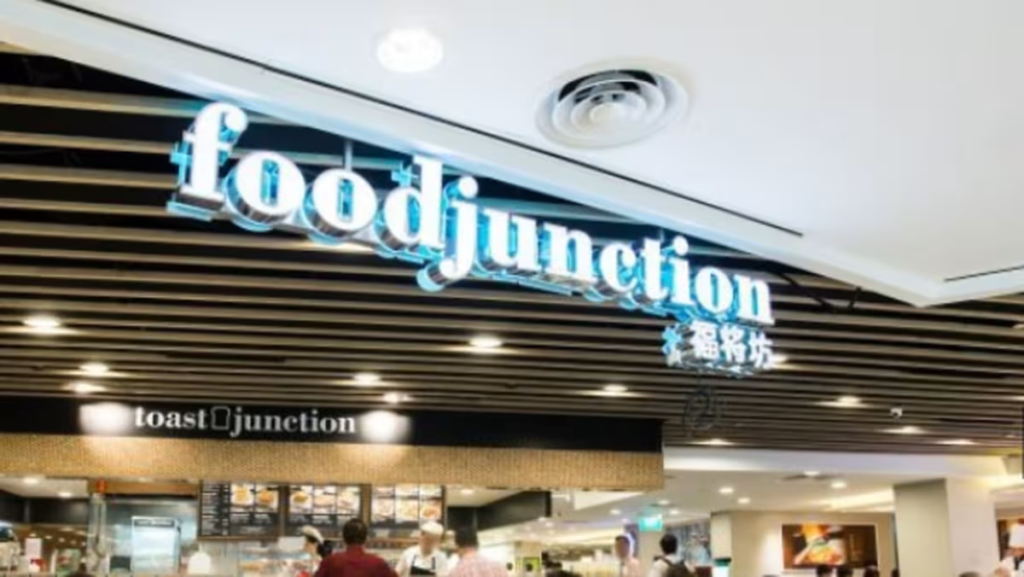
Food Stall Assistant Sentenced for Misusing Card Top-Up System
In a recent case unfolding in Singapore, a food stall assistant was sentenced to two years and eight months in prison for exploiting the top-up system of Food Junction. This incident serves as a critical reminder of the importance of integrity in the hospitality sector.
The Scheme Behind the Crime
Zhang Gui, 47, faced legal repercussions after pleading guilty to one count under the Computer Misuse Act, with another two charges acknowledged during sentencing. Food Junction, which implemented its card topping-up program in October 2021, allowed customers to pay for their meals using preloaded cards, often at a discounted rate.
Initially, customers topped up their cards by approaching individual stalls, utilizing the NETS terminal available at each location. However, the process transitioned to self-service kiosks introduced on November 1, 2021. These kiosks remained in service until their discontinuation in September 2023, just weeks before the card program itself ended on November 28, 2023.
Operation and Discovery
Zhang began his employment at the Food Junction outlet located in Great World City in October 2021, prior to the introduction of these kiosks. After their debut, he discovered that he could still add value to cards through his stall’s NETS terminal. Between October 30, 2021, and November 21, 2023, he executed an astounding 2,070 transactions, topping up Food Junction NETS Flashpay cards with a total of approximately S$41,370 (around US$32,000).
Rather than using the funds for legitimate customer transactions, Zhang misappropriated the stored value to pay for meals and beverages for himself and friends at various Food Junction outlets. His fraudulent activities came to light when NETS flagged the transactions as suspicious on November 21, 2023, noting that funds were being added without any corresponding payments, which violated the updated top-up policies.
A subsequent review of the security footage confirmed the misconduct, showing Zhang loading money onto multiple cards at his stall. When confronted by outlet managers on November 23, 2023, he confessed to his actions and was subsequently arrested.
Legal Proceedings and Sentencing
Zhang, who has not returned any money to Food Junction, faced stern legal scrutiny. Deputy Public Prosecutor Ashley Chin advocated for a sentence of 30 to 40 months, emphasizing the severity of the cheating offense and the considerable duration of Zhang’s fraudulent activities spanning over three years. According to the prosecutor, Zhang had breached the trust placed in him as a stall assistant, as his role facilitated the commission of these offenses.
While Zhang could have faced up to 10 years in prison, alongside a financial penalty of up to S$50,000, the court ultimately decided on a two-year, eight-month sentence.
Conclusion
This case underscores the necessity for robust integrity within the food service industry and highlights the consequences of abusing trust in professional environments. As organizations evolve with technology, the safeguarding of operations becomes increasingly critical.
- A food stall assistant in Singapore was sentenced to two years and eight months for misusing a card top-up system.
- Zhang Gui siphoned about S$41,370 through over 2,000 fraudulent transactions.
- The case emphasizes the importance of integrity and trust in the hospitality sector.
- NETS flagged the suspicious transactions that led to the investigation and Zhang’s arrest.