
Tesla Faces Suspension Threat Over Marketing of Self-Driving Features in California
California regulators are putting Tesla’s ability to sell its electric vehicles in jeopardy, demanding the company revise its marketing strategies concerning its self-driving technology. Following a judge’s ruling that concluded Tesla misled consumers about the capabilities of these features, Tesla could face a 30-day suspension of sales in the state early next year if changes are not made.
The Ruling and Recommended Penalties
The recommendation for the suspension comes from Administrative Law Judge Juliet Cox, who assessed Tesla’s marketing practices for several years. According to the ruling released late on Tuesday, Tesla’s promotion of terms like “Autopilot” and “Full Self-Driving” has misrepresented the autonomous capabilities available in their vehicles.
Findings from the Hearings
After conducting five days of hearings in Oakland, California, in July, Judge Cox suggested not only a sales license suspension but also proposed pausing Tesla’s manufacturing license at their Fremont plant. However, California regulators have opted not to enforce the production-related penalty.
Tesla has been given a 90-day period to make necessary adjustments that more accurately reflect the limitations of its self-driving technology to prevent the suspension of its sales license in California.
Tesla’s Response and Adjustments
In light of the regulators’ actions taken against the company in 2023, Tesla has already started implementing changes. They have included clearer language indicating that the Full Self-Driving package requires human oversight during its operation.
“Tesla can take simple steps to pause this decision and permanently resolve this issue – steps autonomous vehicle companies and other automakers have been able to achieve,” stated Steve Gordon, director of the California Department of Motor Vehicles.
Public Perception and Market Response
In response to the judge’s ruling, Tesla dismissed the actions as excessive regulation via a post on Musk’s X service. The company asserted, “This was a ‘consumer protection’ order concerning the term ‘Autopilot’ in a case where not one single customer came forward to say there’s a problem. Sales in California will continue uninterrupted.”
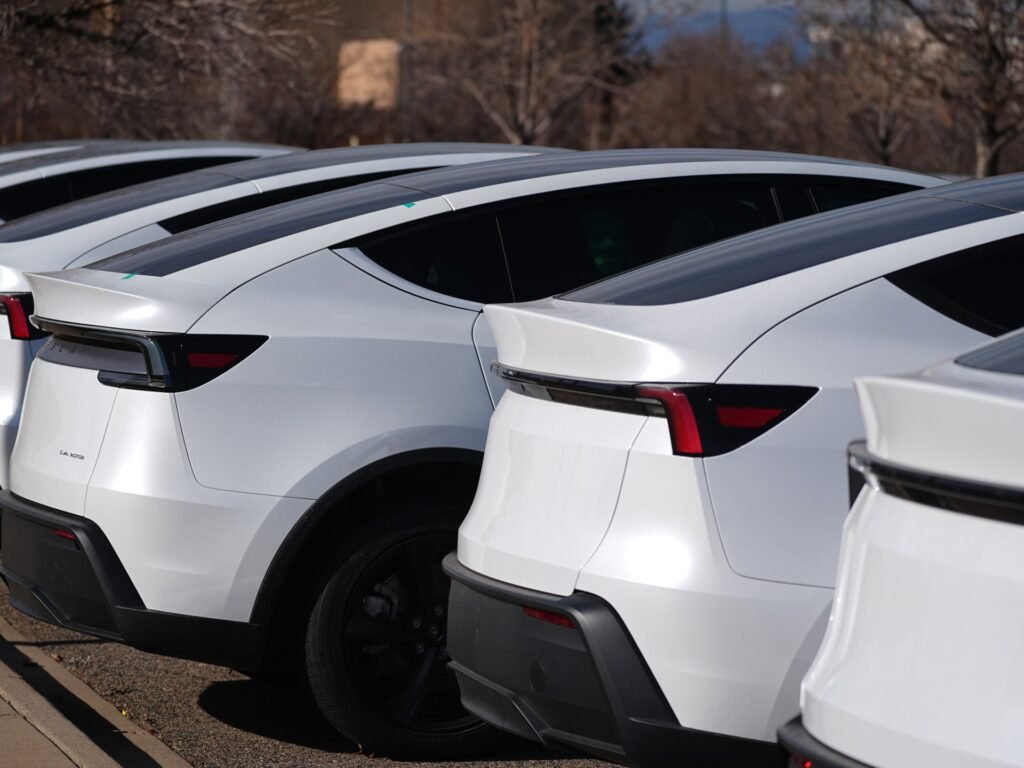
Despite the ongoing challenges faced by Tesla, such as changing consumer demand and intensified competition, the company has seen some successes. They recently revamped their Model Y, which has become the world’s bestselling vehicle, along with launching more affordable versions of both the Model Y and Model X.
The Stock Market and Future Prospects
Amidst the climate of uncertainty and the sales suspension threat, Tesla’s stock reached a record high of $495.28 during early trading on Wednesday, before retracting to just below $470. Despite this fluctuation, Tesla’s shares remain slightly higher than before Elon Musk’s tenure in the Trump administration.
The stock performance has been influenced by growing investor interest in Musk’s ambitious plans for integrating artificial intelligence into both humanoid robots and a fleet of self-driving Teslas functioning as robotaxis across the country. While Musk has been promising advancements in self-driving technology for years, testing began earlier this year in Austin with a human operative present in the vehicle. Recently, Musk announced trials for robotaxis without a safety supervisor.
Criticism and Legal Challenges
Tesla is not new to criticism regarding its self-driving technology. Accusations regarding the exaggeration of its capabilities have arisen, suggesting that such claims have created a false sense of security among users, which may lead to dangerous outcomes. Tesla maintains that its vehicle’s manuals and website have always indicated the need for human supervision in using the self-driving technology. Nonetheless, a 2020 video demonstrating a car supposedly operating independently remained online for nearly four years and was referenced in the decision against the company.
Legal challenges have also beset Tesla, as they face numerous lawsuits related to mischaracterizations of their self-driving technology that have contributed to accidents. While they have settled or successfully defended against several cases, a recent Miami jury found Tesla partially liable for a fatal crash in Florida while Autopilot was active, ordering the company to pay over $240 million in damages.
Conclusion
The ongoing developments surrounding Tesla’s marketing of its self-driving features underscore the fine line between innovation and regulation in the automotive industry. As the company navigates the regulatory landscape in California, its response and adaptability could shape its future operations and consumer relations.
- California regulators threaten Tesla with a sales license suspension unless marketing practices are revised.
- Judicial findings indicated long-standing deceptive marketing regarding self-driving technology.
- Tesla has made initial changes to its advertising to better reflect the need for human supervision.
- The company faces ongoing challenges in sales demand and legal scrutiny but also sees success in stock performance and product innovation.