
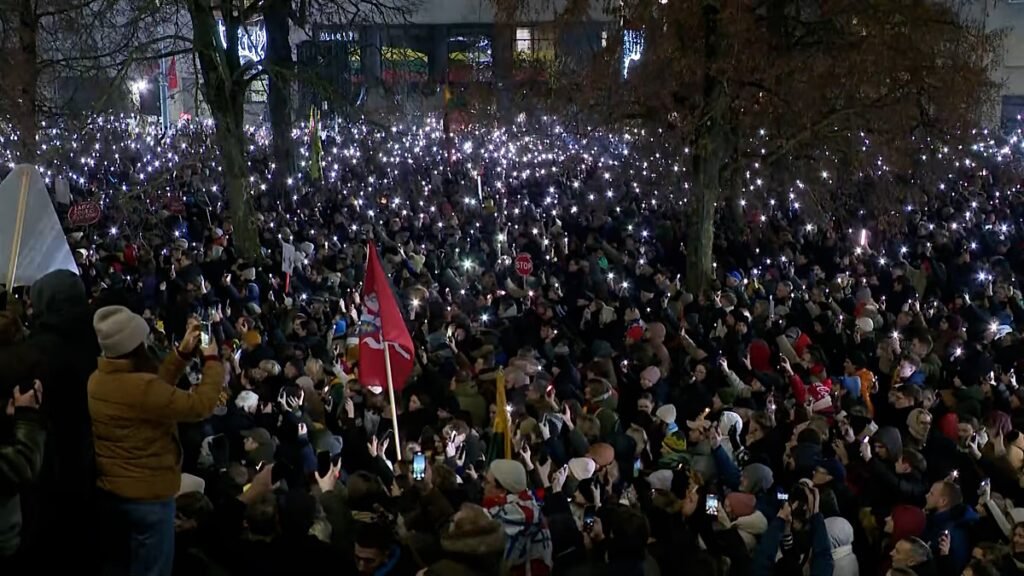
Public Protests Erupt in Lithuania Over Changes to Broadcasting Law
Recently, approximately 10,000 individuals gathered outside the Lithuanian parliament to voice their opposition against expedited amendments to the legislation that regulates the public broadcaster. Protesters expressed concerns that these changes could jeopardize free speech and undermine the autonomy of Lithuanian National Radio and Television amidst an ongoing political crisis.
The Proposed Changes
The ruling coalition aims to modify the criteria for dismissing the director general of the public broadcaster. This new legislation would enable the governing board to conduct a secret ballot, allowing the removal of the director with a lower voting threshold and broader justifications.
Concerns Raised by Critics
Opponents of the amendments argue that this initiative is specifically aimed at displacing the current director, raising alarms about political interference in the media sector.
The Importance of Independent Media
Independent media plays a crucial role in any democratic society. The fear among protesters is that eroding this independence could lead to increased governmental control over critical information shared with the public.
Conclusion
The recent protests surrounding the amendments to Lithuania’s broadcasting laws highlight significant public concern over free speech and media independence. As the political landscape continues to evolve, the importance of safeguarding press freedom remains evident.
- Around 10,000 people protested in Lithuania against changes to broadcasting law.
- Amendments could threaten free speech and media independence.
- The ruling coalition aims to streamline the process for dismissing the director general.
- Critics claim this move targets the current director of Lithuanian National Radio and Television.