
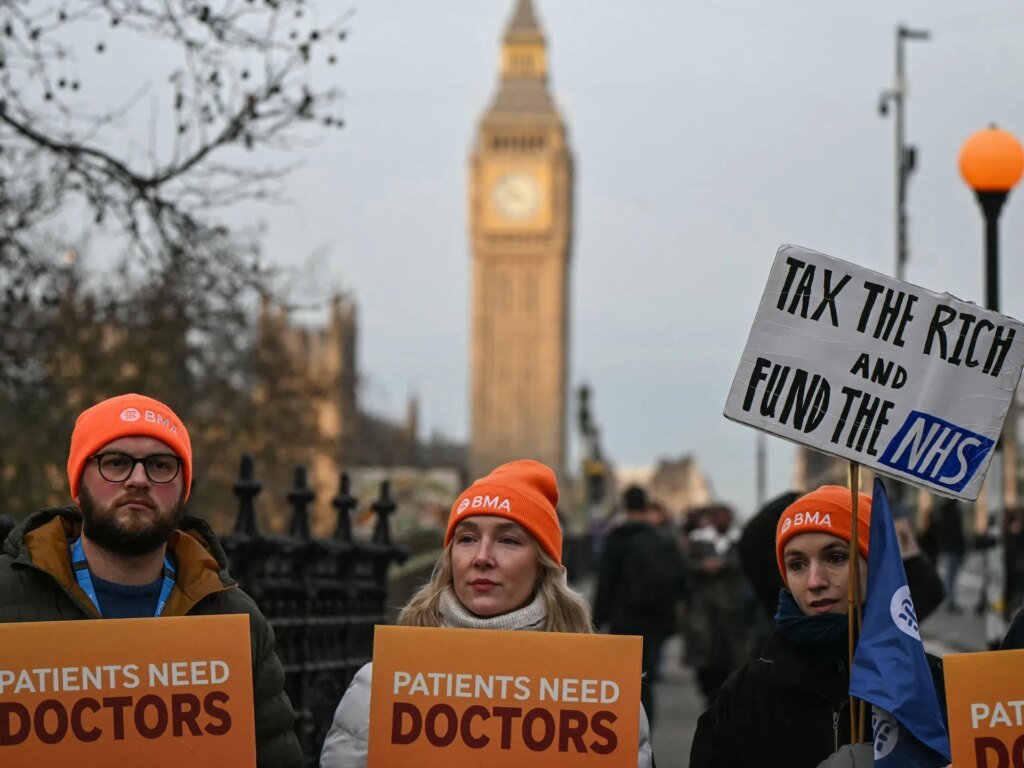
Doctors Strike for Better Pay and Job Opportunities
The British Medical Association (BMA) is advocating for enhanced salaries and an increase in job availability for qualified physicians. Recently, resident doctors in England initiated a five-day strike, stemming from ongoing disputes over pay and working conditions. This article delves into the details of the strike, the government’s stance, and the challenges faced by healthcare professionals in the National Health Service (NHS).
The Start of the Strike
On December 17, 2025, at 07:00 GMT, resident doctors, who historically made up a significant portion of England’s medical workforce, commenced their walkout. This action is set to last until 07:00 GMT on December 22, 2025. The decision to strike came after nearly 30,000 members of the BMA voted against the government’s latest offer regarding pay and job security.
Government Response
During the Prime Minister’s Questions in Parliament, Prime Minister Keir Starmer labeled the strike as “dangerous and utterly irresponsible.” He implored the resident doctors not to abandon their patients and to collaborate with the government to enhance conditions within the NHS. Starmer also attributed the current state of the healthcare system to mismanagement by the previous Conservative administration, stating it had left the NHS “absolutely on its knees.”
Reasons Behind the Strike
The crux of the dispute, according to the BMA representative Jack Fletcher, lies in two primary concerns: inadequate pay and a significant jobs crisis for qualified doctors. Fletcher expressed that many doctors are entering the workforce but struggling to find appropriate roles. He emphasized the need to appreciate healthcare professionals, noting that last year saw more doctors exiting the profession than in the previous decade.
Additional Pressures on the NHS
This strike occurs amidst mounting pressures on the NHS, as flu-related hospitalizations surged by over 50% in early December. Health authorities across Europe are warning of an exceptionally early and severe flu season, further complicating the situation. NHS England has indicated that fewer doctors will be available to treat patients during the strike, with remaining staff focusing on life-saving procedures.
Demands for Change
The BMA is urging for what it describes as a “genuinely long-term plan” to address pay, particularly after years of receiving below-inflation increases. Additionally, they are calling for the establishment of new training positions for doctors, rather than repurposed roles, to facilitate specialization and career advancement.
The Government’s Offer
The most recent proposal from the government, communicated last week, did not include any new terms for pay adjustments. After stepping into his role, Health Secretary Wes Streeting had initially agreed to a deal that offered a 22% pay increase, which falls short of the 29% increase sought by the BMA. Doctors have voiced their demand for “full pay restoration,” aiming to revert salaries to their 2008 and 2009 levels when adjusted for inflation.
Conclusion
The ongoing strike by resident doctors highlights significant issues within the NHS regarding pay and job availability. As healthcare professionals seek to improve their working conditions and remuneration, the future of the NHS hangs in the balance, necessitating immediate attention and action from government officials.
- The British Medical Association is calling for better pay and job opportunities for doctors.
- Resident doctors in England initiated a strike that will last for five days.
- The government’s most recent proposal did not address important pay concerns.
- There is an increasing pressure on the NHS due to rising flu cases, complicating the situation further.