
Trump’s National Security Strategy: A Focus on Latin America
The recent developments regarding a complete blockade on sanctioned oil tankers entering and exiting Venezuela, along with the unexpected financial support for Argentina in October, underscore Latin America’s growing importance to Donald Trump. The newly released National Security Strategy reaffirms the United States’ commitment to enhancing its military presence and influence in the region.
The Shift in Strategy
On December 4, the White House published a document that reflects the current administration’s worldview. It emphasizes that “my administration has acted with unprecedented urgency and speed to restore American strength both domestically and abroad,” as noted in the foreword signed by the president himself. According to the new security guidelines, Trump is determined to tackle illegal immigration, curb the expansion of drug trafficking, and strengthen ties with ideological allies and trading partners.
A Return to Monroe Doctrine Principles
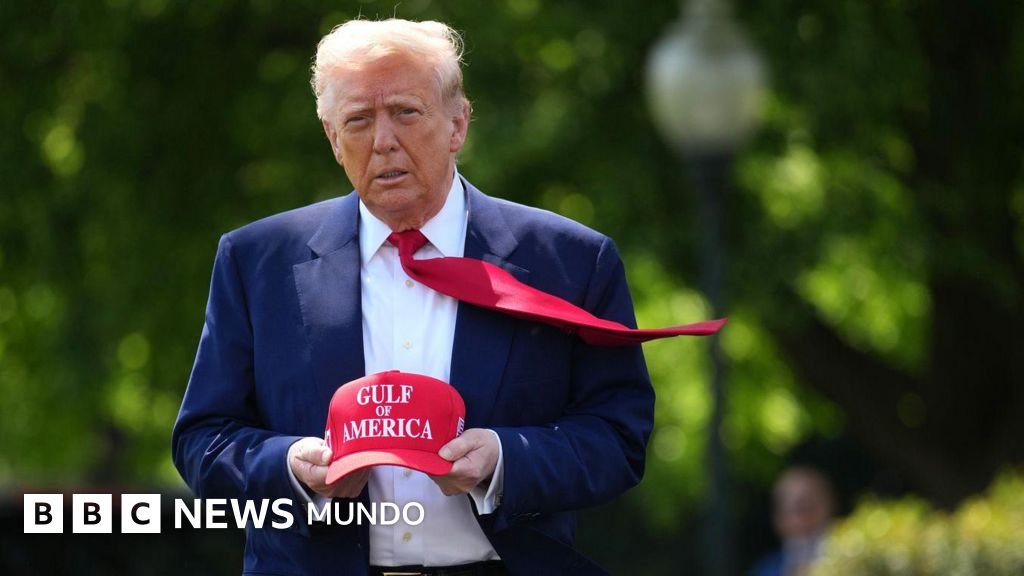
To achieve these goals, he proposes a revival of the foreign policy articulated by President James Monroe in 1823, which advocated for “America for the Americans.” This doctrine aimed to protect the region from external powers. The current document states, “After years of neglect, the United States will reaffirm and apply the Monroe Doctrine to restore American preeminence in the Western Hemisphere,” an approach now referred to as the “Trump corollary to the Monroe Doctrine.” This modern take has been nicknamed the “Donroe Doctrine,” a blend of Donald and Monroe, which first appeared in January on the cover of a major publication and has since been utilized by analysts and international media alike.
Exploring the New Doctrine
Does this signify the emergence of a new Monroe Doctrine in the region? What concerns and interests does Trump hold regarding Latin America, and how does he intend to expand his influence there?
From Monroe to Trump
To solidify global power, Trump recognizes the necessity of asserting influence in the Americas first. The document states, “The United States must be preeminent in the Western Hemisphere as a condition for our security and prosperity.” According to Will Freeman, a researcher at the influential Council on Foreign Relations, Trump is seeking to give “a new spin to an old idea.”
Freeman notes that it serves as an ideological justification for U.S. intervention or a hardline stance in the region, particularly focusing on immigration. “The document also mentions drug cartels and hostile foreign incursions, resonating with the original Monroe Doctrine,” he adds.
Historical Context
Strategies inspired by the Monroe Doctrine are not new. President Theodore Roosevelt introduced his own “Roosevelt Corollary” in 1904, advocating for U.S. intervention in countries unable to meet financial obligations or uphold democracy. However, the “Trump corollary” remains vague, leading analysts to view it more as a statement of principles rather than a strategic plan.
Interests in the Region
Trump perceives Latin American countries as both sources of problems and potential solutions for the United States. The document identifies “illegal and destabilizing migration” as a significant issue rooted in Latin America, noting that half of the immigrants residing in the U.S. come from this region, mainly Mexico. “It is the part of the world he focuses on for his domestic political agenda,” Freeman explains. Additionally, the threat posed by drug cartels is significant, given that nearly all cocaine consumed in the U.S. originates from three Latin American countries: Colombia, Peru, and Bolivia.
Bernabé Malacalza, author of “The Crusades of the 21st Century,” emphasizes that the new national security architecture positions the region as part of America’s internal security perimeter. “Latin America has become a priority for the United States,” he states, attributing this shift to the heightened focus on hemispheric security.
Reflecting Military Presence
Trump’s military strategies are evident, with the USS Gerald Ford aircraft carrier stationed in the Caribbean since November exerting pressure on the Venezuelan government and aligning with the new U.S. security directives. The document asserts the need for “a more appropriate military presence” and outlines concrete deployments to control land borders and maritime routes.
It even endorses the “use of lethal force” in a departure from the failed law enforcement strategies of recent decades, proclaiming, “Force is the best deterrent.” This reflects a foreign policy approach embracing the notion of “peace through strength,” a tagline popularized by former President Ronald Reagan.
Rewards and Alliances
The United States is also extending a range of rewards to its allies. The strategy states, “We will reward and encourage governments, political parties, and movements in the region that broadly align with our principles and strategy.” It emphasizes support for regional leaders who can foster stability, curb illegal migration, and counter drug cartels.
This reward-driven policy was recently exemplified when Trump unveiled a $20 billion bailout for Argentina, supplemented by trade agreements with this country, Ecuador, El Salvador, and Guatemala aimed at lowering export tariffs. However, analysts caution that the so-called “Donroe Doctrine” primarily perceives the region as a realm of threats rather than opportunities.
Freeman summarizes, “Their main concern is far more about preventing dangerous threats from Latin America than about seizing opportunities within the region.”
Conclusion
The evolving security strategy outlines a renewed commitment of the U.S. towards Latin America, prioritizing military and economic influence while firmly addressing issues like immigration and drug trafficking. As the administration seeks to align regional partners with its policies, Latin America’s role becomes increasingly significant in the geopolitical landscape.
- Trump’s strategy emphasizes military presence and control in Latin America.
- The revival of the Monroe Doctrine reflects a focus on preventing threats from the region.
- Economic partnerships are pivotal for addressing issues like illegal immigration and drug trafficking.
- The administration is framing Latin America as both a challenge and an opportunity for U.S. interests.