
Thailand and Cambodia: A Century-Long Border Dispute
The enduring border dispute between Thailand and Cambodia, which has spanned over a century, reached new heights in the summer of 2025. Despite numerous efforts at peace, tensions continue to simmer, fueled by nationalist sentiments and historical grievances over territory and cultural heritage, particularly the ancient temples situated in the contested regions.
A Historical Background
This longstanding conflict traces back to colonial times when the borders were delineated by colonial powers. During the 20th century, France held control over Cambodia, which was part of French Indochina, while Thailand was known as Siam. The borders of the two nations were framed under a series of treaties, starting with the Franco-Siamese treaties that pushed frontier lines and reshaped Cambodia’s geographic landscape.
The 1904 treaty redefined parts of the border using geographical features, and the more significant 1907 treaty resulted in Siam ceding certain provinces to French Indochina, thereby expanding Cambodia’s territory. These agreements largely established the modern Cambodia-Thailand border but left many areas—and their historical ownership—open to interpretation.
The Contested Temples
The border region is home to several revered Khmer temples, which have become focal points of the conflict. Among these are Prasat Ta Moan Thom, Prasat Ta Khwai, and Preah Vihear. The latter, known in Thailand as Khao Phra Viharn, is particularly significant. This 11th-century Hindu temple, predating Angkor Wat by a century, sits atop a ridge overlooking the disputed area.
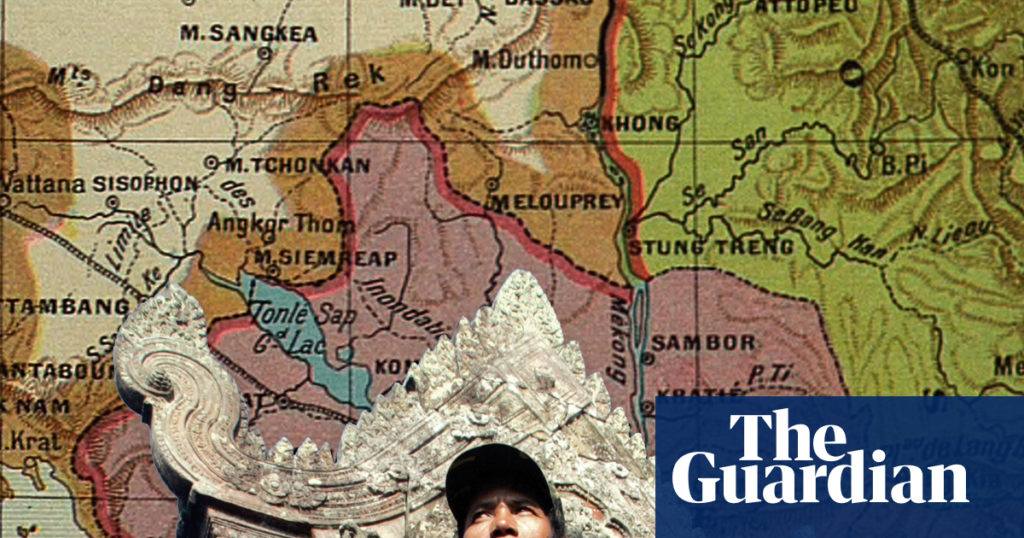
The central issue lies in a 1907 French map, known as the Annex I map, which places Preah Vihear within Cambodia’s territory. This contravenes the agreements that specified a border following the watershed of the Dangrek range, leading to conflicting claims from both nations.
The Discrepancy in Historical Claims
According to Shane Strate, an associate professor specializing in Southeast Asian history, the Mexican boundary line on the map largely followed the natural geography until it veered near Preah Vihear, wrapping the temple within French colonial territory before realigning with the watershed. This inconsistency has allowed both countries to bolster their claims based on different interpretations of historical documents.
While Thailand did not formally object to the Annex I map when it was created, this deviation later fueled claims over sovereignty. Known for its strategic importance, Preah Vihear was briefly occupied by Siam during World War II but eventually came under Cambodian control.
Modern Developments
Following Cambodia’s independence in 1953, tensions over the temple reignited, culminating in a legal review at the International Court of Justice (ICJ) in 1962, which ruled that Preah Vihear belonged to Cambodia. This victory was aided by the lack of formal objection from Siam regarding the 1907 map. Nevertheless, the ruling left unresolved disputes over the broader areas surrounding the temple, allowing disagreements to persist.
Thailand maintains that the border should follow the watershed line established in the original treaties, believing that this would place significant portions of territory, including Preah Vihear, on its side of the frontier. This situation complicates security and access for tourism, as many visitors enter the temple from the Thai side.
Looking Ahead
The differing interpretations of historical documents suggest that the dispute over Preah Vihear and its neighboring temples is unlikely to resolve soon. Historian Chris Baker notes that older maps are often used by both governments to further geopolitical agendas. He emphasizes that this debate extends beyond mere territorial lines, driven by a historic “sibling rivalry” between two culturally similar nations.
As long as these varying interpretations persist, the cultural and geopolitical significance of Preah Vihear and the surrounding temples will likely keep them as contentious points in the Thailand-Cambodia relationship.
- The Thailand-Cambodia border dispute, ongoing for over a century, escalated again in 2025.
- Key historical treaties have shaped the current territorial claims, with ancient temples at the center of the conflict.
- Despite a 1962 ruling favoring Cambodia over Preah Vihear, broader territorial issues remain unresolved.
- The rivalry is complex, involving historical context and ongoing national identities of both nations.