
The Rise of Venezuela’s Ghost Fleet: Navigating Oil Sanctions
In recent years, Venezuela has faced significant challenges due to international sanctions, particularly those imposed by the U.S. on its oil industry. Initially, these sanctions led to a drastic drop in oil exports from around three million barrels per day in 1998 to approximately 495,000 barrels in 2019. However, recent reports indicate a remarkable rebound in Venezuelan oil sales, now hovering around one million barrels per day, suggesting that these sanctions are not having the intended effect.
The Global Ghost Fleet Phenomenon
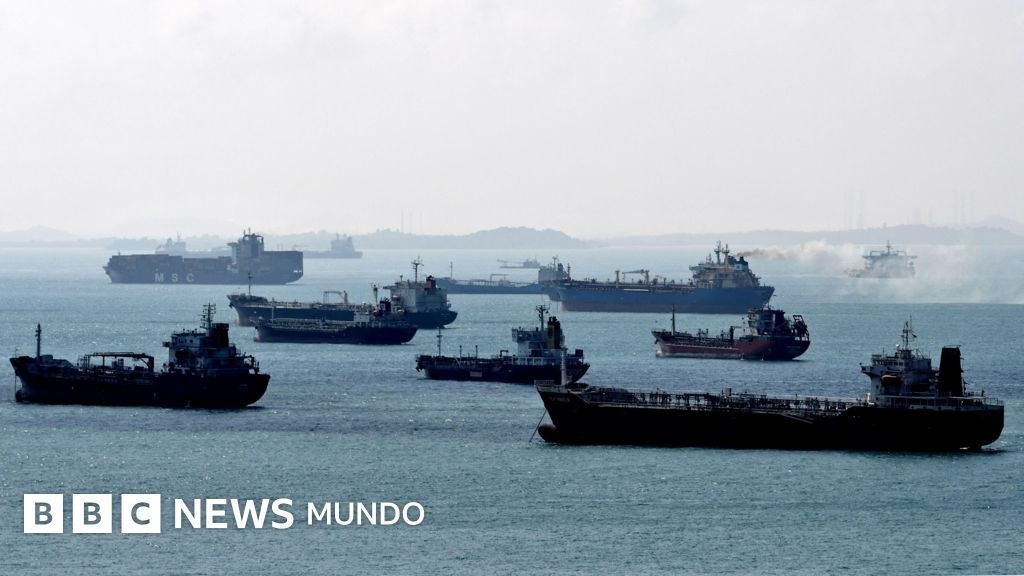
With the Maduro administration actively finding ways to boost oil production and circumvent sanctions, the “ghost fleet” has become an essential part of this strategy. This term refers to a network of tankers that employ various tactics to disguise their operations, allowing them to transport sanctioned Venezuelan oil without detection.
Recent Developments
Just last week, one of these tankers was intercepted by U.S. military forces off the coast of Venezuela. Following this operation, former President Trump announced a “total and complete” blockade on all sanctioned oil tankers entering or leaving Venezuela, further escalating tensions between Washington and Caracas.
The Maduro government condemned this seizure, labeling it a blatant act of piracy, and pledged to bring the matter before international authorities.
Increasing Complexity of Oil Sanctions
Ghost fleets are not unique to Venezuela; they are also observed in countries like Russia and Iran, which face similar sanctions from the West. According to estimates from S&P Global, about 20% of the world’s oil tankers are involved in the illicit trade of oil from sanctioned nations. Of these, 10% transport solely Venezuelan crude, while a significant portion handles oil from Iran and Russia.
In light of these sanctions, countries like Venezuela often offer their oil at deeply discounted prices to entice willing buyers, while taking measures to obscure the oil’s origin.
Methods of Deception
One common tactic among these ghost fleet vessels is frequently changing their names and flags. For example, the recently seized tanker, originally named Adisa, had previously gone by The Tokyo and is linked to Russian oil magnate Viktor Artemov, who is also under sanctions. The U.S. Attorney General noted its role in transporting oil from both Venezuela and Iran, highlighting the tangled web of illicit operations involved.
Interestingly, many of these ghost ships are older vessels, often over 20 years old. Large shipping companies tend to retire tankers after 15 years, making older ships more likely to engage in illicit activities. Some vessels even assume the identities of scrapped ships, effectively masquerading as “zombie ships” by using their registration numbers.
Illicit Transfers at Sea
Another frequent practice involves these ships transferring oil in international waters to vessels legally registered elsewhere, thereby disguising the oil’s true origin. This has enabled Venezuelan oil to reach markets like China under the pretense of being sourced from non-sanctioned countries.
Reports from organizations like Transparency Venezuela indicate that a significant number of these ghost vessels operate under flags from regulatory havens, allowing them to evade scrutiny. Recent surveys showed that many of these tankers spent considerable time away from ports, raising questions about their activities.
Consequences of Enforcement and Monitoring
As the U.S. ramps up military presence in Caribbean waters, the ability of the Maduro regime to rely on this ghost fleet may face increased limitations. The interception of ghost ships signals a heightened awareness and scrutiny of illicit oil trade activities.
Conclusion
The emergence of a ghost fleet in Venezuela underscores the resilience of the country’s oil industry in the face of stringent sanctions. While efforts to disrupt these operations are underway, the interplay between aging vessels, deception, and international market dynamics will continue to shape the landscape of Venezuelan oil exports.
- The U.S. sanctions have had limited success in curbing Venezuelan oil exports, which have now risen to around one million barrels per day.
- A ghost fleet consisting of around 1,300 vessels is pivotal in facilitating the clandestine sale of oil.
- Common tactics include changing ship names and flags, and engaging in maritime transfers to disguise oil origins.
- The increased military presence of the U.S. may further restrict the operations of this ghost fleet.