
Trump’s New Executive Order: Fentanyl as a Weapon of Mass Destruction
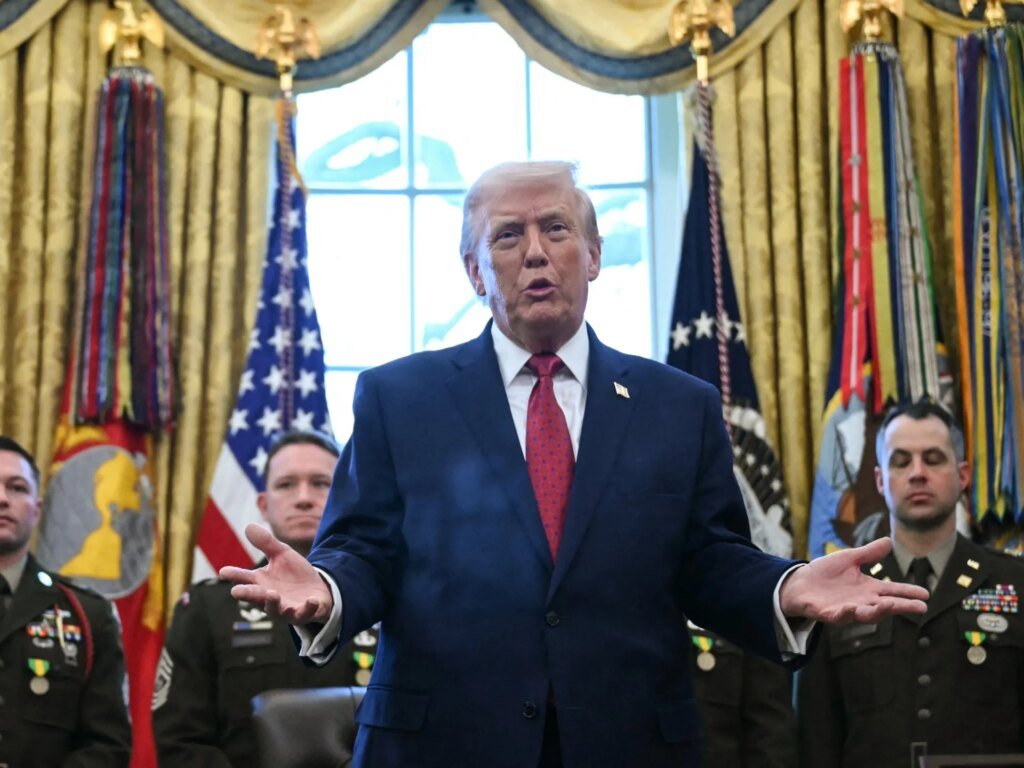
In a significant move, President Donald Trump has announced plans to classify fentanyl and its essential precursors as a “weapon of mass destruction” (WMD). This declaration marks yet another example of his administration adopting a militaristic tone in addressing the ongoing battle against drug trafficking operations. The announcement was made during a White House event on Monday, further amplifying the government’s stance on drug cartels and smugglers.
Militarized Language Against Drug Smugglers
Trump’s administration has increasingly characterized drug traffickers as “narco-terrorists,” even labeling Latin American cartels as “foreign terrorist organizations.” This assertive rhetoric aims to portray drug trafficking groups not merely as profit-driven criminals, but as entities that threaten to destabilize the United States.
“There’s no doubt that America’s adversaries are trafficking fentanyl into the United States, in part because they want to kill Americans,” Trump stated at the event. “That’s why today, I’m taking one more step to protect Americans from the scourge of deadly fentanyl flooding into our country.”
He continued, “With this historic executive order I will sign today, we’re formally classifying fentanyl as a weapon of mass destruction.” However, the real implications of this new label remain uncertain, particularly regarding the use of fentanyl in legitimate medical contexts.
The Executive Order and Its Implications
The executive order primarily calls on heads of governmental agencies to “eliminate the threat of illicit fentanyl and its core precursor chemicals to the United States.” It’s important to note that under existing U.S. law, the president lacks the authority to unilaterally change the legal definition of a WMD. Currently, a WMD is recognized as any weapon intended to cause death or severe injury through the release of toxic or poisonous chemicals.
This definition encompasses a variety of weapons, including those that involve biological agents or toxins, as well as conventional explosives like bombs and grenades.
Escalating Tensions and Justifications
The Trump administration has leveraged its efforts against fentanyl trafficking to justify increased tariffs on countries like Mexico and China. Furthermore, the campaign against drugs has led to military actions targeting alleged drug smuggling boats in the Caribbean and Eastern Pacific—a move described by human rights groups as potentially leading to extrajudicial killings. Additionally, military resources are being bolstered near the coast of Venezuela under the premise of countering drug smuggling.
Trump has openly threatened ground attacks in Venezuela, reiterating, “We’re going to start hitting them on land, which is a lot easier to do, frankly.” This statement reflects a growing perception that U.S. pressure is aimed at destabilizing the Venezuelan government, as claimed by Venezuelan leader Nicolas Maduro.
Debunking the Myths about Fentanyl Origins
Experts have stressed that despite the heightened rhetoric surrounding Venezuela, the country—and South America in general—are not known production centers for fentanyl. John Walsh, a drug policy director at the Washington Office on Latin America, stated, “To be perfectly clear, there is no fentanyl coming from Venezuela or elsewhere in South America.”
Some critics have drawn parallels between the current U.S. pressure on Venezuela and the ramp-up to the 2003 invasion of Iraq, which was predicated on unfounded claims regarding weapons of mass destruction.
Conclusion
President Trump’s classification of fentanyl as a weapon of mass destruction underscores a continued shift toward militarized responses in the fight against drug trafficking. While the intended effects of this executive order remain to be seen, it clearly illustrates the administration’s commitment to treating the drug crisis as a national security threat.
Key Takeaways
- Trump has labeled fentanyl a “weapon of mass destruction” in a new executive order.
- The administration continues to use militarized language to frame drug smuggling as a significant threat.
- There is skepticism regarding the actual origins of fentanyl, particularly in relation to Venezuela.
- The order aims to enhance efforts against illicit fentanyl trafficking without changing existing definitions of WMDs.