
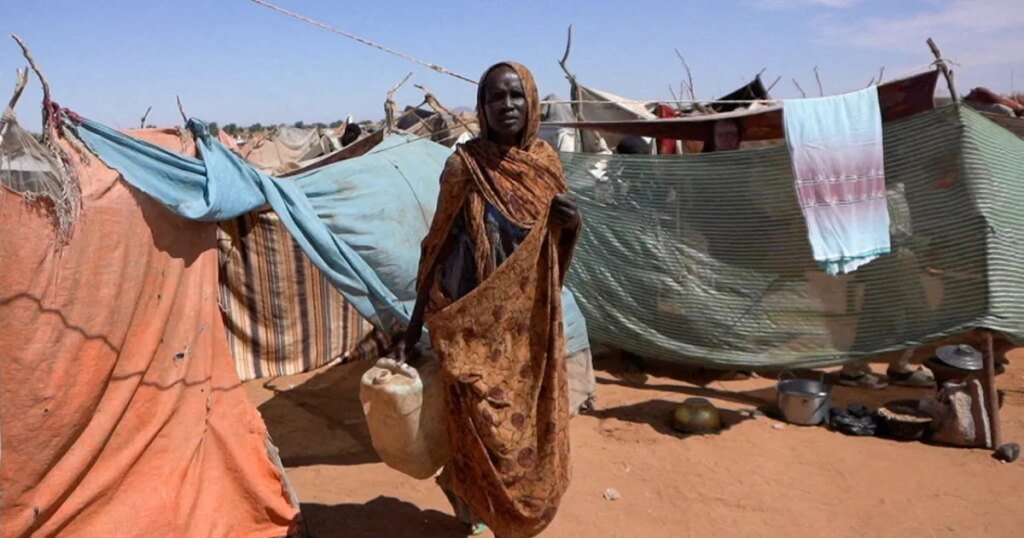
Escalating Humanitarian Crisis in Sudan’s Darfur Region
The turmoil in Sudan’s Darfur region has intensified with the recent takeover of el-Fasher by the Rapid Support Forces (RSF). This has compounded the already dire humanitarian conditions affecting millions. In response, the European Union has implemented an “air bridge” initiative, aimed at delivering vital humanitarian assistance to those in desperate need.
European Union’s Aid Efforts
The European Commission’s department responsible for overseas aid announced on Monday the launch of an air bridge that will transport eight planeloads of humanitarian supplies into the conflict-affected region of Darfur. The initiative is expected to deliver a substantial €3.5 million (approximately $4.1 million) in critical aid to a region grappling with “mass atrocities, starvation, and displacement.”
The first flight successfully departed on Friday, bringing approximately 100 tonnes of essential supplies sourced from EU humanitarian stockpiles and partner organizations. Additional flights are scheduled to continue throughout December and into January, delivering vital items such as water, shelter materials, sanitation, hygiene products, and health supplies. The region is considered one of the hardest hit and most challenging areas for aid organizations to reach.
The Fallout from the RSF Takeover
The capture of el-Fasher, the capital of North Darfur, by the RSF in late October exacerbated an already catastrophic humanitarian situation, making it even more challenging for aid to reach those in need. An 18-month siege prior to the takeover had severely restricted access to food, medicine, and other essential resources, resulting in over 100,000 individuals being forced to flee, many to the town of Tawila, which is now at the center of the escalating humanitarian crisis.
Reports from those who escaped el-Fasher reveal horrific accounts of mass killings, kidnappings, and widespread sexual violence as the RSF conducted raids. United Nations human rights chief Volker Turk condemned the group for committing what he described as “the gravest of crimes.”
Growing Concerns of Further Atrocities
The situation in Sudan spiraled into chaos in April 2023, following a power struggle between the military and the RSF that erupted into open conflict in the capital, Khartoum, and across various regions. With the RSF now in control of el-Fasher, which previously served as the military’s last stronghold in Darfur, clashes have shifted eastward toward the Kordofan region as the RSF and its allies attempt to dominate Sudan’s central corridor.
Targets include Kadugli, the capital of South Kordofan State; Dilling, also in South Kordofan; and el-Obeid, the capital of North Kordofan State. These cities are strategically located along a north-south axis from the South Sudan border to Khartoum. El-Obeid is particularly significant as it lies along a key highway linking Darfur to the national capital.
Repeated warnings from the UN highlight the potential for the Kordofan region to experience similar atrocities to those seen in el-Fasher. With the RSF controlling all of Darfur’s major cities, Sudan is effectively divided; the army retains control over the center, east, and north, while the RSF and its allies claim dominance in the west and portions of the south.
Conclusion
The situation in Sudan remains critical as humanitarian needs soar amidst violence and displacement. The ongoing efforts by the European Union to provide aid offer a glimmer of hope to those affected. However, with the threat of further atrocities looming, immediate and sustained attention is vital to alleviate the suffering in the region.
- The EU has initiated an air bridge to deliver humanitarian aid to Darfur.
- Over 100,000 people have fled due to violence in el-Fasher.
- Reports indicate severe human rights violations by the RSF.
- The Kordofan region faces increasing threats of similar atrocities.